Fuel for thought
The Middle East and North Africa (MENA) region is on track to become the world’s largest hydrogen exporter by 2060, producing 19 million tonnes of hydrogen annually, while retaining its dominant role in global oil and gas markets. This dual trajectory—expanding energy exports while lowering emissions intensity—defines the Gulf Cooperation Council’s (GCC) evolving role in the global energy system.
DNV, the independent energy expert and assurance provider, has released Oil & Gas Decarbonisation in the Gulf Region, the second report in its Energy Transition Outlook 2026 series focused on the Middle East. The report examines how GCC countries are pursuing selective decarbonisation of their core oil and gas operations alongside broader economic and energy diversification.
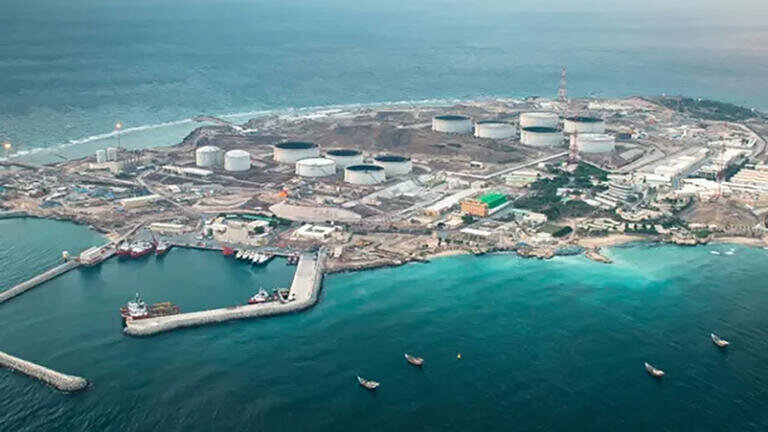
Since 2005, the GCC has accounted for nearly 18% of global oil and gas production, a share expected to rise as investment continues in low-cost, advantaged resources. As global energy demand increasingly shifts toward Asia, the region’s geographic position and cost competitiveness reinforce its status as a preferred supplier. At the same time, emissions performance is becoming a critical component of long-term competitiveness.
“The global energy transition will not move at the same pace everywhere, nor follow a single pathway,” said Brice Le Gallo, Vice-President and Regional Director for Southern Europe, MEA and LATAM, Energy Systems at DNV. “In the Middle East, oil and gas remain central to economic stability and global energy security. The challenge is to reduce their emissions footprint while accelerating investment in the technologies required for a lower-carbon energy system.”
Oil and gas production across the GCC continues to expand, accompanied by a stronger focus on operational emissions reduction. Asset electrification is cutting Scope 2 emissions from pumps, compressors, and offshore facilities through grid connections, renewable power, and hybrid solutions. These efforts are reinforced by energy-efficiency measures and the use of digital tools and artificial intelligence to optimise drilling, reservoir management, and asset operations, reducing both energy intensity and emissions per barrel produced.
Methane abatement represents one of the fastest and most cost-effective routes to emissions reduction. Across the GCC, routine flaring is scheduled to be phased out by 2030, while leak detection and repair (LDAR) programmes are becoming standard practice. National oil companies are also aligning with international methane initiatives, enabling continued production growth while reducing methane intensity in line with national net-zero targets.
At the same time, GCC countries are rebalancing domestic energy systems to reduce oil and gas consumption at home, freeing up volumes for export and for low-carbon fuel production. Rapid growth in renewables, electrification of transport and buildings, and efficiency improvements are driving this shift. Investment in downstream industries, petrochemicals, and low-carbon fuels is also reshaping export portfolios, moving beyond crude oil toward higher-value and lower-carbon energy products.
Hydrogen and ammonia emerge in DNV’s forecast as key long-term export opportunities. With access to low-cost natural gas, abundant solar resources, and established industrial and export infrastructure, the region is well positioned to scale both low-carbon hydrogen—produced from natural gas with carbon capture—and renewable hydrogen generated through electrolysis. By 2060, MENA is projected to produce around 19 million tonnes of hydrogen and 13 million tonnes of ammonia annually, exporting roughly half of this output, primarily to Europe and advanced Asian economies.
“Hydrogen, ammonia, and carbon capture are becoming core pillars of the GCC’s future energy export model,” said Jan Zschommler, Market Area Manager for the Middle East, Energy Systems at DNV. “As emissions requirements tighten, access to international markets will increasingly depend on carbon intensity. Integrating hydrogen production with renewable power, carbon capture, and existing industrial clusters allows the region to remain competitive while meeting these expectations.”
Carbon capture, utilisation and storage (CCUS) underpins much of this transition. More than 98% of CCUS projects planned or operating in the MENA region are in the GCC, led by national oil companies. In January 2026, the UAE’s Supreme Council for Financial and Economic Affairs introduced a dedicated Carbon Capture Policy, reinforcing national commitments to emissions reduction. Captured CO₂ volumes, including carbon removal, are expected to reach around 250 million tonnes per year by 2060—equivalent to approximately 8% of regional energy-related and industrial emissions.
Carbon dioxide removal is also set to expand. By 2060, bioenergy with carbon capture (BECCS) and direct air capture (DAC) are expected to remove a combined 81 million tonnes of CO₂ annually, helping to offset emissions from sectors that are more difficult to decarbonise.
DNV’s Energy Transition Outlook 2026: Oil and Gas Decarbonisation in the Gulf Region presents a transition shaped by sequencing—where reductions in emissions intensity occur alongside continued hydrocarbon production and growing investment in renewables, electrification, hydrogen, methane abatement, digitalisation, and carbon capture. This outlook aligns with findings from DNV’s 2025 Energy Industry Insights survey, which identifies the Middle East as the world’s most optimistic energy region, citing expectations of revenue growth, rapid solar expansion, and continued gas development.
PIN 27.4 Aug/Sept 2026


 Product directory


.jpg)