Fuel for thought
Published over 11 years ago. See the latest and most current information on Fuel for thought.
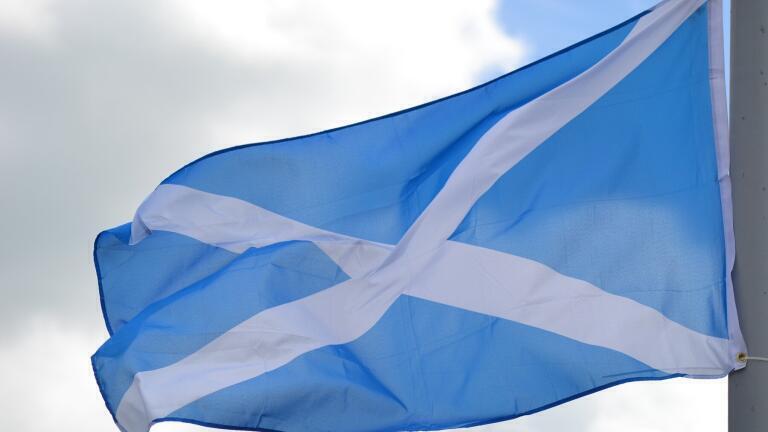
Scottish has voted! Scotland will remain a part of the United Kingdom for the foreseeable future, albeit in exchange for a number of additional powers and responsibilities. Largely, the UK energy sector has expressed its approval. Since gas, electricity, coal and oil production are overseen by the UK’s parliament in London, a “yes” result may have resulted in industrial-scale restructure and a period of great uncertainty. In order to quash the “yes” campaign, Prime Minister David Cameron promised Scotland its very own “devolution revolution”, yet it’s extremely unlikely that Scotland will be afforded direct control of its own energy matters any time soon.
In the end, the “no” campaign triumphed, enabling UK energy manufacturers and investors to breathe a sigh of relief. Yet, while it’s unlikely that Scotland will come to govern its own energy sector entirely independently, some more gradual changes are probable. In this recent post, we asked: how will the Scottish “no” vote affect the UK energy sector?
The energy sector thrives during periods of political certainty and stability. During such times, prices remain fairly consistent and new investment opportunities are pursued with more confidence and vigour. Naturally, had the Scottish public voted to leave the United Kingdom, oil and gas prices may have spiked, potentially derailing an independent Scotland’s plans regarding its own energy matters.
Furthermore, the administration of oil reserves is an extremely complex business, both legislatively and economically. During the months leading up to the Scottish referendum, commentators insisted that Alex Salmond, then leader of the Scottish National Party (SNP), failed to acknowledge this difficulty, and predicted that an independent Scotland would be over reliant on a single industry. Meanwhile, UK Prime Minister David Cameron argued that North Sea oil reserves were in fact dwindling, begging the question: how would an independent Scotland support itself if the oil ran out?
Following the “no” campaign’s victory, energy giant Shell’s CEO Ben Van Beurden stated: “Shell welcomes the decision made by the people of Scotland to remain within the UK, which reduces the operating uncertainty for businesses based in Scotland.”
In its next budget, the current UK government is expected to encourage greater investment in the North Sea region, stimulating further exploration and facilitating the injection of much needed capital. However, questions regarding Scottish energy interests endure. The Scottish renewables body, in particular, continues to argue in favour of greater regulation and representation, while critics of renewable energy insist Scotland covers the costs of its own renewables sector in future.
The Scottish referendum invigorated political involvement at a local, national and an international level, fuelling debate and fostering lively discussion. On both sides of the political fence, new voices came to the fore, posing challenging questions and offering innovative solutions. If sustained political engagement proves to be a consequence of the Scottish revolution, questions regarding Scotland’s energy future are likely to endure also. With plenty of countries exploring and exploiting their own energy reserves successfully, creating “oil funds”, and investing in the burgeoning hydro, tidal and wind sectors, the future of Scottish energy looks bright, if not quite independent.
PIN 27.4 Aug/Sept 2026




 Product directory


.jpg)