Fuel for thought
Published over 10 years ago. See the latest and most current information on Fuel for thought.
It’s no secret that the oil industry will be forced to roll out brutal spending cuts this year, primarily as a result of dropping commodity prices. Last year alone, the industry slashed investment spending by over US$100 billion, and according to insider knowledge, executives are just getting started. In 2016 another round of large scale cuts are set to hit production outlook, as confirmed by the International Energy Agency's chief economist, Laszlo Varro.
In a recent interview with Reuters, Varro asserted that in 2016 investment decline could mimic the magnitude seen in 2015, unless oil prices make a significant recovery. If this comes to light, the deteriorating budgets could have a negative knock on effect for production outlook.
"The investment cuts are so serious that there is no doubt that they have a meaningful impact on the production outlook," he says.
While Iran’s recently lifted sanctions will help to boost production, Varro anticipates that the majority of its resources will remain untapped. This is primarily due to the fact that in order to leverage the full geological potential of the nation, producers would need to invest in sophisticated new technologies. As a result of spending cuts he doesn’t see this materialising, which would mean the majority of Iranian oil production will continue to take place in existing fields.
"The oil industry is cutting investment spending everywhere so Iran would need to offer exceptionally attractive terms for major oil companies ... to come in and bring in sophisticated technologies and new capital," he said. "So we do foresee a growth of Iranian oil production but not to the level which the geological potential would in theory allow."
As demonstrated by the International Energy Agency, market analysis plays a key role in augmenting the accuracy of predictions. But the oil industry isn’t the only sector that relies on in-depth assessment. Petrochemical producers also depend on analytical tools in order to accurately determine the presence of trace elements. For more information on the sophisticated methods currently being used in labs across the globe, ‘The Indispensable Analytical Tool in Petrochemical Laboratories for Quantitative Trace Element Analysis’ is an interesting exploration. It spotlights the unique XRF method, and its key role in ensuring exceptional product quality and optimal performance of engines. Thanks to ‘ready-to-analyse’ data complying with industry standards is made easy, which contributes to a cleaner, greener future.
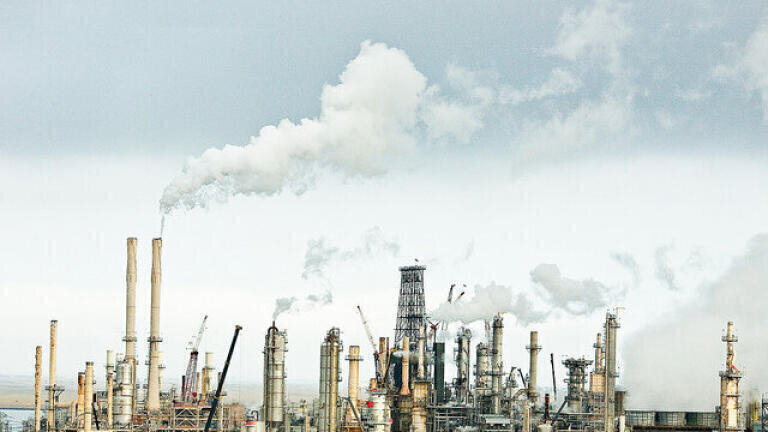
Image via Flickr Creative Commons. Photo credits: Thomas Hawk
PIN 27.4 Aug/Sept 2026




 Product directory


.jpg)