Fuel analysis
Published over 10 years ago. See the latest and most current information on Fuel analysis.
Recent developments in ultra-low sulfur (ULS) fuel have improved fuel efficiency and created cleaner exhaust gases. Globally, the permitted sulfur limit in fuel oils has been decreased to 10ppm in many countries and regions. For compliance verification, X-ray fluorescence (XRF) spectrometry is the definitive analysis tool for use at distribution terminal and refineries, as well as in mobile or stationary testing laboratories.
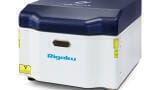
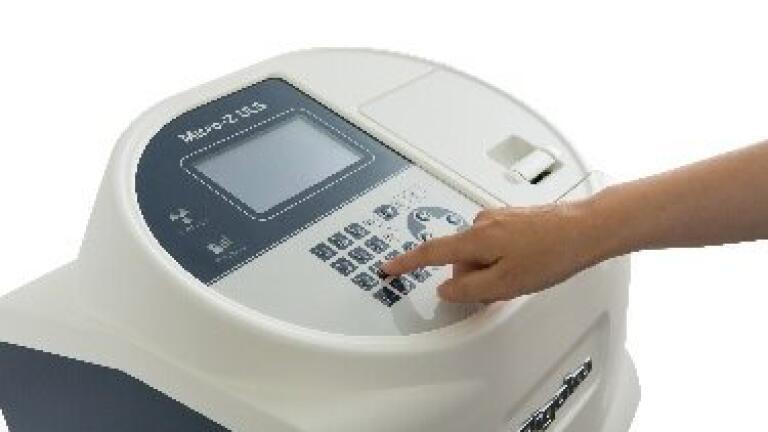
In recent years, there has been increasing need for an instrument which does not require the use of helium gas, for situations when acquisition or delivery of helium to the analysis site is difficult. The Rigaku Micro-Z ULS wavelength dispersive X-ray fluorescence (WDXRF) instrument is a newly developed Sulfur analyser which does not require helium gas in operation.
The method highlighted here demonstrates that Micro-Z ULS can meet the requirements of ASTM D2622-10 (Standard Test Method for Sulfur in Petroleum Products by Wavelength Dispersive X-ray Fluorescence Spectrometry).
Instrument
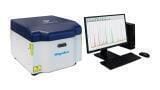
The Micro-Z ULS is a benchtop WDXRF spectrometer with fixed optics optimised for sulfur analysis. The atmosphere in the optics path of the Micro-Z ULS is a vacuum, so helium gas is not required. The spectrometer is designed to minimise installation requirements such as cooling water, special power supply, installation space, etc. It is equipped with an air-cooled 40 W Cr-target X-ray tube and a doubly curved RX-9 analysing crystal optimised for low concentration sulfur.
Sample preparation
For this analysis, four mL of each sample was poured into a liquid cell (inner diameter 35 mm) with sample film of 2.5 μm Mylar® film.
Standard and calibration
'Number 2 diesel fuel' standards and isooctane-based standards were used for calibrations of diesel fuel and gasoline respectively. The calibration results are listed below.
Calibration result for each material using Micro-Z ULS (unit: mg/kg)
|
Material |
Diesel fuel |
Isooctane (for gasoline) |
|
Calibration range |
0 – 100 |
0 – 100 |
|
Accuracy |
0.49 |
0.37 |
|
LLD |
0.3 |
0.3 |
Analysis results
Repeatability tests were carried out using a representative sample for each material. For each sample, two aliquots were prepared and analysed; this process was repeated twenty times.
The difference between successive test results obtained by the same operator with the same apparatus under constant operation conditions on identical test material would, in the long run, exceed the values calculated by the following equation in only one case in twenty:
Repeatability (r) = 0.1462·X0.8015 mg/kg
X: total sulfur concentration (mg/kg)
The test results, where the maximum value for each fuel is smaller than r, prove that the performance of the Micro-Z ULS meets the requirement of ASTM D2622-10 for diesel fuel and gasoline.
Conclusion
Low concentration sulfur in petroleum-based fuel can be routinely analysed with high precision on the Micro-Z ULS benchtop WDXRF spectrometer. This application note demonstrates that the performance of the Micro-Z ULS meets the requirement of ASTM D2622-10, which has become strict in the recent versions of ASTM D2622.
PIN 27.4 Aug/Sept 2026


 Product directory


.jpg)