Analytical instrumentation
Published over 14 years ago. See the latest and most current information on Analytical instrumentation.
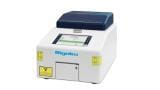
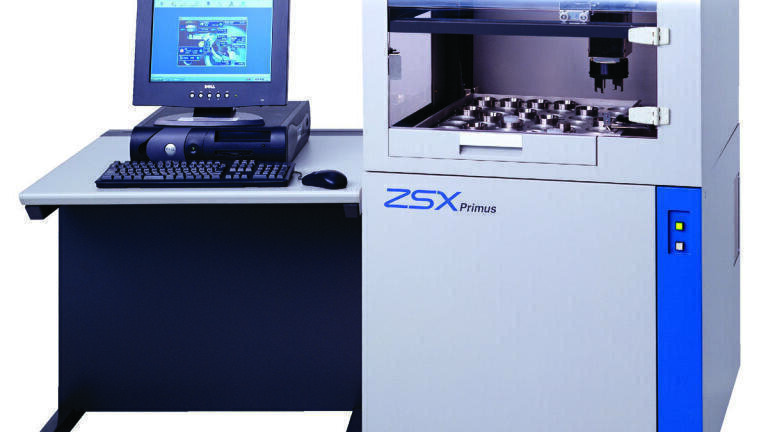
Rigaku Americas Corporation is pleased to announce a breakthrough in light-element sensitivity achieved with the ZSX Primus WDXRF spectrometer and Rigaku’s exclusive MicroCarry® sampling system. Thanks to the industry’s thinnest X-ray tube window, close-coupled geometry and a custom dispersive crystal, the ZSX Primus has allowed Rigaku to reduce the detection limits for sodium (Na) in crude oil to below 2 ppm.
“Until now, this level of sensitivity for light elements has been considered out of reach of XRF,” commented Laura Oelofse, Rigaku’s XRF Product Manager. Indeed, light elements such as Na present a challenge for X-ray fluorescence due to their low fluorescent yield and high absorption by the sample matrix. For this reason, the industry has continued to rely on traditional labour-intensive methods, such as Inductively-coupled Plasma (ICP) spectroscopy. While ICP is able to achieve low detection limits, it requires extensive sample preparation, chemicals and highly-skilled chemists.
“As part of our intensive effort to help the petroleum industry improve the efficiency of their laboratory operations and process control, we have re-examined every element and developed higher-performance methods to analyse for it with XRF,” remarked Tom McNulty, Senior Vice President and General Manager of Rigaku’s rapidly-growing Materials Analysis Division. “The opportunity to measure sodium with the speed and cost-effectiveness of XRF has been very enthusiastically received by our customers.”
PIN 27.4 Aug/Sept 2026



 Product directory


.jpg)











.jpg)


.jpg)