Analytical instrumentation
Published over 6 years ago. See the latest and most current information on Analytical instrumentation.
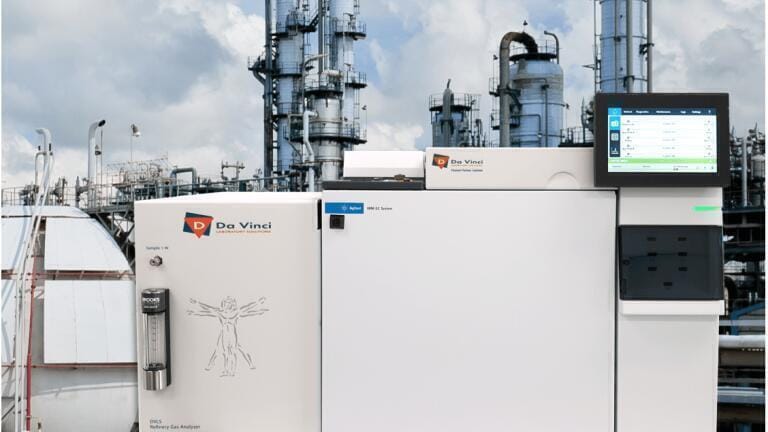
To characterise the hydrocarbon content, permanent gases and Hydrogen Sulfide in refinery & liquefied gases Da Vinci Laboratory Solutions (DVLS) developed a solution based upon the Agilent 8890 Gas Chromatograph. In only 5 minutes the DVLS Refinery Gas Analyser determines the hydrocarbon composition and the permanent gases. The analysis including H2S requires 7 minutes. Using the DVLS PetroReporter software the analyser also reports the calculation parameters such as Calorific and BTU value.
The DVLS Refinery Gas Analyser (RGA) is based upon the Agilent 8890 Gas Chromatograph (GC) containing three different channels. The gas samples are simultaneously injected into the three separate channels.
The FID channel determines C1-C5, C6+ group, the Back TCD channel separates Oxygen/Argon, Nitrogen, Carbon Monoxide, Carbon Dioxide and Hydrogen Sulfide. The Aux TCD channel determines Helium and Hydrogen.
To maximise the system uptime Da Vinci developed a side carrier to contain the valves and a separate heated zone for the Molsieve columns. This unique hardware design includes a built-in column conditioning which reduces the system downtime during the periodical regeneration of the columns.
To customise your refinery gas analysis various hardware options are available:
The Refinery Gas Analyser complies with the various ASTM, DIN, EN, IP, ISO and UOP standard test methods to determine the composition of the refinery & liquefied gases.
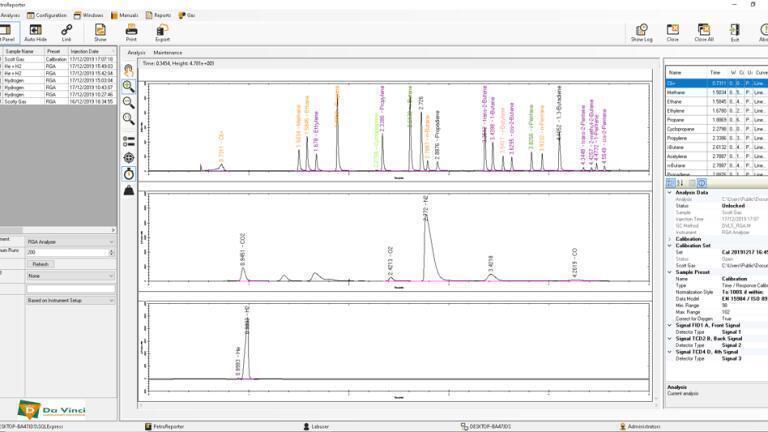
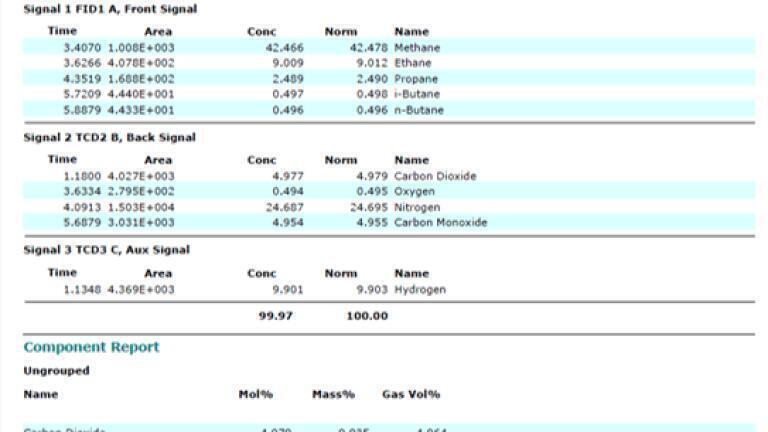
The GC is controlled by Agilent OpenLab software. The DVLS PetroReporter software automates all aspects of the calibration, gas analysis through reporting of gas calculations. Some examples of the calculations are the Carbon content, Emission factor, Calorific Value and BTU, Liquid volume and Molar mass.
The DVLS PetroReporter is compatible with chromatographic data systems (CDS) of major suppliers including the new OpenLab 2.x (Client-server). PetroReporter can be used either stand-alone or in a network configuration.
PIN 27.4 Aug/Sept 2026


 Product directory


.jpg)









.jpg)

.jpg)

.jpg)

.jpg)