Sulphur analysis
Published over 13 years ago. See the latest and most current information on Sulphur analysis.
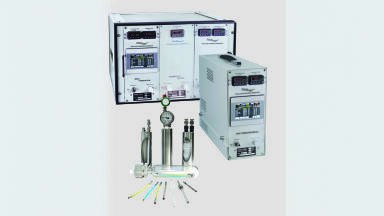
When using conventional elemental analysers for carbon and sulphur determination in solids, the user has to decide whether to use a resistance furnace to analyse organic compounds or an induction furnace for inorganic compounds.
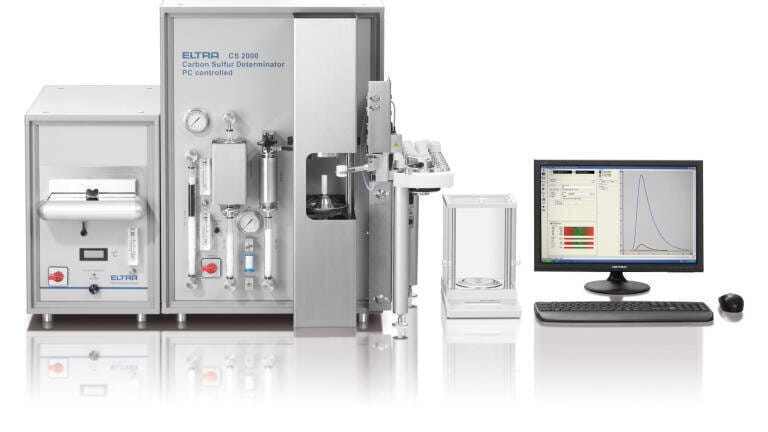
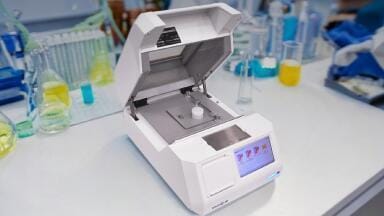
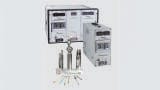
However this has changed with Eltra’s (Germany) unique CS-2000 analyser which combines both techniques. The user only needs one analyser to examine organic matrices (such as fuels, oils, chemicals) and inorganic matrices (such as steel, ores, ceramics, glass) for their carbon and sulphur content directly without cumbersome sample preparation. The analysis time of the CS-2000 is impressively short: analysis of steel, for example, only takes about 50 seconds; for coal it is about 90 seconds.
Carbon and sulphur are measured simultaneously with an accurate infrared detection system. Up to four measuring cells can be customised according to the user’s requirements. Dual infrared detectors for C and S allow reliable detection of both parameters from sensitive, low levels to high ranges.
Eltra’s CS-2000 is a robust, maintenance-friendly and flexible instrument for carbon and sulphur determination in organic and inorganic samples which is unique in the market.
PIN 27.4 Aug/Sept 2026


 Product directory


.jpg)









.jpg)
.jpg)