Sulphur analysis
Published over 8 years ago. See the latest and most current information on Sulphur analysis.
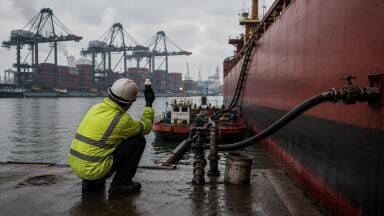
It's no secret that China is plagued with a life-threatening air pollution problem. Now, the People's Republic has acted and banned high-sulphur diesel. Introduced on November 1, Beijing has confirmed that it will cease all domestic sales of diesel with sulphur content levels of more than 10 parts per millions. The "dirty" fuel is typically used by tractors and ships, with the ban set to play an important role in helping to clean up the nation's pollution choked air.
The ban was announced just ahead of the winter season, which sees pollution levels spike across China. As temperatures plummet the nation burns more coal to heat its buildings, which in turn triggers an air pollution surge. The government has also banned winter construction, including major public projects like housing and road repairs. The sanction will span from November 15 to March 15 and is also designed to help Beijing hit key smog targets. Air pollution is now classed as a nationwide crisis, with studies suggesting that one third of Chinese deaths are linked to toxic smog. This puts it in the same category as smoking.
According to analysts, the ban could force Chinese oil companies to ship surplus high-sulphur diesel overseas.
“Companies may have extra high-sulphur diesel to sell as they replace storage tanks with cleaner fuel,” comments a fuel marketing manager representing PetroChina.
The biggest challenge will be executing and enforcing the ban, with analysts pointing out that the government’s quality inspectors only have the power to run random checks. That said, China’s National Development & Reform Commission has warned that it will be cracking down hard on entities that don't meet the government standards. It also added that it will be increasing its supervision of both major refiners and rural gas stations across the country.
As a result, this could tempt both dealers and factories to continue using high-sulphur diesel. To cope with the new laws, Chinese refiners have drastically increased imports of low-sulphur crude, with imports of Russian grades rising to a record high in September.
For a closer look at how refineries determine total sulphur content 'Productivity Boost in Sulphur (UVFD) Routine Analysis' spotlights the latest combustion-coupled UV-fluorescence technique. Independent of analysing feeds, process streams or ultra-pure final products, it delivers “real” information about sulphur content in the shortest possible time.
PIN 27.4 Aug/Sept 2026


 Product directory















.jpg)





.jpg)
.jpg)