Measurement and testing
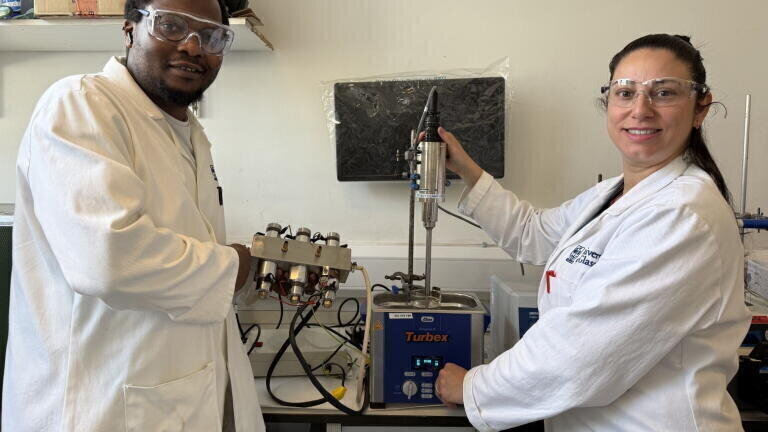
Researchers at the University of Glasgow have developed a novel dual-frequency ultrasound process capable of breaking down Bisphenol A (BPA), a widely used petrochemical building block for polycarbonate plastics and epoxy resins, into harmless byproducts.
BPA, produced globally in millions of tonnes each year, is valued for its durability in plastics but faces increasing scrutiny for its potential health and environmental impacts. It can leach into industrial effluent and surface waters from manufacturing sites, product degradation, and landfill runoff.
The Glasgow team’s method uses two ultrasound frequencies (20 kHz and 37 kHz) at the same time to create tiny cavitation bubbles in water. When these bubbles collapse, they produce intense localised heat and pressure, generating highly reactive radicals that completely break down BPA into CO₂ and water, without forming secondary waste streams.
In laboratory trials, the system achieved 94% BPA removal and a 67% reduction in chemical oxygen demand (COD) within 40 minutes. The method requires no chemical additives and provides a compact, energy-efficient alternative to traditional treatment methods like activated carbon adsorption or ozonation.
Although still in the pilot stage, the researchers believe the process can be expanded for use in industrial wastewater treatment plants serving sectors such as petrochemicals, plastics manufacturing, and landfill leachate management. If successful, it could offer producers and downstream industries a practical way to meet tightening environmental regulations on micropollutants.
Lead author Shaun Fletcher commented: “Our dual-frequency system shows that ultrasound alone can break down BPA effectively, without needing extra steps or materials. It’s a clean, direct solution.”
Dr Lukman Yusuf, co-author, added, “We’re building on earlier work that showed similar success with other pollutants like methylene blue. The goal now is to adapt this for broader applications, including ‘forever chemicals’ like PFAS.”
With global pressure mounting to address microplastic-derived pollutants, such innovations could help petrochemical operators meet environmental targets while protecting water quality.
PIN 27.4 Aug/Sept 2026

 Product directory


.jpg)
.jpg)





.jpg)