Measurement and testing
Published over 17 years ago. See the latest and most current information on Measurement and testing.
M&C (Germany) has developed a special sampling technique for continuous measurement of flue gas from DENOX (SCR) plants where NH3 or Urea is added to reduce NOx. This new sampling technique has also proved beneficial for other processes with problematic salt formation, e.g. glass production and FCC on refineries.
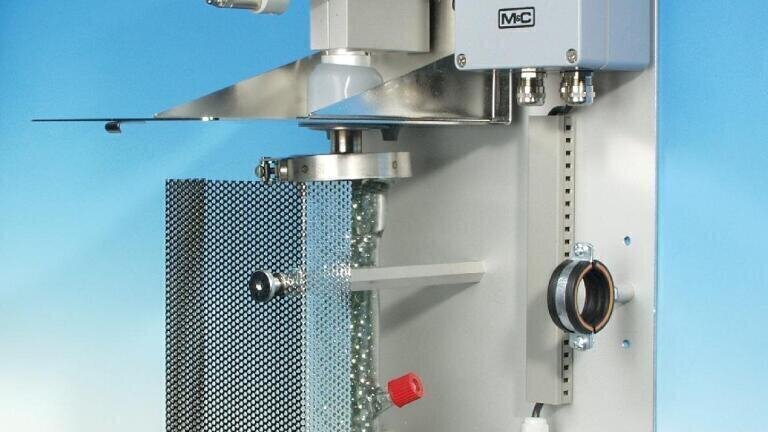
With temperatures of < 300°C, ammonium salts can form from the chemical reaction of free NH3 and SO2/SO3 in the flue gas. This salification blocks up filters and sample lines in a short time. The special M&C gas sample probe SP2000-H320/S offers a good solution. In order to prevent blockage due to salification, the probe temperature is controlled above 300°C, keeping the salts in the vapour phase. At the outlet of the probe filter, the gas passes into a glass separator vessel filled with glass balls to extend the surface for salt formation. Inherent moisture and solubility of salts means the resulting solution can be easily pumped away, providing a self-cleaning mechanism. A range of accessories complement this probe including different probe tube materials, calibration gas management, blow-back and external temperature control.PIN 27.5 Oct/Nov 26


 Product directory


.jpg)






.jpg)


.jpg)