Fuel for thought
Published over 12 years ago. See the latest and most current information on Fuel for thought.
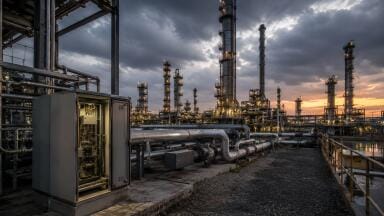
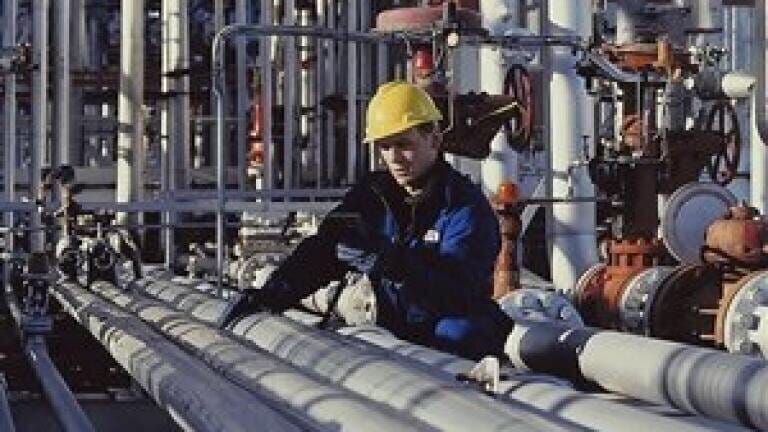
Once it has been taken from the ground, crude oil is sent to a refinery to be distilled into a variety of fuels and commodities. The refining process will differ depending on which outcome is desired. However, the general process remains the same, and comprises of three stages. These are separation, conversion and treatment.
The various components (or fractions, as they are better known) of crude oil have different weights and boiling points. Consequently, they can be separated out effectively. This is done by heating the oil in furnaces and piping the liquids and gases which are produced into distillation units.
In these units, the liquids and gases will separate into their distinct fractions depending on their weight. Lighter fractions vaporise and rise to the top of the unit, where they will return to liquid form via condensation. These will be converted into gasoline and liquid petroleum gas (LPG).
Liquids of medium weight will remain in the middle of the unit. These will be converted into such fuels as kerosene and diesel.
The heaviest liquids with the highest boiling points will settle at the base of the unit. These are less desirable and are often worked upon further to turn them into more useful substances.
It is also important in the separation process to detect and eliminate harmful or corrosive fractions in the oil. This can be achieved through the use of special equipment. One such product, the PAC Antek MultiTek, is unique due to its ability to detect nitrogen, halides and sulphur all at once. For further information on this particular product read this article: Detect Unwanted Chemicals and Corrosives in Your Refinery Process.
Another method of sample analysis is wavelength dispersive x-ray fluorescence analysis, known as WDXRF or simply XRF for short. The article, Changing Crudes, New Analysis Methods, discusses this particular technique in more detail.
Once the fractions have been separated out, they must be converted into useful, finished fuels. The most common method of conversion is cracking, which uses heat and pressure to “crack” the heavier fractions into lighter ones, thus making them more desirable.
However, cracking is not the only form of conversion. One such example is alkylation, which takes the by-products of cracking and then combines them together to make gasoline. In effect, this method is sort of like reverse-cracking.
Another method is reforming, which converts naphtha into high-octane gasoline fractions by applying modest pressure, heat and other, outside catalysts.
The final part of the jigsaw in converting crude oil into petroleum fuels is the treatment stage. This is where specialists carefully combine a delicate variety of different fractions, depending on their vapour pressure, octane levels and other considerations. After the treatment stage, the product is ready to be piped out to storage facilities in the refinery’s vicinity; and from there, across the country.
PIN 27.4 Aug/Sept 2026


 Product directory


.jpg)