Fuel for thought
Published over 10 years ago. See the latest and most current information on Fuel for thought.
While most environmentalists are gravely concerned that the world is bleeding oil and gas reserves dry, BP is remaining surprisingly cool, calm and collected about the so called crisis. In fact, the oil and gas giant maintains that global reserves could increase by over 50% by 2050, despite the booming demand for consumption.
What makes BP so confident? According to the company’s inside information existing and emerging technologies hold the key to unlocking a glut of global reserves.
David Eyton, BP Group head of technology explains that when considering an array of different energy types including nuclear, wind and solar, the world is currently sitting on more than 20 times what it needs over the next 35 years.
"Energy resources are plentiful. Concerns over running out of oil and gas have disappeared," he explained at the launch of BP's inaugural Technology Outlook project.
So what kinds of technologies is Eyton talking about? Over the past few years oil and gas companies have invested huge amounts of capital into using chemicals, super computers and robots to squeeze out every last drop. If these technologies are leveraged to their full potential global fossil fuel resources could skyrocket from 2.9 trillion barrels to 4.8 trillion by 2050. If even more research was channelled into the cause Eyton is adamant that reserves could hit a huge 7.5 trillion!
"We are probably nearing the point where potential from additional recovery from discovered reservoir exceeds the potential for exploration,” he adds.
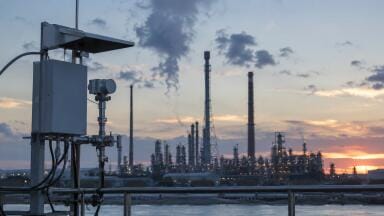
The oil and gas industry is continually evolving thanks to cutting edge new technologies. As well as aiding the extraction process, next generation equipment is also being used to augment safety in the workplace. Written by Dr. Werner Haag, Senior Applications Chemist at Ion Science, ‘Advance in PID Technology Give Resistance to Humidity Effects and Allow Continuous, Benzene-Specific Monitoring’ discusses recent advances in Photo-Ionisation Detector (PID) technology, with a particular emphasis on the petrochemical industry.
Across the globe petrochemical plants manufacture a variety of industrial chemicals such as solvents, dyes, lubricants, detergents, plastics, synthetic rubbers, pharmaceuticals, process oils, resins, asphalt, wax and coke. The employees that man these hazardous environments are at continuous risk of exposure to toxic compounds including benzene, toluene, ethylbenzene, & xylenes (BTEX), butadiene and other volatile organic compounds (VOCs), The article explores the importance of monitoring employee exposure to these compounds, and how advances in PID Technology can assist.
PIN 27.4 Aug/Sept 2026




 Product directory


.jpg)