Fuel for thought
Published over 12 years ago. See the latest and most current information on Fuel for thought.
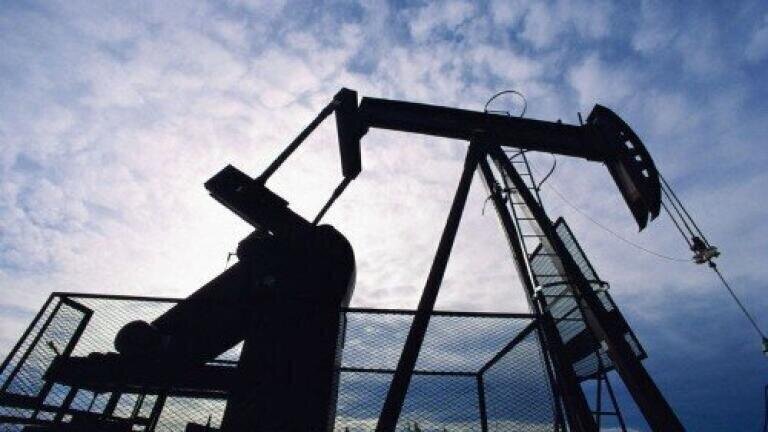
A subsurface oil reservoir is an underground pool of oil and water, which has collected due to the local geological formations. The oil and water are found in porous rocks like sandstone and limestone, or semi-porous rocks like shale. Above the porous rocks lie non-porous rocks, with a different mineral type and structure. These stop the oil from travelling further or evaporating.
Pool is perhaps a misplaced name for the oil in a reservoir. The sandstone and limestone are coarse-grained rocks that allow oil to penetrate and become trapped in the tiny gaps between the grains. The amount of oil that a rock can hold is known as its porosity. The higher the porosity — the more oil a rock can hold. Although a sponge analogy can be used to describe the saturation of the rocks with oil, if the rock were on the surface, the oil would not flow from the pores and the rock could not be squeezed like a sponge.
Various geophysical techniques are used to find rock formations likely to hold oil. Once a formation is found it is important to find out how much oil it holds. The term for the quantity of oil in a reservoir before it is drilled is ‘original oil in place’ (OOIP). Once drilling starts OIP is used to designate ‘oil in place’.
There are two main methods for determining the quantity of oil in a reservoir. A volumetric method and a material balance method:
There are several volumetric methods used to calculate OOIP, and there has been work to standardise the calculation worldwide. One of the main methods involves the equation:
Where:
One of the problems with the method are the approximations used, these can lead to poor estimations.
Of perhaps more importance than OOIP — is the recoverable oil volume. This is found by multiplying the OOIP by a recovery factor. The recovery factor is what fraction of oil is economically and practically recoverable.
Once drilling is under way, samples of fluids and physical measurements such as oil pressure can be made. This leads to more accurate assessments of recoverable oil volumes using the material balances method. The impact of using estimates to calculate oil reserves is discussed in: Monterey shale reserves estimate cut by 96%.
PIN 27.4 Aug/Sept 2026



 Product directory


.jpg)