Fuel analysis
Published over 6 years ago. See the latest and most current information on Fuel analysis.
In October 2016 it was decided by IMO to introduce a global limit for sulphur in fuels used on board of ships. This so-called "Global Sulphur Cap" (capping the global fuel sulphur at 0.5%) has been enforced on 1 January of this year (2020). From this date the shipping industry has two options:
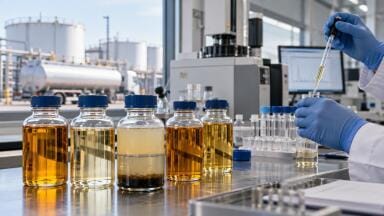
This new situation has introduced a big challenge to the shipping industry and its fuel supply chain. The fuel suppliers will need to deliver a fuel which meets the parameters agreed between the supplier and user of the fuel. The fuel users will have the responsibility that the fuel will be handled correctly and safely on board, causing no engine failures when fuels are switched (even fuels which fully meets the statutory reguirements (ISO 8217) will require treatment on board of ships).
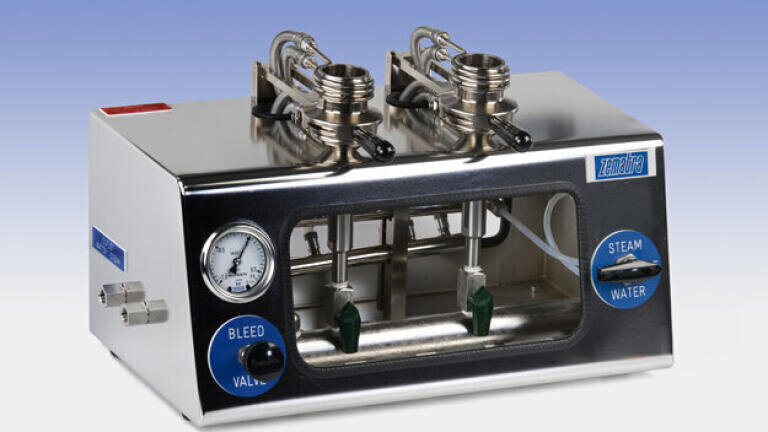
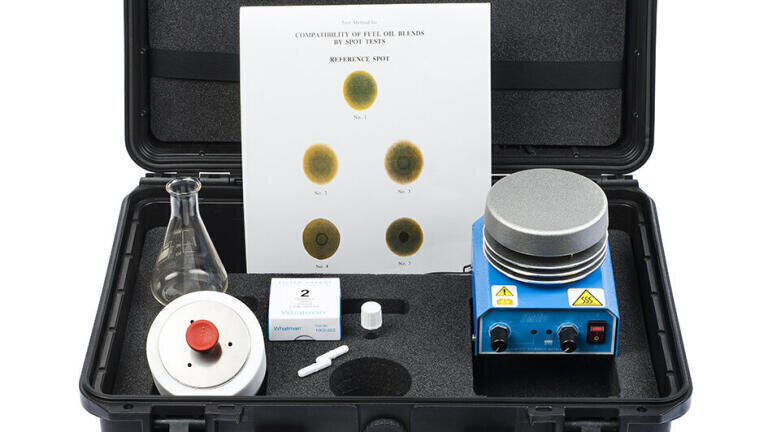
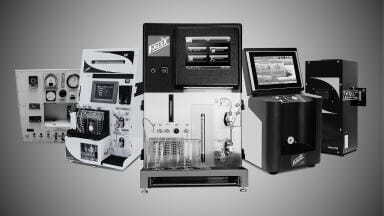
Test methods for evaluation the stability and compatibility of a fuel are the Total Sediment Test (IP375/ISO10307/D4870) wich is a filtration test and the so-called spot test (D4740). Zematra is a producer and supplier of both methods. Zematra has developed an improved version of the Total Sediment Test available in a 2, 4 and 6 position version. The Zematra modified ASTM D4740 is a portable test kit which can be used on board of ships, we also supply a lab version and since 2018 there is an automated version available through Zematra produced by AD Systems.
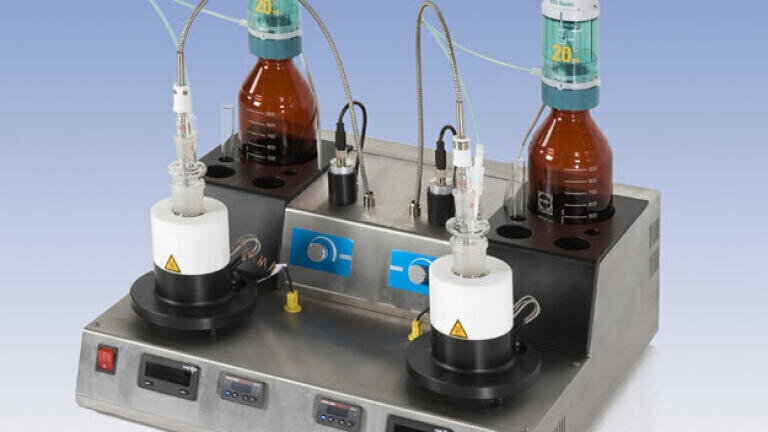
A method for predicting the stability reserve which can be used for blending purposes (determine compatibility ratio) is the ASTM D7060. Zematra is the producer and supplier of the instrument for this method. The Automated Stability Analyser (ASA), calculates the Po and Frmax numbers, which can be used for blending calculations (correct mixing ratio of fuels). Four blends of the fuel are prepared, fuel is mixed with 1-methylnaphtalene (aromatic solvent) in 4 different ratios. These blends are then titrated with hexadecane (non-aromatic solvent). After completion the software calculates the Po, Frmax and P-ratio (P-value). These values can be used for blending calculations with another fuel (mixing ratio).
For more information send us an email.
PIN 27.4 Aug/Sept 2026



 Product directory


















.jpg)