Fuel analysis
As the fuel landscape evolves, so does the need for greater flexibility in ignition quality testing. The growing diversity of alternative, synthetic, and renewable fuels has made it increasingly important for researchers to explore fuel behaviour beyond the limits of conventional test methods.
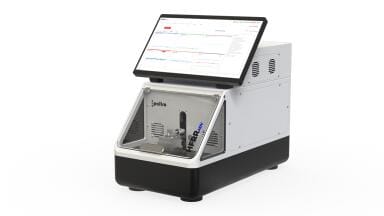
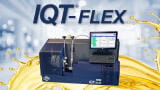
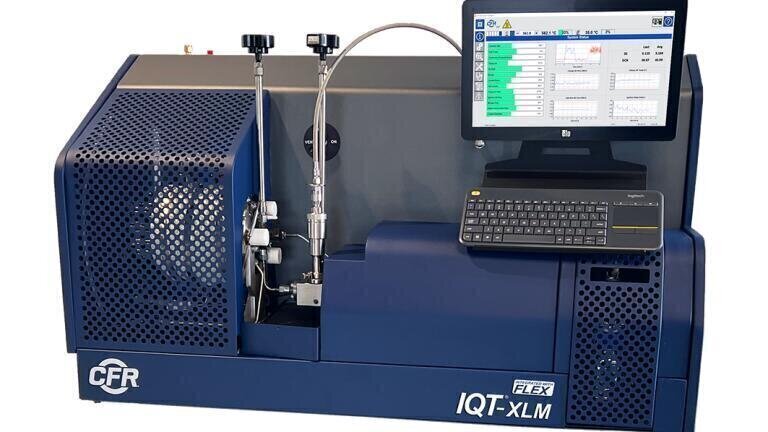
To address this need, the IQT® brand, powered by CFR Engines Inc, has introduced the IQT-FLEX - a research model parallel to the IQT-XLM that provides a new level of testing freedom.
Designed specifically for research environments, the IQT-FLEX combines the proven robustness of the IQT-XLM platform with advanced software that enables users to conduct experiments under a wide range of non-standard test conditions. The result is a system that empowers universities and research laboratories to push scientific boundaries while maintaining precision and reliability that have made the IQT family the global benchmark for Derived Cetane Number (DCN) testing.
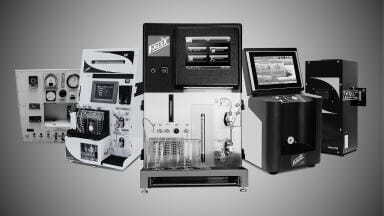
The IQT has a legacy of reliability and precision that has long been associated with the compliance in established standards such as ASTM D6890, EN 15195, and IP 498. However, researchers have often sought the ability to investigate ignition phenomena under conditions that extend beyond those defined in standard methods. The IQT R&D team recognised this demand early on. The legacy IQT-LM and TALM models previously offered a Flexible Research software option that allowed users to modify operating parameters for experimental work. The 2024 next generation of IQT, the IQT-XLM, introduced a new data acquisition and control architecture. The IQT R&D team again saw the opportunity to reimagine this flexibility for a new generation of researchers. The outcome is the IQT-FLEX, an enhanced software configuration purpose-built to enable custom test design, variable ignition parameters, and extended data acquisition - all while retaining the safety, repeatability, and accuracy associated with IQT systems.
The IQT-FLEX offers research-grade control and customisation for users conducting advanced ignition studies. It operates as an add-on software upgrade to the standard IQT-XLM, allowing laboratories to seamlessly switch between standard compliance mode and research mode within a single system. This dual-mode functionality ensures that the same instrument can be used both for regulated testing and for experimental research - a cost-effective and practical solution for university and industry labs alike.
The IQT-FLEX enhances the experimental capabilities of the IQT-XLM with new features and adjustable parameters that support a broad range of scientific investigations. It supports higher operating limits, including up to 375 psi charge air pressure and 750°C combustion chamber temperature, allowing researchers to simulate diverse engine conditions. The system offers flexible test conditions, enabling precise control of temperature and pressure to investigate ignition delay and combustion kinetics. It also supports low-ignition-quality fuels, accurately measuring fuels with ignition delays up to 600ms, which is ideal for studying renewable, synthetic, and low-reactivity fuels. Additionally, users can configure the test design, adjusting pre-injections, main injections, and test duration to explore specific combustion behaviours. Custom calibration options allow for the development of specialised curves for experimental fuels, broadening the scope of research. Furthermore, the IQT-FLEX automatically saves every pressure trace, ensuring complete data capture for detailed analysis and model development. These features make the IQT-FLEX an invaluable tool for both fuel formulation studies and fundamental combustion research.
The flexibility of the IQT-FLEX makes it a valuable tool for exploring sustainable aviation fuels (SAF), renewable diesel, e-fuels, biofuels, HVO and Gas to Liquid fuels - all of which exhibit ignition characteristics that may fall outside conventional cetane testing boundaries. By supporting renewable diesel, Biodiesel, HVO and synthetic fuels, the IQT-FLEX allows researchers to examine ignition phenomena under realistic engine conditions, gaining critical insights into temperature-pressure-ignition interactions that guide cleaner combustion design. Researchers can now evaluate how variations in pressure and temperature affect ignition delay and combustion phasing. These insights are crucial for developing cleaner, more efficient fuels and for supporting global initiatives to reduce carbon intensity in transportation sectors. For universities and research institutes, the IQT-FLEX provides a platform to develop new testing methodologies, explore alternative combustion regimes, and contribute directly to the advancement of environmentally responsible fuel technologies.
The launch of the IQT-FLEX reinforces the long-term commitment of the IQT brand to serving the Research Institutions segment. By providing a research-grade solution for the next generation of IQT instruments, the brand ensures that its partners in academia and R&D can continue to rely on the IQT platform for both standardised compliance and innovative experimentation. Customer demand has been a key driver of this development. Many universities and laboratories expressed the need for a research mode compatible with upcoming IQT-XLM installations. The engineering and software teams responded by developing the IQT-FLEX as an upgradable future-ready solution that maintains the IQT reputation for precision while expanding its scientific capabilities.
The IQT-FLEX marks a significant evolution in ignition quality testing — bridging the gap between standardisation and exploration. By empowering researchers to operate beyond the confines of conventional parameters, it supports the discovery of new insights into fuel ignition behaviour, combustion efficiency, and emissions reduction. As the world accelerates toward cleaner energy systems, tools like the IQT-FLEX will play a crucial role in enabling data-driven progress. The IQT R&D team invite universities and R&D organisations to collaborate in shaping the next generation of ignition quality research - one experiment at a time.
PIN 27.4 Aug/Sept 2026




 Product directory