Fuel analysis
From international fuel research consortia to private innovation labs, momentum around Sustainable Aviation Fuel (SAF) is growing at an unprecedented pace. Reflecting upon extensive travels this year and participating in key industry events - including the EI UK MOD Aviation Fuels Conference in Manchester, the ASTM D02.J Aviation Fuels and SAF Standards meeting in Brussels, the CRC Aviation Committee Meeting at the University of Dayton, and International Conference on Sustainable Aviation Research (ICSAR) at Trinity College in Dublin - it’s clear that the global SAF/SATF market is rapidly gaining traction. Through conversations with OEMs, global petroleum stakeholders, clearinghouses, and research institutions, one message stands out: momentum is building, and the demand for scalable, certifiable, and efficient solutions has never been greater.
Governments across the globe have set ambitious sustainability goals. The European Union’s Refuel EU Aviation initiative mandates that SAF comprise 2% of jet fuel by 2025, ramping up to 70% by 2050. The United States, under the SAF Grand Challenge, aims to produce 3 billion gallons of SAF annually by 2030. In Japan, India, and Canada, national sustainability programs are linking aviation reform to broader climate targets. Meanwhile, the UK’s Jet Zero Strategy is integrating SAF with infrastructure modernisation efforts. The global consensus is clear: decarbonising aviation hinges on the commercial viability of SAF.
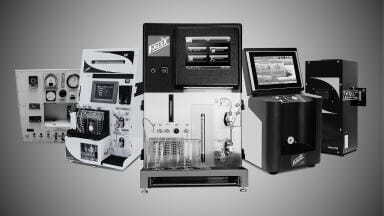
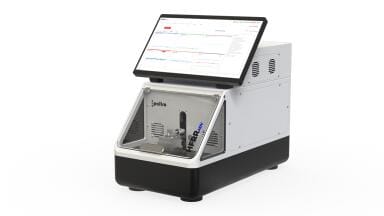
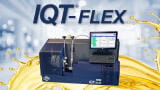
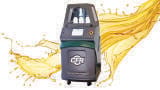
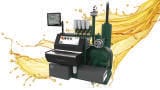
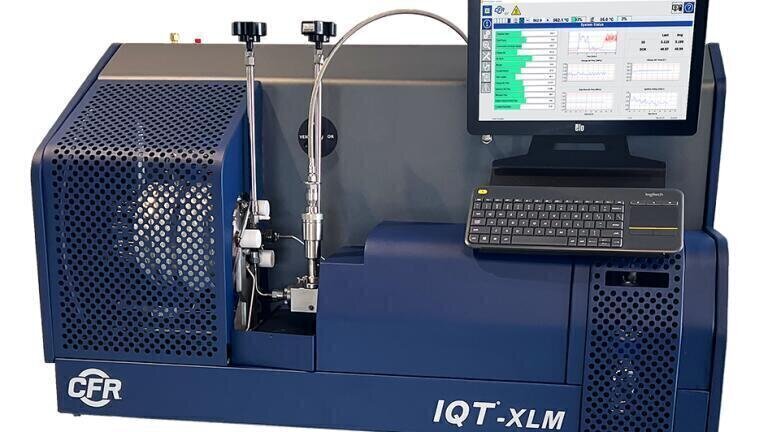
Central to this transition is accurate fuel evaluation. This is where the CFR Ignition Quality Tester (IQT®) has become invaluable. While originally built for testing Derived Cetane Number (DCN) in diesel fuels, the capabilities of IQT extend well into the realm of jet fuel. SAF candidates must pass ASTM D4054 - the international gold standard for qualifying new aviation turbine fuels. A key risk it screens for is lean blowout, where the flame inside a jet Turbine engine extinguishes mid-flight due to poor ignition quality. DCN helps predict this, and the IQT ASTM D6890 and the EN15195 (IP498) methods remain the most trusted approach for this measurement.
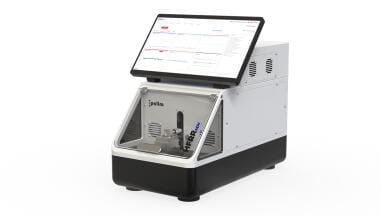
In response to growing SAF demand, IQT has evolved. The latest IQT-XLM model features advanced software, digital control enhancements, and ultra-low sample volume requirements - enabling full DCN analysis with only 10 mL of fuel, and partial evaluation with 5mL. This is critical for early-stage SAF projects where sample volumes are limited.
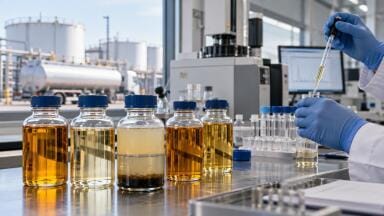
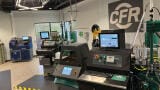
During the recent ICSAR event at Trinity College, attendees were presented with an illustration of this and later embarked on a lab tour and an illustration of its operation was conducted by trained CFR Product Experts demonstrating its robust output and minimal fuel consumption. Leading institutions like Southwest Research Institute (SwRI), Sheffield University, and Trinity College are now routinely using the IQT Instrument for DCN testing of SAF as a preference for their research. Their endorsement underscores IQT’s standing as a cornerstone of SAF certification.
The IQT is not limited to aviation. It is also widely used for evaluating renewable diesel and GTL (Gas-to-Liquid) fuels. In Europe, IQT’s EN 15195 method is the referee method for cetane determination under EN 15940 - the diesel fuel standard for synthetic and paraffinic fuels. With deployments across North America, Canada, South America the UK, Europe, South Korea, Singapore, Asia Pacific and the Middle East, the IQT has truly global reach.
Beyond standard labs, there’s a collaborative wave of innovation. Universities, research hubs, and national labs are actively developing synthetic fuel technologies. The RMI SAF database, ICAO’s SAF research archives, and IATA’s SAF sustainability initiatives are valuable resources accelerating this ecosystem. These programs promote shared methodologies, data transparency, and regulatory harmonization - ensuring innovations in the U.S. align with SAF evaluations in the EU or Japan.
The IQT combustion chamber (CVCC) design provides unmatched flexibility in fuel analysis. The system supports high throughput, repeatability, and stable performance across petroleum-derived jet fuels, Hydro processed Esters and Fatty Acids (HEFA), Fischer-Tropsch fuels, Alcohol-to-Jet (ATJ) fuels, and emerging pathways like Power-to-Liquid (PtL). This makes IQT adaptable to where SAF is heading including complex synthetic blends and second-generation biofuels.
Looking forward, industry cooperation is key. The drive toward net-zero emissions is not a competition - it is a collaboration. SAF is a bridge technology, allowing existing fleets to fly cleaner, while enabling long-term transition. Accurate, reliable tools like the IQT enable this vision. They empower researchers, streamline certification, and ultimately help aviation meet the climate challenge head-on.
Whether in the lab or on the runway, the IQT is fueling the future of flight - one test at a time.
PIN 27.4 Aug/Sept 2026


 Product directory


.jpg)