Fuel analysis
Published over 4 years ago. See the latest and most current information on Fuel analysis.
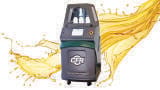
ASTM® standards D2699 (RON) and D2700 (MON) incorporate three separate procedures for determination of Octane Number. While CFR Engines Inc. (CFR) combination carburettor bowls are suitable for use in any of the procedures, this piece will focus on performing procedure B…falling level. The falling level procedure when coupled with the CFR’s expandable control platform (XCP™) offers operators repeatability, reproducibility, traceability, simplicity, ease of training and conformance to ASTM® D2699/2700 and ISO 17025.
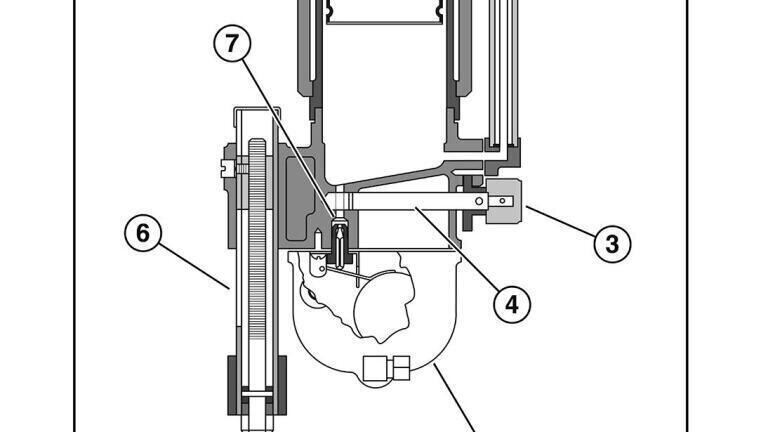
When the fuel delivery valve is turned to the closed or the falling level (FL) position, the float chamber becomes a falling level reservoir. The fuel reservoir, filled to a higher level than that required for maximum Knock Intensity (KI) delivers fuel through a fixed bore horizontal jet. The jet is sized to allow peak KI to fall within the sight glass limits of 0.7 and 1.7. As the engine consumes fuel, knock intensity first increases, passes through maximum knock fuel level, and then decreases as leaning of the mixture continues. Fuel level changes automatically at a constant rate established by the cross-sectional area of the fuel reservoir and associated sight glass assembly. CFR’s XCP™ automatically records the KI incrementally during this process arriving at a maximum KI Typically, two combination carburettor bowl/float chamber assemblies are used for primary reference fuel blends and the other(s) are used for sample fuels. This process is achieved for the test sample as well as the reference fuel brackets. The XCP™ automatically calculates octane number and records environmental data throughout the test.
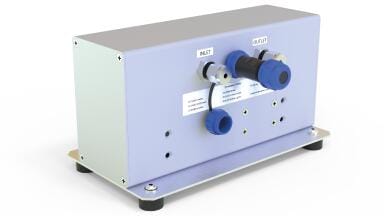
As an added benefit, the CFR combination carburettor bowls and float chambers are offered with an optional heat exchanger to cool more volatile fuels to 33-50F (.6-10C) to prevent premature evaporation.
PIN 27.4 Aug/Sept 2026

 Product directory


.jpg)