.jpg)
Fuel analysis
Published over 5 years ago. See the latest and most current information on Fuel analysis.
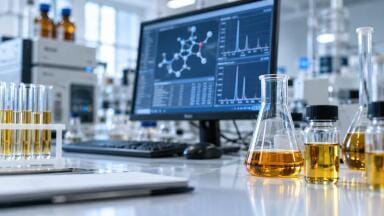
Octane levels play an important part in determining the performance, efficiency and suitability of fuel. Testing for the research octane number (RON) and motor octane number (MON) is a useful way to profile fuel and determine how much compression gasoline can withstand before combusting in the engine.
Want to know more about these oil and gas acronyms? Read on for a closer look at RON and MON, what they mean and why they matter.
The research octane number indicates the combustibility of engine fuel at low speeds and temperatures. It’s designed to reflect the behaviour of fuel under idling conditions and during acceleration. The higher the RON rating, the more compression it can withstand in a spark-ignition engine before igniting. In the UK, the standard RON rating is 95, with all cars built to run efficiently on this fuel grade. Higher octane fuels can have RON ratings as high as 97, 98 and even 100. These come with a higher price tag and are generally favoured by motorists with high-performance vehicles.
At the forecourt, motorists use RON ratings to decide what fuel grade to purchase. RON ratings are also used by petroleum refiners, engineers, car manufacturers and fuel marketers to determine price and optimise fuel/engine pairings.
The motor octane number denotes how a fuel behaves at full-throttle range. The rating is calculated at high speeds and temperatures designed to simulate fuel combustion on motorways and highways. When the MON rating is too low, the air/fuel mixture doesn’t combust properly in the engine and creates a pinging sound known as “knocking”. Optimising fuel and engine pairings is one of the key uses of MON.
Standardised test methods are used to calculate RON, including the ASTM D2699. The laboratory test method uses a single cylinder, four-stroke cycle Cooperative Fuels Research engine. Developed in 1928, the standardised engine remains a cornerstone of the fuel testing sector and is used in laboratories around the world. The ASTM D2700 method is used to determine MON, with testing also carried out using a standardised Cooperative Fuels Research engine. Once calculated, RON and MON are used to develop a final octane number. This is calculated using the average of the two different ratings.
From improving engine performance to minimising emissions, octane ratings are fundamental to the fuel industry. Want to know more about the latest methods used to calculate RON and MON? Authors Dr. Raj Shah, Dr. Vikram Mittal and Mr. Nathan Aragon introduce the next-generation technologies utilised by modern laboratories in ‘Why are RON and MON Important? (Testing for RON/MON using an Octane Engine).
PIN 27.5 Oct/Nov 26

 Product directory


.jpg)














.jpg)