Fixed gas monitor
Published over 4 years ago. See the latest and most current information on Fixed gas monitor.
Benzene is a carcinogen that is a constant hazard to workers in asphalt production, therefore managing exposure and risk is vital for ensuring their safety. ION Science has developed the world’s only fixed gas detector specifically targeting benzene.
Asphalt, or bitumen, is widely used in the construction of roads, pavements; producing such a widely used building material is a global industry. Benzene is emitted throughout the whole asphalt manufacturing process, being derived from crude oil, a product with naturally occurring benzene.
Thousands of people are involved in the global manufacture and handling of asphalt, so protecting personnel against benzene exposure is a top priority. While some legislation exists, for instance: the UK’s DEFRA Process Guidance Note 6/42 (13), which sets out annual extractive testing for bitumen related processing, OSHA has not passed any laws specific to asphalt fumes and preventative measures, other than their existing general respiratory and PPE safety regulations. There are some laws that address general emissions, VOCs, and carcinogens associated with asphalt production, but very little current legislation specific to benzene exposure.
With schemes such as the UK’s Road Improvement Scheme 2 and Norway’s Route E39 coastal highway scheme, which includes an underwater floating tunnel, asphalt will be a crucial ingredient for developing infrastructure for the foreseeable future. Asphalt manufacturers are trying to get ahead of the upcoming law changes by opting for a ‘safety first’ mentality and deploying additional or updated benzene monitoring systems to production sites.
Long term benzene exposure, from a little as 5 years, can result in blood disorders, cancers, and pregnancy risks. Businesses must protect their staff appropriately against benzene exposure, even if it is not a current legal requirement.
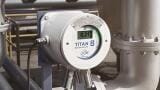
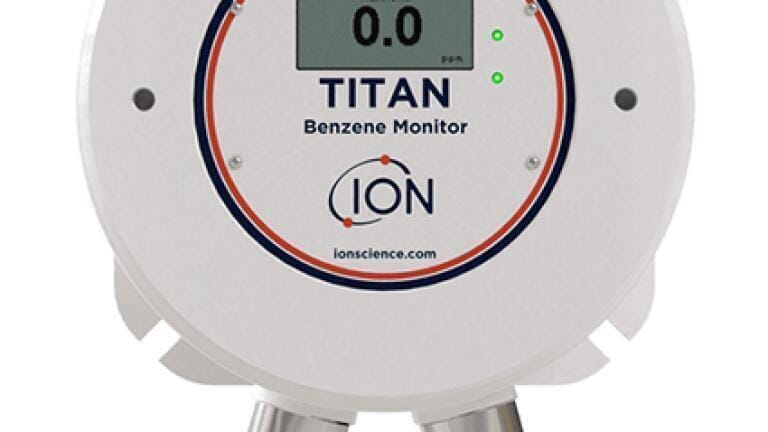
ION Science, a globally renown manufacturer and developer of PID (photo ionisation detection) technology, has developed the only fixed detector specifically for the detection of benzene. The Titan is the world’s only fixed gas detector designed only for the monitoring of benzene. This makes it the perfect choice for use in asphalt manufacturing plants, where benzene is likely to be the most prominent VOC (volatile organic compound) that requires management and monitoring.
As a fixed gas detector, the Titan can be deployed at regular distances around manufacturing plants, and thanks to its ‘plug and play’ installation approach, this device can be left to monitor without intervention. Two alarm systems can be set according to the operator’s criteria, while another 2 are pre-set relays for instant warnings, to ensure that exposure incident is ever overlooked.
The Titan provides continuous real-time data of VOC concentrations in the air; it takes samples every minute achieving an accuracy of 0.1ppm or +10%, whichever is greater. The Titan is built around ION Science’s industry leading PID technology and includes a 10.6 eV lamp that comes with a minimum one-year guarantee for performance. Servicing is only necessary every 6-12 months for the entire instrument, making it the perfect choice for larger plants needing multiple units for wide-range monitoring capabilities.
PIN 27.4 Aug/Sept 2026




 Product directory



















-EN-2.jpg)