Analytical instrumentation
Published over 14 years ago. See the latest and most current information on Analytical instrumentation.
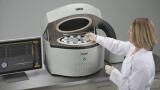
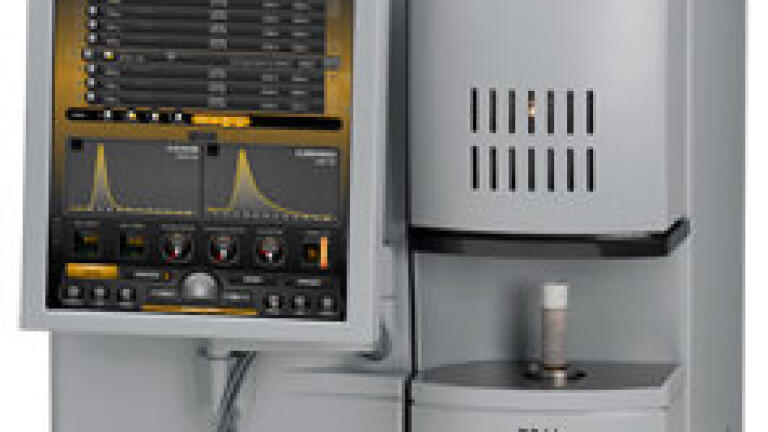
Leco (USA) have introduced their CS844 explaining that it will redefine the way you determine carbon and sulphur in primary steels, ores, finished metals, and other inorganic materials. A high-efficiency combustion furnace offers the more efficient combustion of a wide variety of samples and keeps dust and splatter to a minimum. An improved IR cell design with thermostatic construction provides increased protection from ambient temperature fluctuations, and offers dual-range detection for both carbon and sulphur. Additional features such as a high-velocity HEPA vacuum system for dust removal and 10- and 60-position sample autoloaders make the CS844 Series a valuable resource for any industrial environment needing accurate analysis of carbon and/or sulphur.
The CS844 uses an on-board software platform known as Cornerstone, designed exclusively by LECO software engineers. Cornerstone is optimised for use with a touch-screen monitor mounted onto the front of the instrument by a fully-adjustable, six-axis boom. By having immediate control of all instrument functionality right at the instrument, the user benefits from increased usability, improved ergonomics, and a decrease in the cost-per-analysis.
PIN 27.4 Aug/Sept 2026


 Product directory


.jpg)










.jpg)

.jpg)