Analytical instrumentation
Published over 14 years ago. See the latest and most current information on Analytical instrumentation.
In recent years, different manufacturers have developed their own versions of the Oxygenated PLOT Column (OP). These columns are specifically designed for the analysis of oxygenated compounds at ppm levels in different hydrocarbon matrices. The development of these new columns has opened the door for other interesting applications.
The fact that DCG Partnership (USA) can have a chromatogram with a front end of hydrocarbons and then, well separated, all the oxygenated compounds, means they can inject a large amount of sample, have a large peak of the matrix in the front, and after that all your trace level analytes, oxygenated or other heteroatomic compounds. These will come in peaks big enough to make a good analysis, even on a regular FID. This is an application they use in their lab for testing their standards, but it can be very useful in environmental applications, like air analysis, for example.
In this occasion DCG presents some results in the analysis of different heteroatomic hydrocarbons: O, Cl, S, in air, using an arrangement with this column: the OP columns were tested alone and connected to other columns of different polarities: DB1 and DB5, using gaseous blends required for our customers. The most simple and successful configuration was:
10m RTX1 530µm 0,5µm
+10m Oxyplot 530 µm
+2m RTX1 530 µm 0,5 µm
The columns were directly connected one to the next using glass connectors. Split injection and FID detector was used, with different pressure, flow and temperature conditions. No backflush was performed.
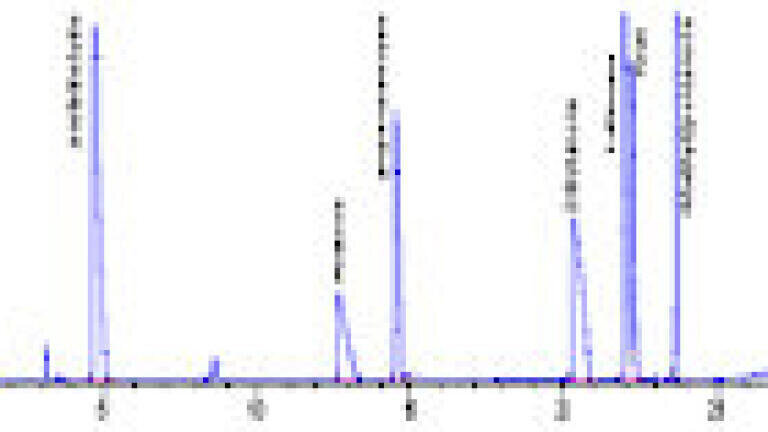
The attached figure shows examples of tests made to standards they prepared for some customers for air analysis.
As we can see, a very good sensitivity can be achieved in all the cases, in fact, the detection limit for species like methylthiophene, chloropentane or pentanone can be below 1 µg/g.
Conclusions:
In the specific case of preparation of standards, normally made in clean pure compounds, this simple configuration is very useful as support for the quality control of their blends using specific detectors.
Real samples can be used for trace analysis of most heteroatomic compounds. They have made some analysis in air, natural gas, refinery gases, and other gaseous samples, at levels as low as 1 µg/g, with very good results. DCG Partnership 1, Ltd. customs blends these types of standards as well as many others. Their calibration standards are: Primary Reference Standards, ≤1% gravimetric uncertainty per component at the 99.5% confidence interval. NIST Traceable by weight with the gravimetric values verified by one or more analytical techniques - NIST Certificate #'s: 822/272801-06, 822/278785-10. Where applicable, their Reference Standards meet or exceed the following guidelines: ISO 6142, ISO 6143, GPA 2198, API 14.1.6.2 and API 14.1.6.3.
PIN 27.4 Aug/Sept 2026



 Product directory


.jpg)










.jpg)
.jpg)