Analytical instrumentation
Published over 6 years ago. See the latest and most current information on Analytical instrumentation.
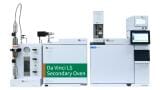
Gas streams from process plants may vary greatly in compositional concentration ranges. Consequently, different sample streams could require adjusted sample introduction procedures for the GC analysis, such as purge time, sub ambient sampling pressure or inert gas flushing. Due to these variations the gas sampling and analysis may be challenging for the operator. Da Vinci Laboratory Solutions (DVLS) offers a turnkey gas chromatographic (GC) solution for the automated sampling, flushing and GC analysis of complex gas streams.
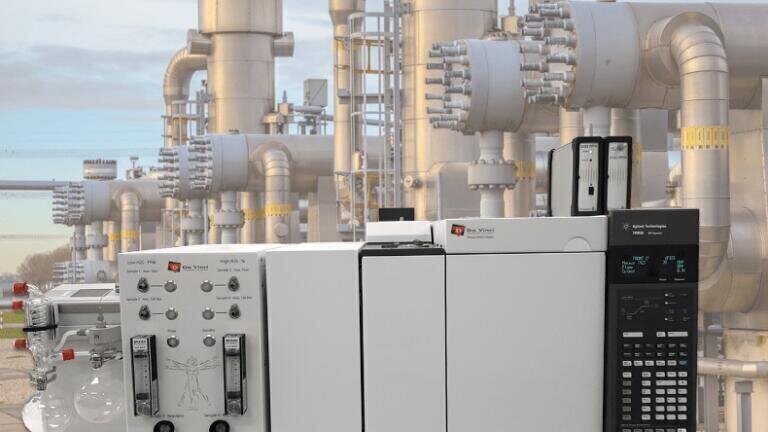
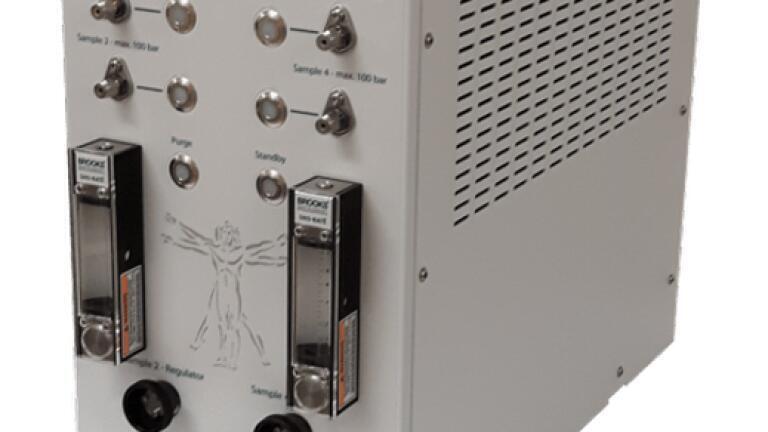
Correct sampling of gas streams is critical for a representative analysis of a gas composition and the accurate calculation of its heating values such as British Thermal Unit (BTU). To provide a user-friendly solution Da Vinci introduces the DVLS Gas Sampling Station (Figure Two). This station is a software controlled device that automates the sampling, purging and interfacing with the Chromatography Data System (CDS) software. The design of the station includes four separate sample inlets to prevent any cross contamination and a controlled vacuum pump for sub-ambient sampling from 100 to 1000 mBar. The station is also corrosion resistant for samples containing high concentrations of Hydrogen Sulfide.
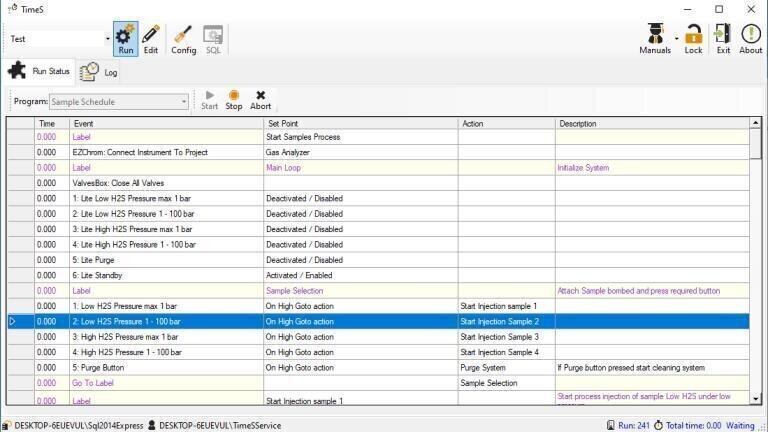
The Gas Sampling Station is controlled by the Time Scheduler software (Figure Three). This tool is used to program the pre-analysis sampling sequencing and corresponding GC analysis in the CDS.
An example of the application of the gas sampling station is the DVLS Sour Gas Analyser, a GC solution that determines the composition of four different gas streams:
The DVLS Sour Gas analyser uses an Agilent GC with electronic pneumatics control (EPC) configured with three different channels. Each channel includes the required columns, valves, inlets and a detector: TCD, FID or PFPD. The analyser is also equipped with a side carrier that contains the columns and valves, which enables a built-in column conditioning. The gas samples are simultaneously injected into the three separate channels:
The Agilent GC is controlled by Agilent OpenLab CDS software for instrument configuration, method setup, instrument control and data acquisition. The DVLS PetroReporter automatically calculates gas properties such as Molar Weight, Gas Density, CV and BTU. DVLS TimeS controls the various modules, from pre-analysis sampling sequencing to sample purging, GC analysis up to reporting of the gas properties by a simple push of the button.
PIN 27.4 Aug/Sept 2026


 Product directory


.jpg)









.jpg)

.jpg)

.jpg)
.jpg)