Analytical instrumentation
Published over 2 years ago. See the latest and most current information on Analytical instrumentation.
Renewable diesel production is expanding rapidly, driven by low-carbon fuel policies that promote the use of fuels with minimal life cycle CO2 emissions. In 2022, U.S. renewable diesel production reached approximately 1.5 billion gallons, while consumption was about 1.7 billion gallons, including roughly 0.3 billion gallons of imports. According to the U.S. Energy Information Administration, U.S. renewable diesel production capacity is projected to more than double by the end of 2025, thanks to several new projects either under construction or in the planning stages.
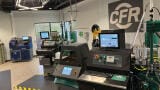
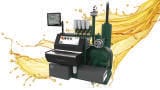
CFR Engines Inc. (CFR) has introduced the F5 Cetane EFI Rating System, a cutting-edge F5 cetane engine equipped with a modern high-pressure electronic fuel injection (EFI) system. Combined with CFR XCP® technology, this system provides precise control over fuel injection timing and quantity. The result is improved cycle-to-cycle consistency in combustion events, leading to more accurate Cetane Number (CN) measurements.
The CFR F5 EFI system extends the cetane number range following ASTM D613 standards. Renewable diesel fuels, such as hydrotreated vegetable oil (HVO) and hydrogenation-derived renewable diesel (HDRD), often have ultra-high cetane values exceeding 70 CN. In comparison, alternative non-renewable diesel fuels like gas-to-liquids (GTL) can have cetane values surpassing 80 CN. The EFI system is more compatible with renewable diesel and biodiesel than the older F5 engine.
A formal interlaboratory study has demonstrated that the precision of the D613 CN method has improved with the adoption of EFI technology. The updated method, which will cover a CN range of 29.6 to 87.6, is expected to be integrated into D613 by early 2025.
CFR Engines Inc. is dedicated to sustainability and has identified opportunities for improvement. Traditionally, laboratories use potable water for cooling at a rate of 5-6 litres per minute, an average of 2,400 litres per 8-hour shift per engine. The water used for cooling the injector nozzle is typically discarded in legacy cetane engines. The new EFI design eliminates the need for injector cooling, enabling the implementation of a closed-loop cooling system for the cetane engine. Laboratories already employing an Engine Air Control System (EACS) with closed-loop cooling for octane engines can easily extend this system to include the cetane engine to conserve water. Additionally, the EFI system uses sample and reference fuels more efficiently, reducing the amount of fuel required for testing and minimising fuel waste.
PIN 27.4 Aug/Sept 2026

 Product directory


.jpg)









.jpg)

.jpg)