Analytical instrumentation
Published over 10 years ago. See the latest and most current information on Analytical instrumentation.
Corrosion on steel pipelines and tanks can lead to destructive leaks that can cost millions to fix and cause irreversible environmental damage. As a result, industries spend billions each year to slow down the natural process of corrosion. The National Association of Corrosion Engineers (NACE) indicates that small amounts of water, air, and polar compounds are some of the biggest threats to petroleum pipeline corrosion. As such, NACE carefully monitors levels of corrosion by testing the interior of pipes for these substances.
The NACE system of testing is dependent upon a manual rating process in which the operator must quantify small percentages of corrosion by visually inspecting a test specimen that has been bathed in a mixture of test fuel and distilled water. This method is highly susceptible to operator error. In addition, due to differences in visual acuity, results are not repeatable.
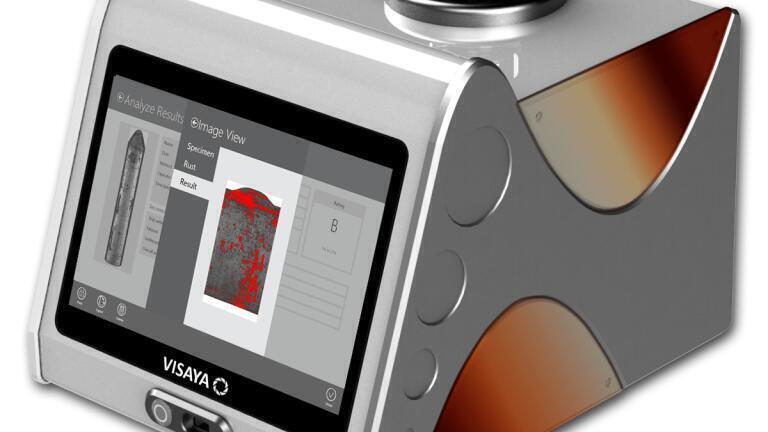
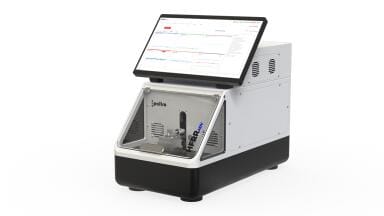
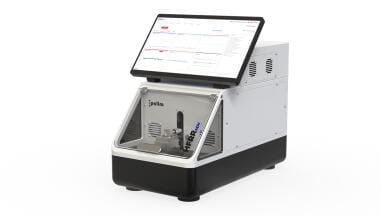
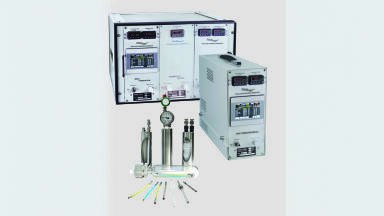
FeDDI, from Ayalytical (USA), was designed to solve the difficulty rating of NACE TM0172 and D665 specimens accurately. It uses uses a four-step automated vision algorithm and classification process to eliminate user bias and provide repeatable results. After scanning a specimen’s entire surface area, corrosion coverage is quantified. FeDDI provides an complete automated method, which replaces the inherently difficult visual quantification referenced in NACE TM0172 and ASTM D665.
PIN 27.4 Aug/Sept 2026


 Product directory


.jpg)










.jpg)


.jpg)