Environmental laboratory
As part of the PHYSICS FOR FOOD research project funded by the Federal Ministry of Research, Technology and Space (BMFTR), physical technologies such as the cold atmospheric plasma (CAP) process were tested for removing bacteria, fungi and pests from seeds and crops. The aim was to increase the shelf life and germination capacity of seeds.
To make reliable assessments of the use and effect of cold plasma, a range of parameters must be considered. There are various cold plasma devices on the market, differing in plasma generation method and geometry. In particular, energy consumption, treatment duration and the gas concentrations produced in the plasma define the effectiveness of the process.
In the PHYSICS FOR STORAGE & FOOD flagship project, the Institute for Nutrition and Food Technology (ZELT) gGmbH in Neubrandenburg, together with project partner Wi.Tec-Sensorik GmbH in Wesel, developed and evaluated a method for reliably checking gas concentrations in grain storage.
For this purpose, a conveyor belt was equipped with a direct cold plasma source to continuously decontaminate grain in flow. These plasma sources were measured using a novel gas analyser. Online detection of plasma gases creates new opportunities and challenges.
The PHYSICS FOR STORAGE & FOOD flagship project, funded by the BMFTR, was successfully carried out between 2023 and 2025.
Protective measures are needed throughout the agricultural process, from sowing to harvesting, storage and transport, in order to reduce losses. The greatest economic damage in the grain trade occurs when bulk goods are spoiled by harmful organisms or by improper storage, which can encourage the introduction or spread of harmful insects such as beetles and moths, while also allowing mould and other micro organisms to grow in the released moisture.
Studies show that the calorific share of consumption from harvested grain is around 53%. [Kumar 2017]. One third is lost in the field due to disease, and a further third is lost during harvesting, storage, distribution and in households. [FAO 2011]. ‘Global quantitative food losses are around 30% for cereals. In African countries, these losses have been estimated to range between 20% and 40%.’ [Kumar 2017].
Figure 1: Storage of grain in a closed hall (Source: INP Greifswald)
Farmers wishing to market grain through trade channels are obliged to deliver it in the best possible condition in accordance with integrated pest management (IPM) principles.
Quality checks on incoming goods determine whether deductions will be made, for example if residual moisture content exceeds 14% or if beetles are found in the sample.
The acceptance of grain with proven insect infestation is associated with significant deductions in the price paid to farmers. Depending on the situation, traders may even reject contaminated batches completely, meaning the farmer must transport the bulk material again for chemical treatment against insect pests.
Some batches can be saved using phosphine or sprays such as the insecticide deltamethrin, while others can only be used for thermal energy production through incineration.
All of these measures involve considerable cost for farmers. In addition to its insecticidal and disinfecting properties, cold atmospheric plasma is also capable of reducing dangerous mould toxins, or mycotoxins, and positively influencing grain physiology.
This can appear, for example, in improved germination capacity or faster germination.
Plasma is often referred to as the fourth state of matter. It is created by continuously supplying energy to a gaseous substance. Plasma is therefore a partially ionised gas made up of ions, free electrons, excited molecules, radicals and molecular fragments (Fig. 2). The gases produced during plasma generation are highly reactive and depend on the gas from which the plasma is generated (Fig. 3).
Figure 2: Schematic representation of the reactants in a plasma
There are various ways of generating plasma, including corona discharge, as used in plasma jets, and dielectric barrier discharge (DBD). It can act directly on the material being treated as a plasma flame, or indirectly by using the plasma gas produced. The conveyor belt demonstrator with plasma jet uses corona discharge for in situ treatment.
The following processes take place in the discharge zone. Firstly, dissociation: high-energy electrons break down stable molecules such as N2, O2 and H2O into atoms such as N, O and OH. Secondly, ionisation: particles lose or gain electrons, forming ions such as N2+, O2- and NO3-. Lastly, recombination: the fragments combine to form new, highly reactive molecules such as O3 or HNO3.
Direct and indirect treatment
Direct treatment is more intensive, as even short-lived species can reach the grain. Here, the grain is located directly in the discharge zone or in the visible plasma plume.
This means the full spectrum of short-lived radicals, ions and electrons reaches the grain. The electric field, heat and UV radiation also affect the grain. (Figs. 2 + 3)
In indirect treatment, the plasma is generated at a distance from the grain. Only the plasma afterglow, or an activated medium, reaches the grain.
Primary and secondary plasma
Primary plasma has a strong electric field. Higher temperatures can damage the embryo of the seedling. Its effect against mould spores is increased, and bombardment by high-energy particles and full UV radiation is at its highest.
Secondary plasma is less intense because there is no longer any active energy supply from the primary field. The species are in a state of recombination.
Charged particles such as ions and electrons decrease rapidly with distance. Treatment is driven primarily by chemical reactivity from reactive oxygen and nitrogen species (RONS), and less by physical force such as fields or ion impact [Lin 2021; Rathore 2022; Stryczewska 2022].
Figure 3: Schematic plasma nozzle
Table 1: States of oxygen, nitrogen and humidity in a cold atmospheric plasma Stryczewska (2022)
The advantages of using cold plasma in agriculture are manifold and can be summarised as follows [Esmaeili 2026; Feizollahi 2023; Wald 2023; Rao 2022; Stryczewska 2022; Chauhan 2019]: plasma generation from ambient air using electrical energy (e.g., from renewable sources); replacement of chemical pesticides, no disposal, no more hazardous phosphine required; worldwide improvement in quality in terms of stock protection, export and food safety; currently, there are no known resistances to CAP; effective against harmful insects, microorganisms, mycotoxins and pesticide residues on the grain surface.
Further development steps are necessary to establish the use of this technology in agriculture. These include the following approaches in particular.
Developing standardised treatment processes for different agricultural products and bulk goods, with control supported by gas measurement. Validating different types of CAP for different applications.
Carrying out further research into mode of action to rule out negative effects such as overdosing.
Using online gas measurement to track the effectiveness and concentration of selected RONS during direct grain treatment on the conveyor belt, and to measure the plasma sources used under different operating parameters.
Typical reactive oxygen and nitrogen species are formed in plasma from ambient air. Some are very short-lived and return to their original state in the primary or secondary plasma. Others are more long-lived (Fig. 3).
These reactive species act against micro organisms, harmful insects and other surface contaminants. To support online measurement for agricultural plasma applications, the molecular species present at the crop surface must be measured and analysed.
Recombined molecules such as O3, NO2 and NO can therefore be detected over a longer period [Wei 2026; Kaur 2020; Niemira 2012].
Table 2: Rough classification of plasma generation sources according to their primary species and characteristics
Two different plasma sources from TIGRES GmbH were used in the project, each with different plasma properties.
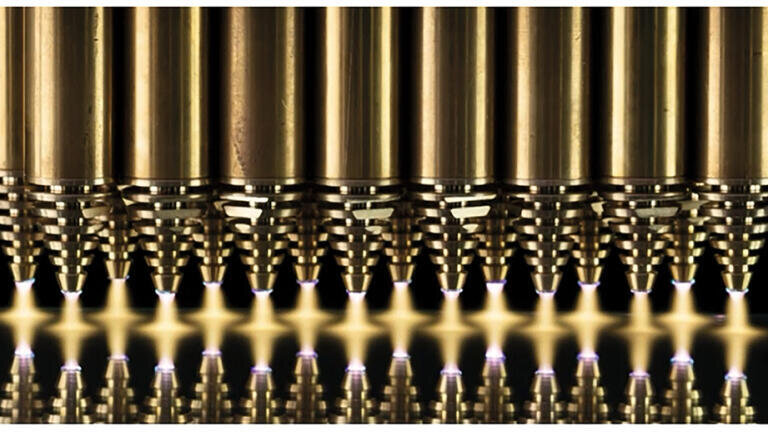
The T-SPOT is a classic inline plasma system in which an arc discharge is ignited between a centred electrode and the nozzle, which acts as a counter-electrode. The combination of nozzle geometry and gas flow causes the plasma to be ejected in two zones. These are a primary plasma with current-carrying filaments inside the nozzle, and a secondary plasma that exits the nozzle opening without filaments.
The T-JET is based on an indirect corona discharge, generated internally between two electrodes and transported to the substrate by an air flow. Unlike the T-SPOT, this technology is characterised by very low heat input, with a surface temperature increase of less than 3 K. It has therefore also been investigated scientifically for food applications. Dry bulk goods such as grain are especially suitable because of their low moisture content.
It is known from the literature that different groups of substances can be formed in cold atmospheric plasma [Reuter 2018].
The formation of individual substances and their concentration ranges depends on several boundary conditions, including air humidity, air pressure and accompanying gaseous substances.
To identify the gaseous components formed from plasma both quantitatively and qualitatively, they were measured using FTIR and UV spectroscopy.
The experimental set-up is shown in Figure 6. The plasma source was located at the entrance to a plastic pipe with a diameter of 150 mm, and gas was extracted directly at the source using a ceramic pipe.
Several sampling points were installed in the pipe system in order to record the local and temporal progression of the gases. The gas samples were drawn in via a diaphragm pump and set to approximately 1 L/min using a needle valve.
The gas mixture then entered a container, which was later filled with different substances in order to analyse interactions between those materials and the plasma gases.
The FTIR spectrometer was located after the container, followed by the UV spectrometer.
The plasma generator was operated with different control settings during the experiments, with the gas mixture always containing similar components.
In the IR range, the gases N2O, CO2, NO, NO2, N2O4 and HNO3 were identified. In the UV range, the main species detected were NO and NO2. Ozone occurred only in very low concentrations, as it immediately combined with other gas components such as NO.
The gases produced when cold atmospheric plasmas are used are highly complex and originate mainly from the gases present in air. In dry air, nitrogen and oxygen are present in a ratio of 78:21.
Depending on the season and geographical location, moisture content ranges from approximately 0.1 to 5 vol.% H2O.
It is known from the literature [Reuter 2018] that ozone is formed from atmospheric oxygen, and that significant proportions of nitrogen oxides such as NO, NO2, N2O and N2O4 are also present, produced by chemical reactions between O2 and N2
[Pavlovich 2014].
UV and IR spectroscopy are suitable methods for analysing these species both qualitatively and quantitatively.
This analytical approach is also used in modified form as NDUV and NDIR photometry, in which measurements are taken in a photometer at the centre of a significant absorption band.
The spectral position of this absorption band is unique to the gas in question and therefore provides the basis for qualitative analysis. Quantitative analysis is then carried out by measuring the reduction in radiation intensity in the presence of that gas.
A direct-reading NDUV photometer, ULTRA.sens®, is used for online gas analysis. [Wiegleb 2023]. The photometer uses the selective absorption of different gases at defined wavelengths.
The set-up shown in Figure 10 measures, for example, NO at 226 nm, NO2 at 405 nm and O3 at 255 nm. ULTRA.sens® can be used across different measurement ranges, from 0 to 100 ppm up to 0 to 5000 ppm depending on requirements.
Ozone measurement is also available in significantly smaller ranges, such as 0 to 1000 ppb O3.
Figure 10: NDUV gas measurement module ULTRA.sens® for selective gas analysis of NO, NO2 and O3
INFRA.sens® is based on the well-established NDIR method and can be used with different cuvette lengths from 2 mm to 250 mm.
Thanks to this modular design, up to three gases can be measured in one measuring cuvette. The spectral range extends from 2 µm to 12 µm, allowing a wide variety of gases to be measured.
Figure 11 shows one such set-up for simultaneous gas analysis of NO, CO2 and H2O. In addition, oxygen measurement using a liquid electrolyte and a humidity sensor, HUMI.sens®, can be integrated, allowing a total of five gases to be detected.
Figure 11: NDIR gas measurement module INFRA.sens® for simultaneous gas analysis of up to three gases
The OEM gas measurement modules shown in Figures 10 and 11 were designed for integration into measurement systems and gas analysers.
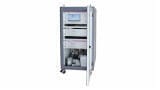
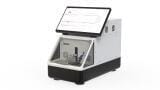
For use in the agricultural application described here, this integration is essential. Figure 12 shows a mobile gas analyser, BINOS®, in a suitcase housing.
An INFRA.sens® and an ULTRA.sens® are integrated into the case. In addition, the system includes oxygen and humidity measurement, a sample gas pump, and a flow meter with a needle valve for flow adjustment visible on the front panel.
Two accessible filter elements, one coarse and one fine, are also included for cleaning the sample gas.
Figure 12 : BINOS® gas analyser for measurement of NO, NO2, O3, H2O and CO2 for mobile use
For outdoor use, a prototype gas analyser was also designed in an IP66 wall-mounted housing. The entire assembly is thermostatically controlled to 50°C and can therefore be used at ambient temperatures from -10°C in winter up to 40°C in summer.
A status signal was also attached to the outside of these prototypes so that the operating state can be recognised at any time, even from several metres away.
Adsorption of the measured gases by different materials
The gas analysis described above can be used to detect chemical reactions between plasma gases and different substances or surfaces. In one experiment, plasma gas was passed through various materials. NO and NO2 in particular were detected using the gas analyser, while only traces of ozone were found.
With the T-Jet, more than 1100 ppm NO and more than 800 ppm NO2 could be reproducibly detected at an electrical power of 500 W.
Various materials, including barley, steel wool, an O3 scrubber and activated carbon, were placed in a gas-tight container of approximately 1 L between the sampling point and the gas analyser and brought into contact with the plasma gas.
The gas flow rate was approximately 1 L/min. The change in individual gas concentrations was compared with the highest gas concentration observed without these materials.
The decrease in NO2 was greater than the decrease in NO, which could still be detected even after the activated carbon (Fig. 14). The material surfaces therefore show a catalytic effect or absorption property that will need to be considered in future investigations.
This series of experiments was used to determine the spatial distribution of gas concentrations, specifically O3, NO and NO2, directly in the T-JET plasma flame (Fig. 15).
Measurement was carried out using a ceramic tube placed in the plasma flame. The ceramic tube moved slowly through the flame using a spindle drive in order to determine the local distribution of gas concentrations.
This concentration profile was recorded within 100 seconds.
Figure 16 shows an example of the concentration profile for NO and NO2. Two maxima can be seen at approximately one third of the flame width. By contrast, there is a minimum in the centre of the flame.
The difference in concentration values between the minimum and maximum is 30 to 40%. A total of five measurements were taken, and the mean value was calculated across the concentration curve to compensate for fluctuations within the flame.
The use of the developed cold plasma technology allows users in commercially efficient agricultural businesses to determine measurable concentrations during plasma treatment using a gas analyser.
Gas analysis can also support quality assurance in other sectors, including plastics processing and printing. Online gas analysis also opens up new opportunities in scientific research to analyse recombined RONS.
Inline gas measurement enables continuous monitoring of the gas composition in the plasma flame, resulting in more accurate and timely data.
Immediate feedback allows adjustments to be made to the plasma application straight away, increasing efficiency. Measuring directly in the plasma flame reduces the risk of sample contamination and provides more accurate data.
With the ability to monitor different gases in real time, new applications and optimisations in food processing can be explored. Comparisons of different inlet gases become possible.
Firstly, optimisation of plasma applications. Findings from gas analysis could support the development of new plasma applications in the food industry, including sterilisation and preservation.
Secondly, inline gas measurement can help develop more environmentally friendly processes that consume less energy and reduce waste. Lastly, the technology can advance basic research in plasma physics and its applications in
food technology.
Real-time monitoring can help optimise processes and thus reduce operating costs. Precise treatment of grain with cold plasma can improve the quality and shelf life of harvested products.
Companies that use innovative technologies such as inline gas measurement can set themselves apart from competitors and tap into new markets.
Cold plasma can effectively kill microorganisms that impair the quality of grain. Targeted plasma treatment can improve the germination capacity of seeds.
Plasma applications can be used to improve storage conditions and prevent mould growth in storage rooms.
Plasma sources are already being used successfully in many areas of agriculture and food technology. Their advantages include safe and reliable application without chemical insecticides, which can have harmful long-term effects.
The rapid decomposition of reaction products also makes the method environmentally friendly and resource-efficient.
With the gas analysis described here, the process can be controlled and monitored more effectively, helping to deliver a high safety standard.
The gas analyser described also offers good long-term stability and is therefore low-maintenance in operation. Installation in different housing designs means it can be tailored to different applications, allowing both mobile and stationary use.
Funded by the Federal Ministry of Research, Technology and Space of the Federal Republic of Germany as part of the Physics for Food project (Funding reference number: 03WIR2814A).
1. Barner, N.; Nelles, M.; Garbe, L.-A. The Application of Cold Atmospheric Plasma (CAP) in Barley Processing as an Environmentally Friendly Alternative. Foods (2025), 14(9), 1635 https://doi.org/10.3390/foods14091635
2. Kumar, D.; Kalita, P. Reducing Postharvest Losses during Storage of Grain Crops to Strengthen Food Security in Developing Countries. Foods (2017), 6, 8. https://doi.org/10.3390/foods6010008
3. Food and Agriculture Organization of the United Nations (FAO: Global Initiative on Food Loss and Waste Reduction Viale delle Terme di Caracalla, 00153 Rome, Italy) (2011) Lin, L. & Keidar, M. A map of control for cold atmospheric plasma jets: From physical mechanisms to optimizations. Appl. Phys. Rev. 8, 11306 (2021).
4. Rathore, V. : Study the effect of electrode material, its surface, and dielectric material on plasma and properties of plasma-activated water. (2022) doi:10.13140/RG.2.2.21340.46727.
5. Stryczewska, H. D. applied sciences Applications of Plasma Produced with Electrical Discharges in Gases for Agriculture and Biomedicine. (2022).
6. Rao, W. et al. The Application of Cold Plasma Technology in Low Moisture Foods. Food Eng. Rev. (2022) doi:10.1007/s12393-022-09329-9.
7. Reuter, S., et al.: The kINPen—a review on physics and chemistry of the atmospheric pressure plasma jet and its applications. 2018 J. Phys. D: Appl. Phys. 51 233001
8. Pavlovich M., J., et al: Air spark-like plasma source for antimicrobial NOx generation. J. Phys. D: Appl. Phys. 47 (2014) 505202 (10pp)
9. Chauhan, O. P.: Non-thermal Processing of Foods. Florida (2019); ISBN-10113803584X
10. Kaur, M. A., Hüberli, D. B. & Bayliss, K. L. Cold plasma: exploring a new option for management of postharvest fungal pathogens, mycotoxins and insect pests in Australian stored cereal grain. 715–724 (2020).
11. Niemira, B. A. Cold Plasma Decontamination of Foods*. Annu. Rev. Food Sci. Technol. 3, 125–142 (2012).
12. Los, A. et al. Improving microbiological safety and quality characteristics of wheat and barley by high voltage atmospheric cold plasma closed processing. Food Res. Int. 106, 509–521 (2018).
13. Feizollahi - Mycotoxin degradation in food and feed grains by atmospheric cold plasma technology. Department of Agricultural, Food and Nutritional Science, Canada (2023)
14. Wei, Q., Y. Wang, L. Jiang, et al. . “ Cold Plasma for Fungal and Mycotoxin Control in Low-Moisture-Content Agri-Food Products: Mechanisms and Applications.” Comprehensive Reviews in Food Science and Food Safety 25, no. 2: e70410. (2026) https://doi.org/10.1111/1541-4337.70410
15. Fazileh Esmaeili, Mohammad Ramezani Kaporchali, Khadijeh Razavi, Mohammad Ahmadi, Sara Hejri, Milad Begri, Aboutorab Naeimabadi, Tahmineh Lohrasebi, Highlighting the cold plasma effect on Wheat performance: Enhancing drought tolerance, and improving baking quality, Current Plant Biology, Volume 46, (2026), 100591, ISSN 2214-6628, https://doi.org/10.1016/j.cpb.2026.100591
16. Wald, Glaß & Garbe – Physikalische Behandlung von Lagerschüttgütern zur Inaktivierung von Schadinsekten. Lebensmittelbrief (01.2023)
17. Wiegleb, G.: Gas Measurement in Theory and Practice. Springer 2023 https://doi.org/10.1007/978-3-658-37232-3
PIN 27.2 Apr/May 2026




 Product directory