Sulphur analysis
Published over 12 years ago. See the latest and most current information on Sulphur analysis.
Ensuring adequate supplies of 1.00% sulphur (16S) bunker fuel oil to satisfy European demand in emission controlled areas (ECAs) as well as complying with recent North American ECA guidelines affecting the availability of Low Sulphur Fuel Oil (LSFO), continues to be a challenge.
The effect of the requirements of blending operations to produce 1.00% S fuels on fuel quality is also a concern.
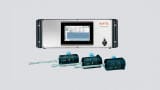
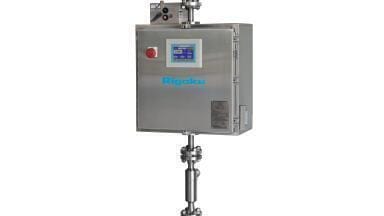
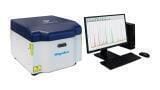
To address the tougher quality control (QC) requirements and more rigorous blending operation conditions for LSFO, Rigaku, a global leader in X-ray analytical instrumentation, has engineered a 3rd generation X-ray Transmission (XRT) sulphur process gauge.
With uniquely engineered hardware and novel proprietary software technologies, the Rigaku NEX XT system is faster, more sensitive and far more compact than previous generation systems and provides continuous, reliable detection of sulphur at pressures up to 1480 psig and 200ºC. Sulphur may be quantified from 200 parts-per-million (ppm) to 6.5 wt. %, with analysis times as short as 1 second. The Rigaku NEX XT can operate as a stand-alone analyser or provide real time closed loop control when tied into a blending or plant wide automation system.
Among its other key features are a simplified user interface, reduced standards requirement, automatic density compensation, automatic water compensation, password protection, and standard platform for communicating sulphur, density, and water content to a Distributed Control System (DCS).
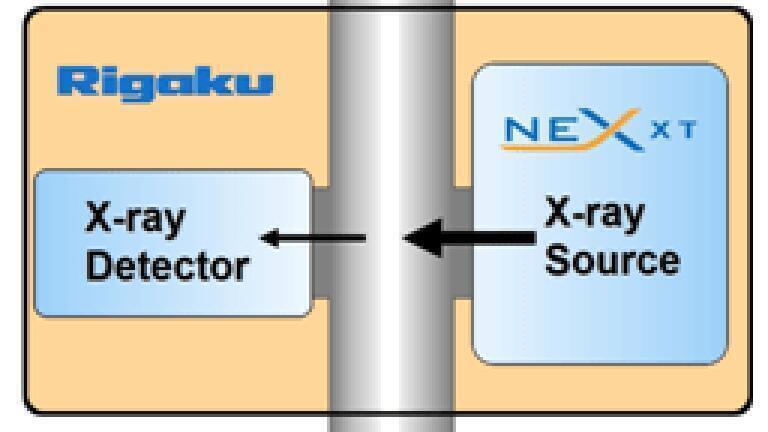
Employing the X-ray Transmission (XRT) measurement technique, the Rigaku NEX XT continuously measures a process hydrocarbon stream that passes through an internal flow cell (see Schematic 1). Unlike older generation XRT sulphur analysers, the Rigaku system contains no dangerous radioisotope sources and requires no routine maintenance.
Globally, the petroleum industry continues to employ tens of thousands of radioisotopes in activities that range from exploration and production to distribution. Whether protecting the customer base or corporate shareholders, technology – like the Rigaku NEX XT – now exists to eliminate the risk associated with owing previous generation isotope-based technologies while providing vastly superior analytical results.
PIN 27.4 Aug/Sept 2026


 Product directory












.jpg)

.jpg)
.jpg)