Safety
Published over 16 years ago. See the latest and most current information on Safety.
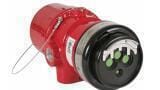
US manufacturer Detector Electronics Corporation (Det-Tronics) GT3000 Toxic Gas Detectors have received ATEX hazardous location and performance certification. In addition, GT3000 Toxic Gas Detectors are FM, CSA, CE, and IECEx certified and have earned the IP66 rating. Det-Tronics is part of UTC Fire & Security, a unit of United Technologies Corp.
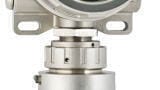
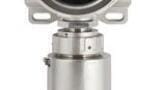
The GT3000 family is a group of electrochemical fixed-point detectors that provide non-intrusive calibration, communication via 4-20mA with HART protocol, and the ability to swap sensors without de-classifying hazardous areas. A GT3000 detector consists of a transmitter (GTX) and a sensor module (GTS). The transmitter generates a 4-20mA output signal with HART that is proportional to the concentration of the target gas and corresponds directly to 0-100% full scale.
Currently, the GT3000 family includes sensors that detect these gases: hydrogen sulphide (H2S), oxygen (O2), carbon monoxide (CO), ammonia (NH3), chlorine (Cl2), and sulfur dioxide (SO2). More gases will be added soon.
“Although GT3000 is approved as a stand-alone device,” says product development manager Mike Bragg, “many users choose to partner it with Det-Tronics’ FlexVu® Universal Display for quick device set up and easy access to sensor status.”
PIN 27.4 Aug/Sept 2026


 Product directory


.jpg)
















.jpg)