Specialised Imaging reports that the Institute of Heat and Mass Transfer at RWTH Aachen University, in Germany, has invested in a Kirana Ultra High-Speed camera to undertake fundamental research that underpins the development of bio-hybrid fuels for the next generation of sustainable transportation.
Groundbreaking research at the University of Aachen Fuel Science Center (FSC) aims to develop high-density liquid energy carriers (“bio-hybrid fuels”), for highly efficient and clean combustion engine concepts. The FSC is also investigating the fundamental processes behind the electro-catalytic production of renewable fuels for automotive engines as this technology is an important enabler for the development of these next generation energy carriers.
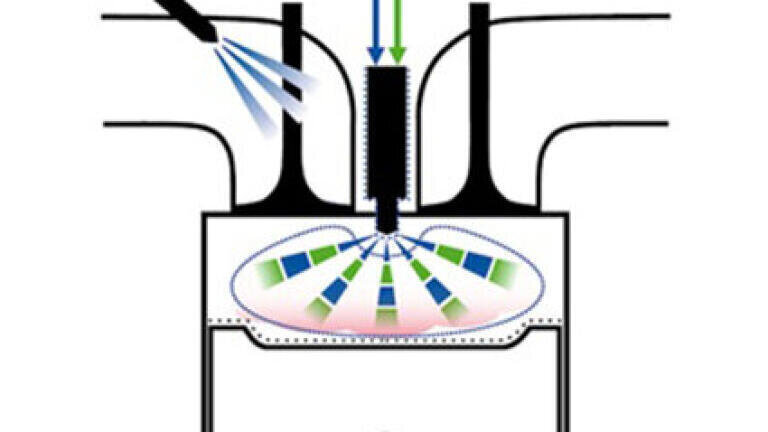
The researchers intend to use the Kirana Ultra High-Speed camera to visualise the transient processes behind the electro-catalytic injection, mixture formation and combustion of bio-hybrid fuels.
Conventional high-speed imaging techniques are already well-established in automotive fuel combustion research, but are not able to resolve very fast processes such as spray fluctuations or the injector opening in high spatial resolution, as the fuel leaving the nozzle can travel at many hundreds of metres per second.
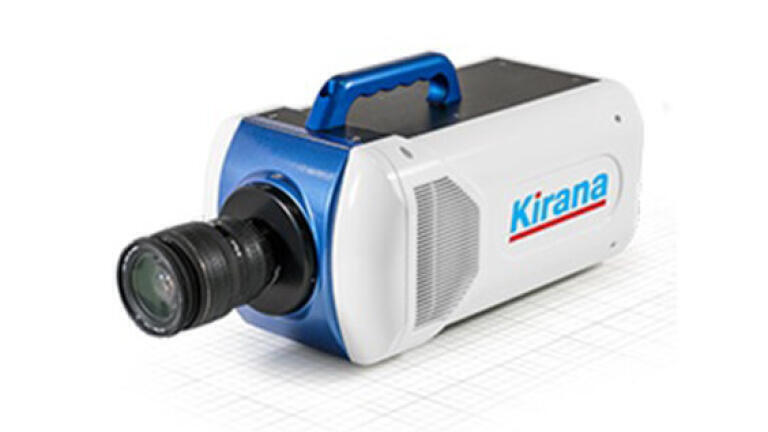
The Kirana Ultra High-Speed camera from Specialised Imaging sets a new standard for what is possible, being able to take 180 consecutive high quality images at frame rates of up to 5 MHz.
The full resolution of the Kirana camera is maintained independently of its frame rate, enabling it to acheive high spatial and temporal resolution at the same time.
The compact Kirana ultra high speed video camera can deliver high resolution and high speed (up to 5 million frames per second) in a no-compromise design. The full resolution of this video camera is maintained at all speeds. Comprehensive triggering facilities, highly accurate timing control and a wide range of output signals, coupled with a software package, simplifies image capture and analysis. Full remote operation using Ethernet connectivity comes standard enabling the Kirana to be easily integrated into almost any environment. The Kirana offers the performance, ease-of-use and operational flexibility that enables users to record and deliver impressive slow-motion video images in just about any material scientific research application.


 Product directory


.jpg)




.jpg)


.jpg)