Measurement and testing
Published over 12 years ago. See the latest and most current information on Measurement and testing.
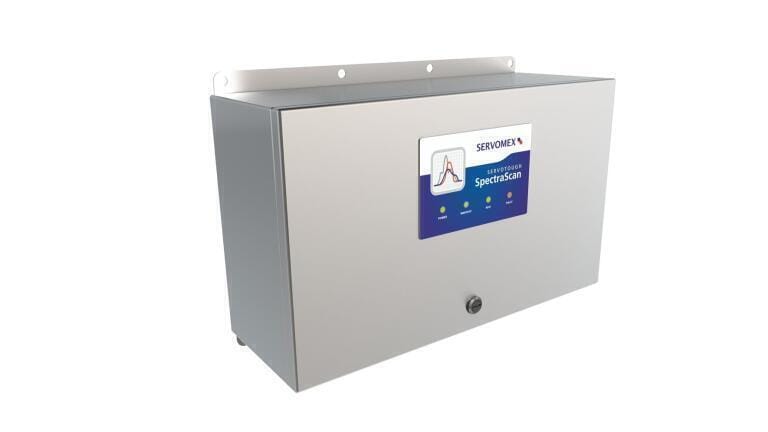
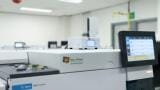
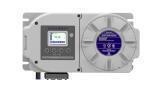
The new SERVOTOUGH SpectraScan light hydrocarbon analyser from Servomex (UK) offers revolutionary new “Tunable Filter Spectroscopy” optical sensor technology for on-line hydrocarbon gas composition analysis – a measurement uniquely developed for applications where a real-time analysis is necessary for optimal process control.
Rhys Jenkins, Market Sector Manager at Servomex, explains: “As an all-optical sensor, physical separation of the compounds - as performed in gas chromatography (GC) - is not required; instead, the SpectraScan performs real time speciation and quantification of the individual hydrocarbon components in multi-component matrices of light hydrocarbons, from methane to pentane as well as gases such as hydrogen sulphide, carbon monoxide and carbon dioxide. An advanced spectral processing and chemometric algorithm provides highly repeatable and robust speciation performance, compensating for various spectral nonlinearities due to pressure, flow and temperature variations.”
The result is a flow-through optical sensor that not only provides unattended, real-time and consumable-free analysis suitable for a wide range of applications, but brings a whole host of performance benefits including improved efficiency and significantly reduced cost of ownership in comparison to analysis systems utilising traditional technologies.
The SERVOTOUGH SpectraScan’s multi-component fast analysis achieves a superior level of process control optimisation not obtainable with the slower analysis methods used in GC systems. As a consequence, it excels in areas such as the precise and rapid analysis of process gases within light hydrocarbon fractionation, which is vital in ensuring both efficient operation and maximum product yields.
For example, when installed on an ethylene plant, the fast and reliable process analysis and high measurement availability provides unprecedented levels of process efficiency and process control. This is achieved by shortening the residence time in the cracking furnace, rapidly adapting to changing feed-stocks, optimising fractionation giving high ethylene and propylene yields and improved plant and process reliability.
PIN 27.5 Oct/Nov 26


 Product directory


.jpg)










.jpg)



.jpg)