Fuel for thought
Published over 10 years ago. See the latest and most current information on Fuel for thought.
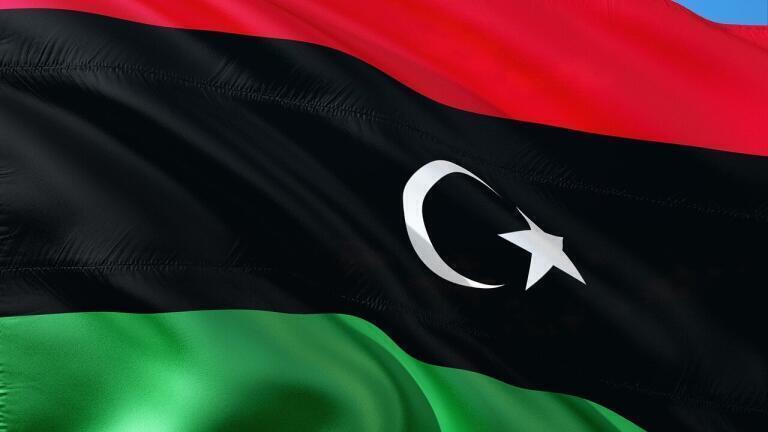
For years, Libya’s political instability has prevented it from cracking the global oil market. However in the wake of a political breakthrough, analysts are predicting that consolidation could revive the country’s disrupted oil industry.
Since 2014, Libya has been torn apart by civil war, spurred by an election that saw the government of the Council of Deputies take power in May 2014. Meanwhile, the rival Islamist government of the General National Congress (GNC) is vying for territory, which plunged the country into a political gridlock. Couple this with the arrival of ISIS, and Libya’s oil industry plummeted.
Yet recently, Libyan officials confirmed that two rival oil companies have agreed on a merger deal that could trigger a major political breakthrough. Based in Tripoli, the National Oil Company is controlled by the western government. In Tobruk, the rival eastern government operates its own venture. Now, both sides have agreed to consolidate their operations, and relocate all operations to Benghazi.
“We made a strategic choice to put our divisions behind us and to unify and integrate NOC,” said Mustafa Sanalla, chairman of the National Oil Company. "This agreement will send a very strong signal to the Libyan people and to the international community that the Presidency Council is able to deliver consensus and reconciliation."
For the nation, a unified national oil company could be the key to achieving political, and social reconciliation.
"There is only one NOC, and it serves all Libyans,” stressed Sanalla’s in the official merger statement.
Not only will the deal have a markedly positive impact on Libya, but analysts assert that it could also have global effects, in the form of a revitalised oil production and exports industry. In the in the Qaddafi era the country produced 1.6 million barrels per day, yet dropped to less than 300,000 when civil war kicked-off in 2014.
Libyan officials maintain that is stability can be achieved, production could quickly multiply to 700,000 barrels per day. Reuters agrees, predicting that success could also help reopen major sites in the El Sharara and El Feel fields, which are currently in operational due to conflict with local groups. Couple this with the fact that Libya’s Petroleum Facilities Guard has recently recaptured several keynote towns from ISIS militants, and a national oil resurgence is looking increasingly likely.
Saudi Arabia, Russia, America, China and Canada… watch this space.
If Libya’s oil revival comes to light, it will need to comply with international standards, as well as introduce its own local regulations. ‘Impact of Tier 3 Program’ spotlights the latest requirements introduced by the U.S. Environmental Protection Agency, which exist to ensure sulfur levels in gasoline sit at 10 ppm, or lower.
PIN 27.4 Aug/Sept 2026



 Product directory


.jpg)