Elemental analysis
Published over 8 years ago. See the latest and most current information on Elemental analysis.
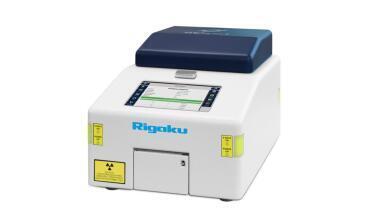
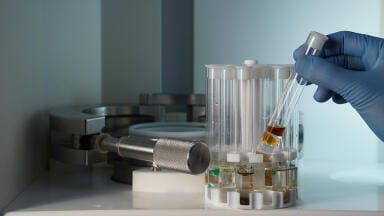
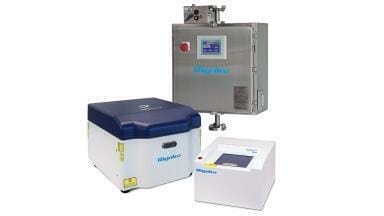
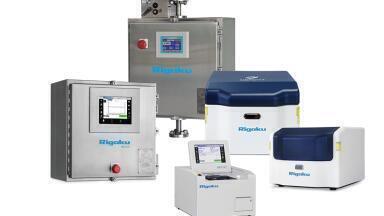
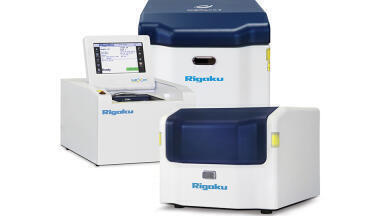
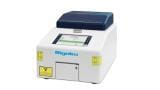
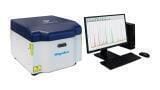
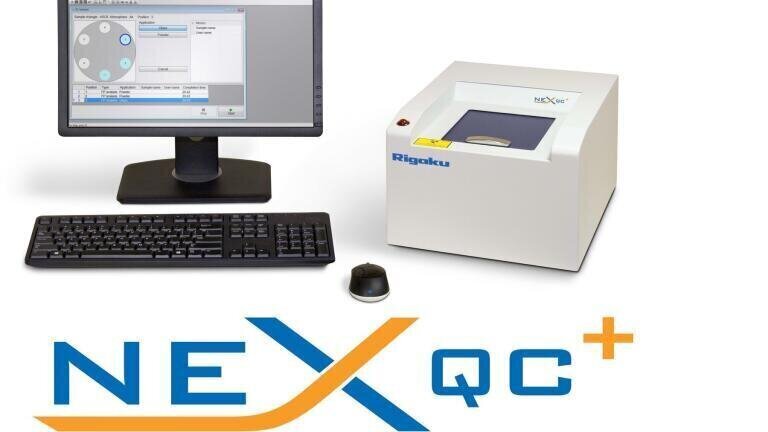
When drilling for crude oil and natural gas, rock cuttings are brought to the surface by the drilling mud for examination and characterisation of the rock strata. Mineralogy and elemental composition are some of the tests that go into the lithology of the rock layers, giving valuable information on the formation being drilled for well logging and positioning of the drill bit when geosteering. X-ray fluorescence (XRF) gives elemental composition of the cuttings, an important part of the overall well logging system. To meet the industry needs, Applied Rigaku Technologies offers the NEX QC+ QuantEZ Energy Dispersive XRF (EDXRF) analyser for measuring elemental composition of various geological materials.
Samples often are measured in course form with particle size up to 5mm. For course samples it is recommended to use a sample spinner to average out miscellaneous X-ray scatter effects. Optimum results are obtained by further grinding the sample to a dry, homogeneous powder ~100-200 mesh (150-75um particle size).
Fill a standard 32mm diameter XRF sample cup with material, typically 5g, and measure directly. For optimum sensitivity to measuring low levels of light elements Na-Cl, a powder sample can be prepared as a hydraulically pressed pellet and helium purge atmosphere is used.
FP (Fundamental parameters) is used to generate semi-quant results without the need for any reference standards. The semi-quant approach is ideal for general screening and comparative characterisation. Rigaku RPF-SQX is an advanced FP methodology that automatically models background and deconvolutes any peak overlaps. To optimise the FP model the QuantEZ software includes the feature for the user to easily create a Matching Library using one or more samples that have been characterised and assayed by a reference technique such as ICP. In this way the FP model can be matched to site samples and referee results and provide fully quantified results.
In general the Rigaku FP mythology is used to measure and characterise the geological strata encountered during drilling, including: shale (slate), limestone, clay, sand, sandstone and siltstone, etc.
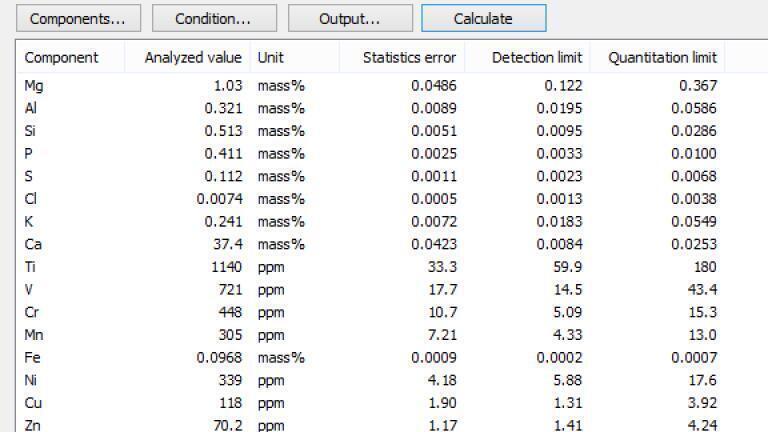
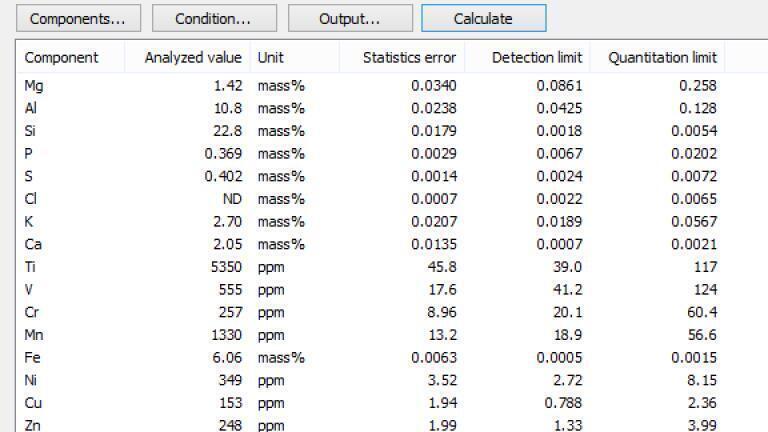
Examples are shown here of the QuantEZ report of a shale and a limestone sample. (Please refer to image A & B**)
A result is stored and can be printed, or transmitted to a spreadsheet file locally or on a network folder. Results can also be transmitted to a LIMS system by comma-delimited ASCII stream.
Spectra are generated using element KLM markers to identify peaks. Qualitative viewing of spectra can also be used to see the presence of unexpected elements and compare various samples to view overall composition differences.
EDXRF provides a rapid, non-destructive means of semi-quantitative measurement for screening, identification, as well as elemental quantification of metals, solids, powder, pellets, thin films and liquids. QuantEZ software allows users to optimise the characterisation of cuttings by easily creating a Matching Library based on representative samples assayed by a referee technique. The NEX QC+ QuantEZ powerful yet simple and intuitive software gives is an ideal system for measuring elemental composition of drill cuttings in the drill site or in the lab.
Click here to request a full copy of the application report.
PIN 27.4 Aug/Sept 2026




 Product directory


.jpg)