Elemental analysis
Published over 4 years ago. See the latest and most current information on Elemental analysis.
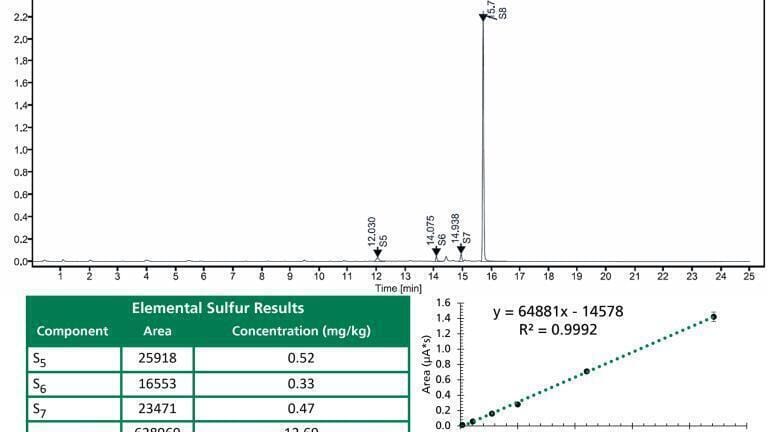
To prevent corrosion in refining processes and to comply with environmental regulations it is vital to determine elemental sulfur. Da Vinci Laboratory Solutions (DVLS) has developed a dedicated gas chromatographic (GC) application for the analysis of elemental sulfur in LPG based on the ASTM D7756 configuration.
Elemental sulfur is an unstable component with a tendency to stick to active surfaces, which makes traditional injection techniques challenging. To address this challenge Da Vinci introduced an alternative and fast gas chromatographic (GC) method, which includes a direct injection of the LPG. This direct injection technique ensures full transfer of the elemental sulfur component onto the column.
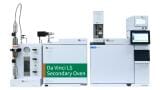
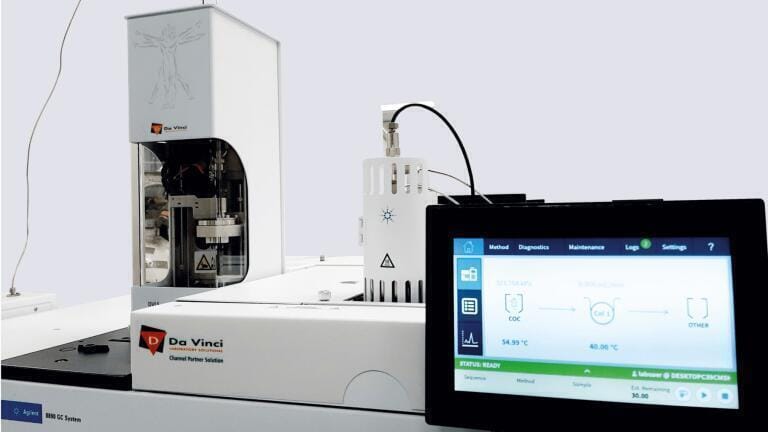
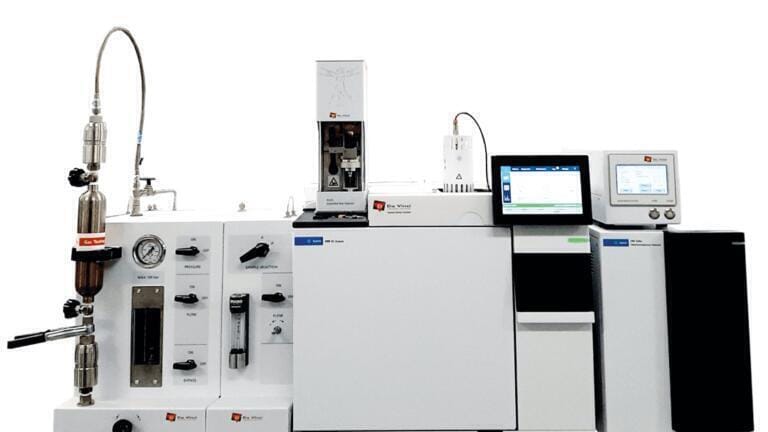
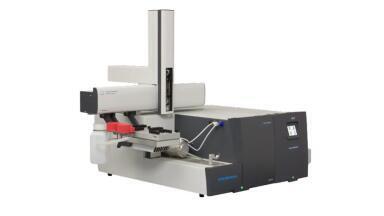
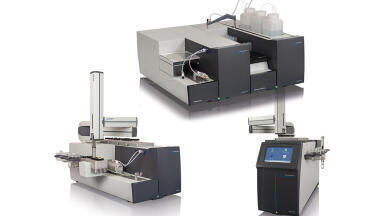
The GC application uses the Agilent 8890 Gas Chromatograph (GC) configured with the DVLS Pressure Station and Liquefied Gas Injector to safely handle and inject LPG samples. A Flame Ionization Detector and a Sulfur Chemiluminescence Detector are used to simultaneously detect oily residue and elemental Sulfur. This configuration is based on the ASTM D7756 configuration to determine oily residue in LPG within 20 minutes.
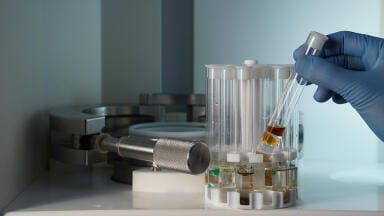
The Liquefied Gas Injector (LGI) injects the LPG as a liquid directly into the GC inlet, which eliminates the need for evaporating large volumes of liquefied gases. In a product video the system configuration is explained followed by a demonstration of the sampling & residue analysis in LPG using the Liquefied Gas Injector.
The calibration curve of the elemental sulfur analysis shows a linear correlation for the analysis range of 0.15 – 22 mg/kg. The calibration of five replicates displays a relative standard deviation below 5% at each concentration level.
Next a study of six LPG samples containing elemental sulfur was performed. This study demonstrates that the Sulfur application analyzes the different amounts of elemental sulfur, ranging from 0.1 to 20 mg/kg S. A Limit of Detection (LOD) of 0.01 mg/kg S for individual components was achieved.
Da Vinci introduced the Liquefied Gas Injector in 2010 for the safe, fast and accurate analysis of oily residue in liquefied petroleum gases by gas chromatography. Adapting the hardware setup allows to extend the analysis to a wider application range comprising of:
A new brochure describes the various applications of the DVLS Liquefied Gas Injector. Contact us to request for the new brochure of the Liquefied Gas Injector.
PIN 27.4 Aug/Sept 2026

 Product directory


.jpg)











.jpg)

.jpg)