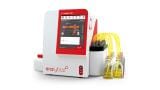
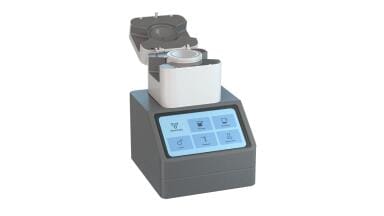
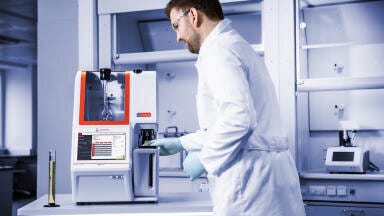
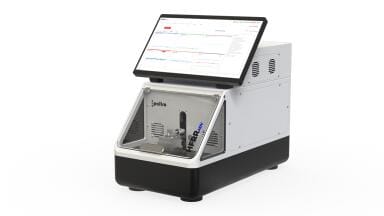
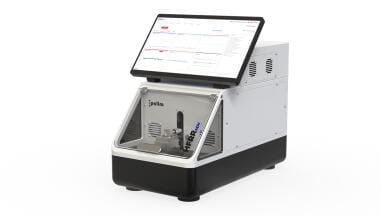
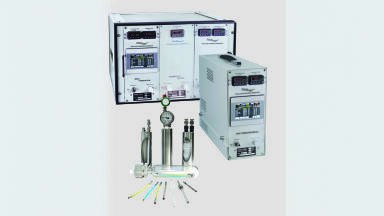
Versaperm (UK) has introduced a sensitive new instrument to measure vapour permeability for a wide range of gases, including O2, N, He, Hydrocarbon-based and water vapour.
Versaperm’s new-version MkVI meter can measure permeability and diffusive flow across samples, finished packages, seals and equipment – for an enormous range of commonly used gasses. Most materials, seals, pipes and equipment are subject to vapour diffusion which can lead to
performance changes in many materials. It can also result in anything from reduced drug potency through instrument and electronics failure.
The Versaperm meter can determine vapour permeability for almost any material and gas, and can give results in as little as 30 minutes. Conventional gravimetric measurement takes days or even weeks and is significantly less accurate and repeatable.
The new instrument is reliable and offers highly reproducible results. Its highly automated computerised control makes it very simple to operate and be configured to cope with several samples at a time,. Results may be as accurate to a few part per million (with some samples a few parts per hundred million).



 Product directory


.jpg)









.jpg)

.jpg)


.jpg)