Analytical instrumentation
Published over 8 years ago. See the latest and most current information on Analytical instrumentation.
By Matt Kreiner, Product Manager, Hitachi High-Tech Analytical Science
Air and water quality are increasingly important concerns for the shipping and boating industries. Both the International Maritime Organization (IMO) and the EU are implementing new regulations regarding sulfur content in marine fuels. X-ray fluorescence (XRF) analysers provide one of the most cost-effective techniques for measuring sulfur content both at the laboratory or on-board a ship.
IMO’s new global low sulfur fuel oil requirement
As part of ongoing efforts to reduce air pollution released from burning fossil fuels, the IMO has announced that the Maritime Protection Committee (MEPC) agreed to implement the proposed 0.50% global sulfur cap on marine fuels on 1 January 2020.
This is a significant reduction from the current limit of 3.50% which has been in place since 2012.
Within sulfur emission control areas (ECA), the sulfur limit remains at the 0.10% level established in 2015. ECAs are established in the Baltic Sea area, North Sea area, North American area, United States Caribbean Sea area and three regions in China – the Pearl River Delta, Yangtze River Delta and Bohai Sea Region.
To ensure compliance, a variety of control measures can be put in place, such as on-board sulfur testing.
Using X-ray fluorescence (XRF) technology to measure sulfur content
XRF analysis is rapid (taking seconds or minutes), non-destructive, and requires little sample preparation. The global petroleum community trusts XRF spectrometers for upstream and downstream quality control, and it is also a common technique used by on-shore test laboratories. The same testing can be performed reliably by minimally trained staff on a ship following accepted test methods such as ISO 8754, IP 336 and ASTM D4294.
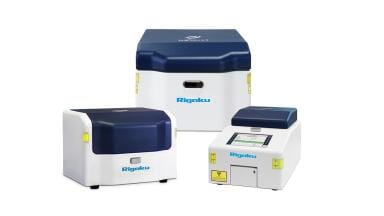
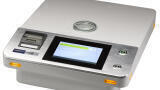
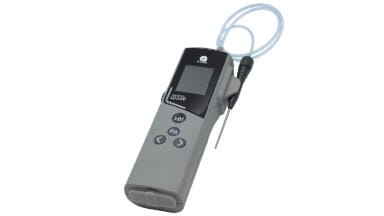
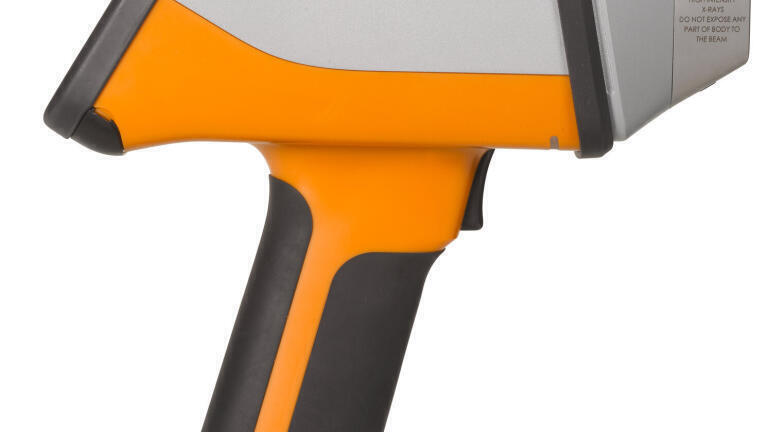
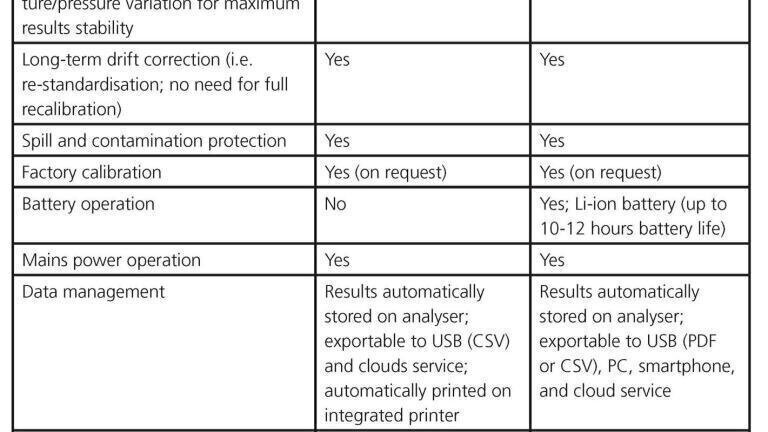
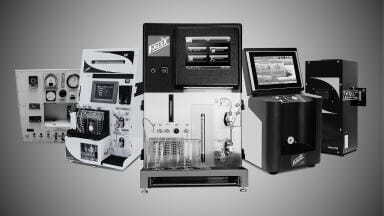
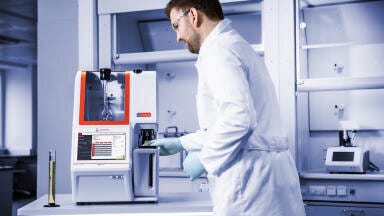
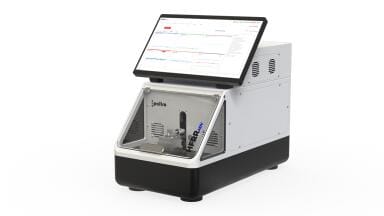
Hitachi High-Tech’s range of XRF analysers are easy to operate, requiring minimum user training. Self-contained and requiring no gas purge, the benchtop Lab-X5000 and the handheld X-MET8000 deliver cost-effective sulfur analysis at the laboratory or on-board a ship. The X-MET is fully portable and can be taken from ship to ship, port to port, if spot-checks are required. Potentially expensive sample spills or cup leakages are prevented by the use of our simple-to-assemble safety window. The analysers are factory-calibrated using reference materials according to industry standard test method procedures. With an intuitive user interface, operators also have the ability to create their own calibrations to meet other applications requirements.
As maritime emissions regulations change, XRF can be depended upon to provide fast, reliable and easy fuels analysis.
Choosing the right XRF analyser for your needs
At Hitachi High-Tech, we are able to provide you with both benchtop analysers (Lab-X5000) which are ideal on-board a ship or in a lab, and field-portable analysers (X-MET8000).
PIN 27.4 Aug/Sept 2026



 Product directory









.jpg)