Analytical instrumentation
Published over 9 years ago. See the latest and most current information on Analytical instrumentation.
Thought robots were reserved for Will Smith movies? Think again. As well as hospitals, manufacturing plants and cruise ship bars, robots are set to make an appearance in some of West Australia’s biggest petroleum mines.
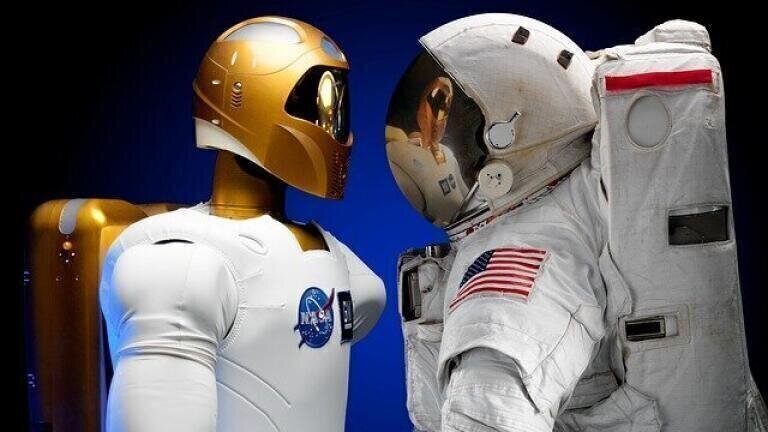
In collaboration with NASA, oil giant Woodside Petroleum will put a next generation humanoid Robonaut to work in its WA mines. The goal is to explore how robotic technology can be used to improve operational efficiency, as well as improve employee safety in high risk, isolated environments.
The big news was announced by Woodside Petroleum earlier this month, with a representative revealing that NASA has agreed to loan the company its "highly dextrous" anthropomorphic machine for a five year stint.
While it’s an exciting step forward for the oil and gas industry, it’s not the first time Woodside has toyed with AI. In 2015 the company announced plans to develop its own AI unit, designed to boost productivity in the wake of the oil price crash. According to Senior VP and Chief Technology Officer Shaun Gregory, the latest NASA collaboration will put WA on the map as a global centre for AI excellence.
"We want the best thinkers from inside and outside our company to be working on solutions that unlock value in our operations," he said in a recent statement. "It also supports the WA innovation agenda."
Designed to operate in extreme conditions, NASA’s robots are purpose built for environments like the International Space Station. For Woodside, they’ll be programmed to carry out dangerous tasks that put human lives at-risk. The company has sourced insight from its frontline employees, and put together more than 300 ideas that robots could be trained to perform.
Due to arrive in mid-2018, Robonaut technology could revolutionise the oil and gas industry. Not only from a safety perspective, but also from an operational efficiency viewpoint.
Of course, the project isn’t without criticism. While Woodside maintains that Robonaut will save lives, some critics are concerned that the rise of robotics could also put jobs at risk. As AI continues to develop, an Oxford University study warns that more than 700 occupations are at risk of computer automation.
Technology has always played a vital role in advancing the oil and gas industry. For more information on the latest analytical tools that are reimagining the chromatographic separations process, ‘GC - MS ANALYSIS IN HYDROCARBON PROCESSING GOES BALLISTIC’ is a must read article.
PIN 27.4 Aug/Sept 2026


 Product directory


.jpg)







.jpg)
.jpg)