Environmental laboratory
Urban densification and the growth of vehicle fleets are putting increasing pressure on air quality in underground car parks.
Emissions of carbon monoxide (CO), nitrogen dioxide (NO₂), liquefied petroleum gas (LPG), and compressed natural gas (CNG) require systems that can quickly detect exceedances, provide clear alerts, and control ventilation to balance safety with energy efficiency.
The rise of electric vehicles adds another layer of complexity: early detection of certain gases can indicate a thermal runaway event in EV batteries. Recognising these events early helps prevent fire risks and enables timely responses from facility teams.
Continuous supervision gives operators immediate visibility across the car park, with reliable traceability and accurate data to support operational decisions.
From a regulatory perspective, this need falls under EN 50545-1, the European standard for fixed toxic gas detection in car parks and tunnels. The standard sets out performance and usage requirements, including measurement accuracy, response time, alarm and fault management, self-monitoring, periodic testing, maintenance, and installation recommendations.
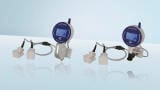
In line with EN 50545-1, DALEMANS gas detectors form the first line of protection, monitoring levels of CO, NO₂, LPG, and CNG across car park areas.
In practice, gas monitoring in car parks typically relies on detectors distributed across floors and areas. Sensors are positioned according to gas density: CO and NO₂ at around 150 cm from the ground, LPG near 15 cm, and CNG near the ceiling.
They continuously monitor gas levels, perform self-checks, and transmit measurements in real time to a control panel covering lanes, ramps, and stagnation-prone areas, ensuring consistent coverage.
The control panel aggregates this information, manages thresholds, acknowledgements, and faults, and controls ventilation and alarms. Data can also be transmitted to other supervisory systems via Modbus TCP.
However, operations often reveal three friction points that can affect safety, compliance, and efficiency:
Data centralisation: Measurements remain scattered across sensors, panels, and floors, creating delays and inconsistencies during gas exceedances.
Data visualisation: Heterogeneous interfaces and incomplete zone-based views make alarms harder to interpret, reducing situational awareness.
Traceability management: Incomplete historical records of measurements, events, and faults complicate consolidation for testing, maintenance, and reporting.
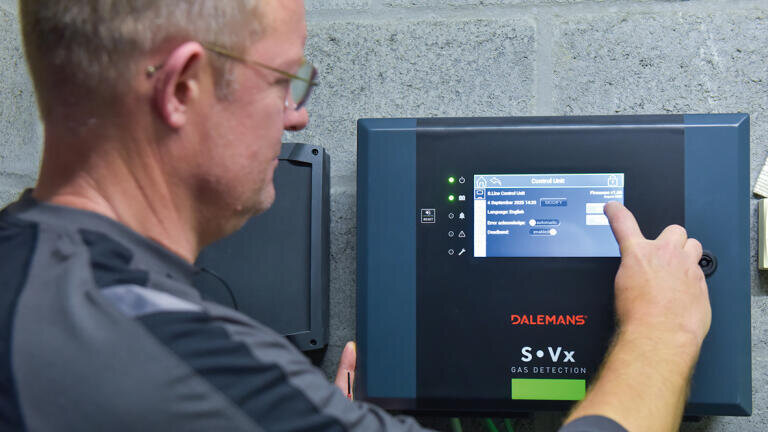
Integrating a human–machine interface with detectors and control panels can address these challenges. For example, DALEMANS detectors, combined with the Fuji Electric TS4000 HMI, can automatically collect measurements from all sensors, unify formats, and centralise data into a single reference system. This provides operators with a clear, comprehensive overview, enabling faster, more accurate decision-making and coordinated action across floors and zones.
The HMI continuously records values, alarms, faults, acknowledgements, and events, all timestamped and linked to specific zones, floors, and equipment. Historical logs support analysis, reporting, and maintenance planning, with easy access for operational teams.
Touchscreen displays can be customised to display zones, trends, thresholds, alarms, faults, statistics, and ventilation indicators. Whether accessed locally or remotely via Modbus TCP, this interface accelerates understanding and supports timely responses in the field.
Centralise and secure data: Supervise all detectors, record readings, and maintain historical logs.
Display what matters: Custom screen layouts tailored to your operational needs.
Access locally or remotely: Consult readings and histories on the HMI or through a supervisory system.
Flexible screen sizes: TS4000 models from 7 to 15 inches, adaptable to available space.
Remote supervision: Read and integrate Modbus TCP data via third-party supervisory systems.
Custom readability: Tailored displays for zones, floors, thresholds, alarms, and trends.
Project support: Co‑engineering with DALEMANS to define the architecture, adapt the screens, and ensure reliable integration of detectors and control panels.
PIN 27.2 Apr/May 2026


 Product directory