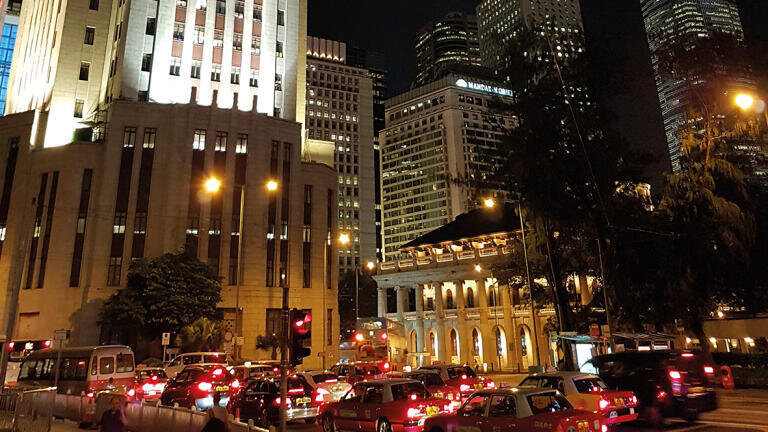
Environmental laboratory
China’s vastly growing economy has come with the side effect of rapidly growing NOx emissions by industrial emissions, combustions and fossil fuel consumption. Anthropogenic nitrogen oxides influence vastly the tropospheric chemistry, leading to photochemical smog (Rubio et al.,2002) and the increased concentration levels of urban ozone (Melkonyan & Wagner, 2013).
The rural exodus and migration into China’s economic centers, leads to an add-on of NOX-concentration into highly densely populated areas. For example, China’s capital Beijing grew from 11.8 million citizens in 2007 to 21.5 million in 2016 and 22 million in 2017 (Xinghua, 2017). In parallel, the total number of cars on the road was estimated at 5.62 million by the end of 2015.
Currently the capital administration is trying to limit the vehicle number to 6 million (Meng Xue, 2017). Cars in the city of Beijing run at an average speed of 7.5 miles per hour (12.1 km/h).
In consequence, China’s authorities have decided to reduce the annual registration from the current 150.000 cars to 100.000 cars a year in 2018 (Xinghua, 2016). The tax will rise to 7.5% in 2017 and up to 10% in 2018 (Reuters.com, 2017-01-12). On the other side, development and distribution of electric and alternatively powered cars are pushed.
Researchers estimate that 2.8 million citizens endured cancer deaths and 4.3 million new cancer cases emerged during 2015 (Chen et al., 2015). In December 2016 the National People’s congress implemented China’s first tax regulation focusing on Environmental protection, the EPT Law, replacing the predecessor pollutant discharge fee (PDF), to strengthen law enforcement, effective from January 2018 (Weining Hu, 2017).
China’s latest action on vehicle emission regulation is the “China 6/VI emission standard for light- and heavy-duty vehicles” (Fig.1), which the government intends to implement nationwide by 2020 (Hui He, 2016).
In order to measure the current situation and the potential progress of the newly instated counter measures, new monitoring applications are approached to give a realistic insight.
Prof. Zhi Ning from the City University of Hong Kong focuses on the “On-road traffic pollution and vehicle plume measurements in Hong Kong and Beijing”.
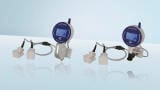
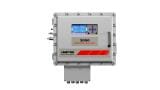
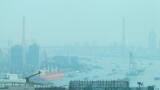
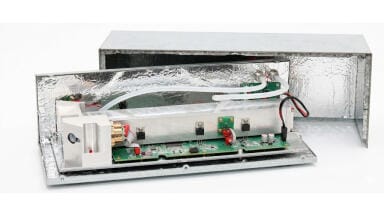
PM2.5 and ECO PHYSICS NOx-detectors (nCLD66, Fig.2) are installed in monitoring vehicles, that follow a daily routine pattern, including exemplary sampling sites, to display the real atmospheric situation inside China’s metropolises (Fig.3).
Along with on-road and road-side measurement, the traffic volume is quantified in parallel by numerous traffic counting points.
The outcome of the daily monitoring (Fig.4) has the goal to lead to a sustainable transport policy initiative with NGOs, giving new perspectives on alternative city planning.
Fig.1: Projected emission reduction of PM and NOx with implementation of China 6/VI standards by 2020. (Source: ICCT roadmap model)
Fig.2: nCLD66, nCLDAL2
Fig.3: Measurement pattern for on and off-road emission (Prof. Zhi Ning, School of Energy and Environment,
City University of Hong Kong, 2017)
Fig.4: Vehicle type emission results (Prof. Zhi Ning, School of Energy and Environment,
City University of Hong Kong, 2017)
Rubio, M.A., Lissi, E., Villena, G., “Nitrite in rain and dew in Santiago city, Chile. Its possible impact on the early morning start of the photochemical smog”. Atmospheric Environment, 36(2):293-297. 2002
Melkonyan, A., Wagner, P., “Ozone and its projection in regard to climate change”. Atmospheric Environment, 67:287-295. 2013
Xinghua, “Bejing to cut number of new cars”. http://www.chinadaily.com.cn/china/2016-10/25/content_27170185.htm . 2016
Xinghua, “Beijing to cap population at 22 mln in 2017”. http://www.china.org.cn/china/2017-01/15/content_40106128.htm . 2017
Spring J., Cheng F., “China vehicle sales to grow 5 percent in 2017 as tax cut reduced “. https://www.reuters.com/article/us-china-autos-sales/china-vehicle-sales-to-grow-5-percent-in-2017-as-tax-cut-reduced-idUSKBN14W0T6 . 2016
Meng X., “Beijing to limit vehicles to under 6 million by 2017”. http://english.cri.cn/12394/2016/09/14/4081s940288.htm . 2016
Grey D., “A big reason Beijing is polluted: The average car goes 7.5 miles per hour”. https://qz.com/163178/a-big-reason-beijing-is-polluted-the-average-car-goes-7-5-miles-per-hour/ . 2016
Chen W., Zheng R., Zhang S. et al. “Cancer Statistics in China”, 2015. CA: Cancer J. for Clin. 2016.
Ning Z., “On-road traffic pollution and vehicle plume measurements in Hong Kong”. School of Energy and Environment, City University of Hong Kong. 2017
PIN 27.2 Apr/May 2026


 Product directory