Analytical instrumentation
The rapid growth of renewable fuels, including Hydrotreated Vegetable Oil (HVO), Renewable Diesel, and Sustainable Aviation Fuel (SAF), requires stringent quality control to ensure engine performance and regulatory compliance.
These fuels typically contain ultra-low concentrations of sulfur and nitrogen, requiring analytical techniques capable of reliable sub-ppm determination.
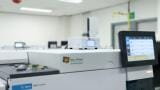
The TRACE XplorerPlus TN/TS analyzer equipped with the new Liquids Module Plus provides an optimized solution for the direct introduction of liquid renewable fuels.
The enhanced sample introduction module offers improved temperature control, an increased maximum injection temperature of 600 °C, and an integrated automatic oxygen cleaning function that significantly reduces contamination and maintenance requirements.
Combined with the combustion technology of the XproPlus furnace tube, the Liquids Module Plus enables accurate, precise and reliable determination of total sulfur according to ASTM D5453 and total nitrogen according to ASTM D4629, making it ideally suited for routine analysis of HVO, SAF and related renewable fuels.
Renewable fuels are becoming increasingly important in meeting global sustainability targets while maintaining compatibility with existing transportation infrastructure.
Hydrotreated Vegetable Oil (HVO) and Sustainable Aviation Fuel (SAF) are paraffinic hydrocarbons with virtually no oxygen-containing compounds, very low sulfur levels and excellent combustion characteristics.
Compared with conventional biodiesel (FAME), these fuels offer improved oxidation stability, reduced NOx and SOx emissions, excellent cold-flow properties and compatibility with existing diesel and aviation engines.
HVO can be used directly in diesel engines or blended with conventional diesel, while SAF is approved for blending with conventional jet fuel up to 50%.
Because sulfur and nitrogen concentrations are typically well below 15 mg/kg, and often below 1 mg/kg, analytical techniques must provide excellent sensitivity, repeatability and robustness while complying with ASTM D5453 and ASTM D4629.
Direct liquid injection is particularly well suited for HVO and SAF because these fuels are clean, homogeneous hydrocarbon matrices with excellent injection characteristics.
The newly developed Liquids Module Plus for the TRACE XplorerPlus enhances analytical performance by providing:
• temperatures up to 600 °C, compared with 500 °C for the previous generation;
• improved temperature regulation and steering for more reproducible vaporization and combustion;
• an automatic oxygen cleaning cycle that periodically switches the carrier gas from argon to oxygen, effectively removing deposits from the injection system and minimizing routine maintenance.
Together with the enhanced capacity of the XproPlus combustion tube, these improvements increase system robustness, maximize uptime and provide highly reliable trace sulfur and nitrogen analysis for renewable fuels.
The simultaneous determination of total sulfur and total nitrogen was performed using the TRACE XplorerPlus horizontal combustion analyzer equipped with ultraviolet fluorescence (UVF) detection for sulfur and chemiluminescence detection (CLD) for nitrogen.
Samples were introduced using the Liquids Module Plus, installed on the TRACE XplorerPlus TN/TS analyzer and coupled to a VECTRA liquid autosampler equipped with a temperature-conditioned sample tray and precision syringe.
The direct liquid injection system allows accurate and reproducible introduction of liquid hydrocarbon samples without sample dilution.
Calibration curves for sulfur and nitrogen were established over the required concentration ranges, after which renewable fuel samples containing both low and elevated sulfur and nitrogen concentrations were analyzed.
Each sample was measured as ten replicates to evaluate repeatability, while certified reference materials (CRMs) were used to verify analytical accuracy.
1. Sample Introduction: A defined volume of sample 50 μL is introduced via direct injection.
2. Evaporation: During the controlled sample introduction, the sample is evaporated in the Liquids Module under a flow of inert carrier gas (argon or helium), which transports the vaporized sample into the combustion furnace.
o Oxidation: An oxygen-rich atmosphere at above combustion temperatures oxidizes the hydrocarbons to CO2 and H2O, whereby the sulfur compounds present in the sample are converted to SO2 and nitrogen compounds converted into NO.
3. Detection simultaneous S and N: After removal of the water molecules out of the combustion gasses:
o S: SO2 is excited by UV light and emits light as it relaxes, detected by a photomultiplier tube (PMT).
o N: NO reacts with ozone to form excited NO2*, emitting light, which is detected by a photomultiplier tube (PMT).
See below figure to show the principle of operation and set-up of the TN/TS analyzer:
Standards used for calibration were made from Pyridine (N) and Dibutyl Sulfide (S) in Xylene.
The XplorerPlus is calibrated in the range 0.1-10 mg/L and 1-100 mg/L.
All calibration points have been corrected for the average blank area count.
Example Graph 1: Calibration line, Total Sulfur 0.1 – 10 mg/L. R2 = 0.999887
Example Graph 2: Calibration line, Total Nitrogen 0.1 – 10 mg/L.
R2 = 0.999192
The following 2 tables show the analytical performance of the nitrogen and sulfur analysis data obtained with the given configuration of the TRACE XplorerPlus model TN/TS analyzer.
The set of samples did include sustainable and renewable fuel samples which were analyzed undiluted.
Diesel round robin samples and Gasoline CRM standards were included in the sample analysis to demonstrate high accuracy of analysis and as basis for the blending of sample material.
Table 1: Results for Total Nitrogen, sample data based on 10 replicates per sample
Table 2: Results for Total Sulfur, sample data based on 10 replicates per sample
Chromatograms for Total Sulfur (top) and Total Nitrogen Kerosine/SAF Blend
The analytical results demonstrate that direct liquid introduction using the Liquids Module Plus model provides excellent repeatability and accuracy for renewable fuel analysis.
HVO and SAF samples exhibited extremely low sulfur and nitrogen concentrations, while blended samples showed excellent recoveries relative to certified reference materials.
The improved injector temperature capability and enhanced temperature control contribute to consistent sample vaporization, controlled oxidative high temperature combustion and stable detector response.
In addition, the automatic oxygen cleaning function effectively removes deposits from the sample introduction pathway, reducing maintenance requirements.
It will ensure long-term instrument uptime during routine laboratory operation.
The TRACE XplorerPlus equipped with the new Liquids Module Plus provides a robust and efficient solution for trace-level determination of total sulfur and total nitrogen in renewable fuels such as HVO and SAF according to ASTM D5453 and ASTM D4629.
The increased injector temperature capability of 600 °C, enhanced temperature steering and automatic oxygen cleaning functionality improve sample introduction robustness, minimize contamination and reduce routine maintenance.
Combined with the high combustion efficiency of the XproPlus combustion tube, these improvements deliver excellent analytical performance, high productivity and reliable long-term operation for routine quality control of renewable and conventional liquid fuels.
• Trace Total Sulfur Analysis per ASTM D5453
• Trace Total Nitrogen analysis per ASTM D4629
PIN 27.4 Aug/Sept 2026


 Product directory