Analytical instrumentation
Friction and wear have been important research concepts since the industrial revolution.
The friction and wear of mechanical parts have caused energy efficiency loss and equipment mechanical failure [1].
Lubricants are used to protect against wear and heat loss between contacting surfaces, protecting them from deterioration and oxidation [2].
In recent years, the lubrication industry has developed rapidly.
Lubricants and greases that are commonly used in many industries are mainly composed of base oils and various lubricant additives.
In today’s market, 90% of lubricants are composed of hydrocarbon molecules and the rest are additives that govern their behavior [3].
Modern additives are being investigated to satisfy the high performance of lubricants and greases.
Additives could greatly improve the tribological performance of lubricating oils by endowing new properties and making up for the disadvantages of pure base oils [4].
The industrial shift towards bio lubricants has also contributed to the advancement of additives.
Despite the environmental advantages of bio lubricants due to their biodegradability, they exhibit poor performance, such as poor thermal and oxidation stability, poor low-temperature fluidity and poor hydrolytic stability, which makes it difficult to use in heavy machinery industry [5]. This has led to the development of additives that address the limitations of bio-based oils.
The additives are organic and synthetic chemical substances that can improve the properties and parameters of lubricants such as oxidation, wear, corrosion and friction.
Nanoparticles have been studied to be used as lubricant additives to reduce the effects of friction and wear in industrial applications [6].
There are various compositions of nanoparticles that have demonstrated various degrees of friction-modifying and anti-wear effects.
The widely studied and utilized nanoparticle examples are mainly categorized by material types.
They include metal oxides such as titanium dioxide (TiO2), zinc oxide (ZnO) and aluminum Oxide (Al2O3), carbon-based nanoparticles such as graphene, graphene oxide and carbon nanotubes, and inorganic sulfides and dichalcogenides such as molybdenum disulfide.
Further research on additives has led to the discovery of two-dimensional nanomaterials such as hexagonal boron nitride, tungsten disulfide and molybdenum disulfide [7].
There are four major mechanisms responsible for the improved tribological performance using nanoparticles as additives.
The rolling effect, as seen in Figure 1, shows nanoparticles producing a rolling effect, converting sliding friction to rolling friction.
The mending effect refers to when nanoparticles deposit themselves into the valleys and grooves, smoothing out the surface [8].
The polishing effect happens when the asperities of the surface break down, making it smooth [9].
Lastly, nanoparticles form a protective film between the surfaces, preventing direct contact and reducing wear [9].
This paper will examine the major types of nanoparticles alongside their main examples, applications, limitations and future outlook.
Figure 1: Illustration of lubricant mechanisms of nanoparticles [9].
Carbon nanoparticles are highly utilized as advanced lubricant additives and solid lubricants.
Due to the success of graphite as a solid lubricant in industry for centuries, carbon-based nanoparticles have been the focal point for tribological research [10].
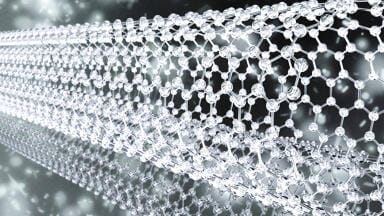
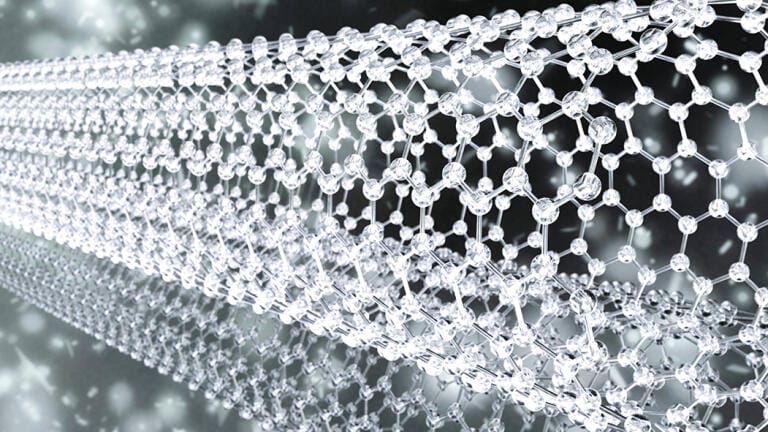
Graphene has a unique layered honeycomb structure and has a hexagonal lattice with a single atomic carbon plane constructed by sp2-hybridized carbon atoms [11].
Graphene has excellent physicochemical and mechanical properties and has been researched as an additive to improve the tribological performance of lubricants.
It exhibits high mechanical strength, outstanding conductivity, low shear strength and high surface area [12].
Graphene-based nanoparticles are used as additives in different engineering applications such as drilling fluids, rolling and cutting fluids, and industrial gear oils.
One challenge in the lubricating performance of drilling fluids is high temperatures over 200 °C. Geng et al. found that graphene-based lubricant combined with glyceryl trioleate substantially improved lubrication performance at 240°C [13].
The lubricant reduced the adhesion coefficient by more than 70%, showing that graphene reduced friction and increased the drilling efficiency of the lubricant.
Although graphene additive is thermally unstable at high temperatures, experimental evidence from Wang et al. shows that multilayer graphene nanoplatelets (GnP) continue to exhibit solid lubrication at higher temperatures.
Graphene nanoplatelets are a multilayer of flattened graphene sheets held together by weak van der Waals forces which, when placed between to sliding surfaces, friction is applied within the GnP stack, overall reducing friction and wear [14].
In ball on disc tests, GnP reduced friction and wear across the 600 - 900°C. The coefficient of friction dropped by roughly 50% at 600-700°C. The coefficient of friction continued to be measurably lower even at 800-900°C.
However, at the 800-900°C range, the coefficient of friction was reduced for a shorter duration of around 70 sec and 40 sec respectively before oxidation occurred, diminishing its lubrication effect, as seen in Figure 2 [15].
Figure 2: Effect of coefficient of friction against sliding time for dry and introduced graphene nanoparticles tests at various temperatures [15].
Two-dimensional nanomaterials have attracted great attention as lubricant additives because of their physical and mechanical properties.
Hexagonal boron nitride consists of thin sheets of boron nitride with each sheet containing boron and nitride covalently arranged in a hexagonal structure [16].
This additive is an insulator with a wide band gap of around 6 eV and exhibits higher thermal stability and resistance towards oxidation compared to graphene [16].
These properties promise the potential of hexagonal boron-nitride nanosheet additives in industrial applications such as nanoelectronics, piezoelectricity, electron field emission, and self-cleaning coating [7], [17].
The improvement of friction and wear is linked to the weakly bonded lamellar structure of h-BN.
This property allows for the layers to easily slide against each other and reduces the shear resistance of the surfaces in contact [18].
h-BN nanoplatelets formed a thin protective film on the steel surface, which minimized the surface damage and enhanced wear resistance.
Although h-BN offers great advantages as a lubricant additive, it disperses poorly in liquid lubricant base oils.
To address this, Kumari et al. exfoliated h-BN powder into thin b-BN nanoplatelets and then chemically attached a long octodecyltriethoxysilane alkyl chain to deflect and edge sites on the nanoplatelet surface.
This surface treatment allowed octadecyltriethoxysilane-functionalized h-BN (h-BNNPS-ODTES) to stay stabilized when dispersed in synthetic polyol ester oil for an extended period of time.
This is due to the attached alkyl chains interacting favorably with the polyol ester oil’s hydrocarbon group [18].
In the ball and disk experiment, different concentrations of h-BNNPs-ODTES were tested.
Figure 3 shows that the 0.04 mg.mL-1 exhibited the lowest coefficient of friction compared to the other lower concentrations.
However, when the concentration was increased to 0.06 mg.mL-1 the coefficient of friction increased. Figure 4 showed that when polyol ester was used, the track was 570 μm
in width and 12 570 μm deep. However, with the addition of h-BNNPs-ODTES the track decreased significantly.
Figure 3: Effects of friction coefficient with the number of laps for different concentrations of h-BNNPs-ODTES blended in polyol ester [16].
Figure 4: Wear effects of polyol ester lube oil with and without 0.04 mg.mL- h-BNNPs-ODTES [16].
Metal oxide nanoparticle lubricating additives have shown improved tribological properties in lubrication [19].
Aluminum, silver and copper oxide nanoparticles are widely used as additives [20].
Abdel Rehim et al. study tested the tribological performance of spherical copper oxide nanoparticles dispersed in a 20W-50 mineral base oil while using oleic acid as a surfactant to stabilize the dispersion.
The lubricant with 0, 0.2, 0.5 and 1 wt. % were tested using a pin on disc tribometer across different loads.
In Figure 4, the results showed that CuO particles reduced the coefficient of friction by 15%-42.9% compared to base oil alone.
At low load and speed, 0.2 wt% concentration performed the best, while 0.5wt% concentration performed the most consistently across a wider range of conditions [21].
The results were proven by surface analysis which indicated that the CuO reduced friction through two mechanisms.
One of the mechanisms is tribosintering, where the CuO nanoparticles fill the surface micro-grooves and get mechanically flattened under heat and pressure to form a protective film.
Secondly, through the nano-ball-bearing effect where the particles roll between the sliding surfaces, converting the sliding friction into rolling friction [22].
Figure 5: Effect of CuO additive on specific wear rate under different concentrations [21].
Despite their promising performance on the tribological properties of lubricants, nanomaterials face several challenges.
One major challenge is their poor dispersion stability. Nanoparticles tend to agglomerate over time, reducing their effectiveness and increasing wear.
Research shows that increasing the concentration of nanoparticles excessively can lead to particle aggregation and diminished performance.
With the shift towards environmentally conscious lubricants, there is still limited information regarding the long-term environmental and health impacts of incorporating these nanoparticles into bio-lubricants and greases.
Future research is expected to focus on improving nanoparticle dispersion through advanced surface functionalization. Hybrid additives provide tribological improvements where individual nanoparticles fall short.
Nanomaterials have demonstrated significant promise as lubricant additives, offering measurable advantages in friction reduction, wear resistance, and surface durability across different materials and at different operating conditions.
Carbon-based nanoparticles, particularly graphene and graphene nanoplatelets, show strong lubricating performance. GnP retains functionality up to 900°C due to its multilayer structure.
For two-dimensional nanoparticles, hexagonal boron nitride, when combined with other nanoparticles, offers major tribological advantages as well as overcoming dispersion challenges seen in h-BN.
Metal oxides, such as CuO, combine tribosintering and nano-ball-bearing lubrication mechanisms.
In all nanoparticles, optimal concentration needs to be used to achieve optimal performance.
When a low concentration of additives is used, there is little significance in wear and friction.
However, excessive concentration promotes agglomeration and oxidation, which degrades the materials rather than enhancing performance.
In conclusion, further research in nanomaterial additives is required as they play a central role in improving the durability and energy efficiency of mechanical systems across industrial applications.
Dr. Raj Shah, is a Director at Koehler Instrument Company in New York, where he has worked for the last 25 plus years.
He is an elected Fellow by his peers at ASTM, IChemE, ASTM,AOCS, CMI, STLE, AIC, NLGI, INSTMC, Institute of Physics, The Energy Institute and The Royal Society of Chemistry.
An ASTM Eagle award recipient, Dr. Shah recently coedited the bestseller, “Fuels and Lubricants handbook”, details of which are available at ASTM’s Long-awaited Fuels and Lubricants Handbook https://bit.ly/3u2e6GY.
He earned his doctorate in Chemical Engineering from The Pennsylvania State University and is a Fellow from The Chartered Management Institute, London.
Dr. Shah is also a Chartered Scientist with the Science Council, a Chartered Petroleum Engineer with the Energy Institute and a Chartered Engineer with the Engineering council, UK.
Dr. Shah was recently granted the honorific of “Eminent engineer” with Tau beta Pi, the largest engineering society in the USA.
He is on the Advisory board of directors at Farmingdale university (Mechanical Technology), Auburn Univ (Tribology), SUNY, Farmingdale, (Engineering Management) and State university of NY, Stony Brook (Chemical engineering/ Material Science and engineering).
An Adjunct Professor at the State University of New York, Stony Brook, in the Department of Material Science and Chemical Engineering, Raj also has over 700 publications and has been active in the energy industry for over 3 decades.
Fiona Njeri Okech is also a member of a thriving petroleum research internship at Koehler Instrument Company, where she regularly contributes to the petroleum and energy research industry.
[1] S. Shahnazar, S. Bagheri, and S. B. Abd Hamid, “Enhancing lubricant properties by nanoparticle additives,” Int. J. Hydrog. Energy, vol. 41, no. 4, pp. 3153–3170, Jan. 2016, doi: 10.1016/j.ijhydene.2015.12.040.
[2] M. Akbulut, “Nanoparticle-Based Lubrication Systems,” J. Powder Metall. Min., vol. 01, no. 01, 2012, doi: 10.4172/2168-9806.1000e101.
[3] A. Yadav, Y. Singh, and P. Negi, “A review on the characterization of bio based lubricants from vegetable oils and role of nanoparticles as additives,” Mater. Today Proc., vol. 46, pp. 10513–10517, 2021, doi: 10.1016/j.matpr.2021.01.046.
[4] Y. Zeng et al., “A Review of Chemical Modification of Vegetable Oils and Their Applications,” Lubricants, vol. 12, no. 5, May 2024, doi: 10.3390/lubricants12050180.
[5] T. M. I. Riayatsyah et al., “Biolubricants for electric vehicles: A sustainable perspective on emerging challenges and opportunities,” Renew. Sustain. Energy Rev., vol. 235, p. 116967, Jul. 2026, doi: 10.1016/j.rser.2026.116967.
[6] Z. Jiang et al., “Research progresses of nanomaterials as lubricant additives,” Friction, vol. 12, no. 7, pp. 1347–1391, Jul. 2024, doi: 10.1007/s40544-023-0808-9.
[7] Z. Jiang et al., “Two-dimensional nanomaterials as lubricant additives: the state-of-the-art and future prospects,” J. Mater. Chem. C, vol. 13, no. 9, pp. 4327–4373, Mar. 2025, doi: 10.1039/d4tc04844j.
[8] L. Hao et al., “Tribological evaluation and lubrication mechanisms of nanoparticles enhanced lubricants in cold rolling,” Mech. Ind., vol. 21, no. 1, p. 108, 2020, doi: 10.1051/meca/2019085.
[9] M. Waqas, R. Zahid, M. U. Bhutta, Z. A. Khan, and A. Saeed, “A Review of Friction Performance of Lubricants with Nano Additives,” Materials, vol. 14, no. 21, p. 6310, Jan. 2021, doi: 10.3390/ma14216310.
[10] M. M. Rahman, M. Islam, R. Roy, H. Younis, M. AlNahyan, and H. Younes, “Carbon Nanomaterial-Based Lubricants: Review of Recent Developments,” Lubricants, vol. 10, no. 11, p. 281, Nov. 2022, doi: 10.3390/lubricants10110281.
[11] Q. Gao, S. Liu, K. Hou, Z. Li, and J. Wang, “Graphene-Based Nanomaterials as Lubricant Additives: A Review,” Lubricants, vol. 10, no. 10, p. 273, Oct. 2022, doi: 10.3390/lubricants10100273.
[12] A. R. Marlinda et al., “Graphene as a Lubricant Additive for Reducing Friction and Wear in Its Liquid-Based Form,” Lubricants, vol. 11, no. 1, p. 29, Jan. 2023, doi: 10.3390/lubricants11010029.
[13] Y. Geng et al., “A novel graphene/triolein complex-based lubricant for improving high temperature water-based drilling fluid,” RSC Adv., vol. 13, no. 49, pp. 34772–34781, Nov. 2023, doi: 10.1039/d3ra04850k.
[14] M. Bahiraei and S. Heshmatian, “Graphene family nanofluids: A critical review and future research directions,” Energy Convers. Manag., vol. 196, pp. 1222–1256, Sep. 2019, doi: 10.1016/j.enconman.2019.06.076.
[15] L. Wang, A. K. Tieu, M. Ma, J. Li, G. Hai, and H. Zhu, “Potential application of graphene nanoplatelets as a high temperature lubricant for hot rolling,” Friction, vol. 10, no. 11, pp. 1810–1823, Nov. 2022, doi: 10.1007/s40544-021-0556-7.
[16] S. Kumari et al., “Alkyl-Chain-Grafted Hexagonal Boron Nitride Nanoplatelets as Oil-Dispersible Additives for Friction and Wear Reduction,” ACS Appl. Mater. Interfaces, vol. 7, no. 6, pp. 3708–3716, Feb. 2015, doi: 10.1021/am5083232.
[17] N. Kostoglou et al., “The Roles of Impurities and Surface Area on Thermal Stability and Oxidation Resistance of BN Nanoplatelets,” Nanomaterials, vol. 14, no. 7, p. 601, Jan. 2024, doi: 10.3390/nano14070601.
[18] A. Morshed, H. Wu, M. Ren, Z. Xing, S. Jiao, and Z. Jiang, “A Study of Water-Based Nanolubricants Using Hexagonal Boron Nitride (hBN)-Based Nanocomposites as Lubricant Additives,” Lubricants, vol. 12, no. 4, p. 123, Apr. 2024, doi: 10.3390/lubricants12040123.
[19] A. Singh, P. Chauhan, and T. G. Mamatha, “A review on tribological performance of lubricants with nanoparticles additives,” Mater. Today Proc., vol. 25, pp. 586–591, Jan. 2020, doi: 10.1016/j.matpr.2019.07.245.
[20] A. Hernández Battez et al., “CuO, ZrO2 and ZnO nanoparticles as antiwear additive in oil lubricants,” Wear, vol. 265, no. 3–4, pp. 422–428, Jul. 2008, doi: 10.1016/j.wear.2007.11.013.
[21] A. A. Abdel-Rehim, S. Akl, and S. Elsoudy, “Investigation of the Tribological Behavior of Mineral Lubricant Using Copper Oxide Nano Additives,” Lubricants, vol. 9, no. 2, p. 16, Feb. 2021, doi: 10.3390/lubricants9020016.
[22] F. Du et al., “Research Progress Regarding the Use of Metal and Metal Oxide Nanoparticles as Lubricant Additives,” Lubricants, vol. 10, no. 8, p. 196, Aug. 2022, doi: 10.3390/lubricants10080196.
PIN 27.4 Aug/Sept 2026




 Product directory