Analytical instrumentation
Published over 13 years ago. See the latest and most current information on Analytical instrumentation.
The fast and correct determination of total sulphur is an integral part of the process and quality control in refineries. The most reliable method to do this is combustion of the sample followed by UV fluorescence detection of the produced SO2.
Independent of the sulphur content, the majority of matrices can be analysed with excellent results. But some of them give too high sulphur readings due to the presence of interfering components, such as nitrogen compounds. This effect is caused by a cross-sensitivity to NO, which fluoresces in the same wavelength range as SO2. Depending on the nitrogen content of the sample, this can lead to too high results of approx. 0.6 %–2 % of the TN content on the TS result. As an example, for a matrix, with 500 ppm TN, the TS value will be falsified by approx. 3–10 ppm.
Refinery products contain a multitude of additives, amongst them cetane improvers. They are used to improve the ignitability (cetane number) of fuels. For this purpose compounds containing nitrogen, such as amyl nitrate, cyclohexyl nitrite, triethylene glycol dinitrate, 2-ethoxyethyl nitrate, or 2-ethylhexyl nitrate, have proven to be especially suitable and cost efficient. Besides the positive effect on the ignition characteristics these substances also lead to increased nitrogen contents in the final product. Depending on the amount of cetane improver, this can have a significant influence on the sulphur determination. This is a serious problem, considering the fact that some fuels already have an "actual" TS content close to the specified maximum limit of 15 ppm resp. 10 ppm (ASTM D4814, D6751//DIN EN 590, DIN EN 14214). If the sulphur content is analysed after the add-on of such additives the result can be higher than allowed. The fuel exceeds the specified threshold (e.g. ULSD, grade S15) and no longer complies with the requirements. This means that a time and cost intensive "after treatment" is required (e.g. blending with a more pure fuel). However, these unnecessary costs and efforts can easily be avoided by using interference-free working detection techniques.
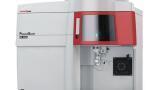
For this application field conventional elemental analysis systems fail by only delivering partially reliable results. In contrast the multi EA® series ensures matrix-independent, correct results, thanks to the innovative Micro Plasma Optimiser (MPO). This patented technique ensures that interfering components are converted into harmless species by direct ionisation of the reaction gas stream.
Sample Preparation and Analysis
An elemental analyser of the multi EA® series was used for the analyses in vertical operation mode. By means of the multi matrix sampler – MMS 5000 – for each sample a volume of 20 µl was injected fully automatically into the evaporation zone of the combustion tube. The sample digestion was carried out in a biphasic combustion process at 1050°C with a surplus of oxygen. This ensures the quantitative oxidation of all sample components. The formed SO2 was led to the UV fluorescence detector equipped with MPO.
Method parameters
The method TS_verti_liquid_MPO of the method library was used for the analysis.
Calibration:
Prior to the actual determination of the sulphur content, the system was calibrated using liquid standard solutions (dibenzothiophene in iso octane) in the range of 0–25 ppm.
Results and Discussion
The results given in table 1 and 2 are average values of 3 replicate analyses.
For refinery samples without high TN additives (diesel fuel No. 1) fully equivalent results are achieved by both, the common UV fluorescence and the UV fluorescence technique with MPO.
But in case of the diesel fuel No. 2 and the additive solutions with high TN content, the two techniques deliver quite different results. Here the common UV fluorescence technique fails by indicating too high sulphur values, due to the known cross-sensitivity to nitrogen monoxide.
Only the MPO technology is able to generate the correct TS result. This is clearly proven by the analysis results of the pure and the spiked additive solution (table 1 and 2).
Conclusion
The analyser of the multi EA® series are outstandingly well suited for the measurement of sulphur contents in diesel fuel and related matrices, independent of the type and quantity of used cetane improver. The Micro Plasma Optimizer (MPO) ensures correct results when measuring samples which are highly enriched with nitrogen compounds.
Of course the application possibilities of this technology are not only limited to petrochemical applications (fuels analysis). It can be used also for other organic matrices, such as solids (e.g. polymers, fats), liquids (e.g. hydraulic oil, lubricating oil), and gases/LPG if the correct sulphur content has to be determined in the presence of increased nitrogen concentrations.
MPO technology – Advantages for the user:
• Fast determination of sulphur contents
• Elimination of cross-sensitivity effect
• Trustable analysis results
• Maintenance-free!
• Easy to operate – fully automatic
• No consumable costs!
• Precise and sensitive (down till ultra-traces: 10 ppb)
• Wide operation range (up to 10.0000 ppm)
PIN 27.4 Aug/Sept 2026



 Product directory


.jpg)