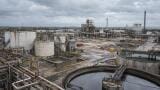
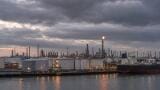
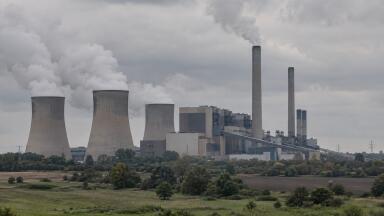
The United States has recently experienced the most rapid expansion in oil and gas production in four decades, owing in large part to implementation of new extraction technologies such as horizontal drilling combined with hydraulic fracturing. The environmental impacts of this development, from its effect on water quality to the influence of increased methane leakage on climate, have been a matter of intense debate. Air quality impacts are associated with emissions of nitrogen oxides and volatile organic compounds, whose photochemistry leads to production of ozone, a secondary pollutant with negative health effects. Recent observations in oil- and gas-producing basins in the western U.S. have identified ozone mixing ratios well in excess of present air quality standards, and including the highest levels yet recorded in the U.S., but only during winter. Understanding winter ozone production in these regions is scientifically challenging, however, and goes against conventional understanding of ozone as a summertime urban pollutant.
In order to identify the best way to tackle this breach of U.S. environmental regulation, a local industry body partnered with a team of atmospheric scientists to get to the bottom of this unusual phenomenon. Over the course of 3 winters between 2012 and 2014 we made detailed chemical measurements in the Uintah basin, Utah. These measurements resulted in new understanding of the chemistry leading to these pollution events, and enabled a quantitative analysis of the best emissions reduction strategies to tackle the problem.

PIN 27.4 Aug/Sept 2026


 Product directory


.jpg)
.jpg)