This talk will describe the Differential Absorption Lidar (DIAL) Technique and explain how it can be used to measure and quantify fugitive emissions of hydrocarbons from refineries and the petrochemical industry. The identification and quantification of fugitive emissions from industrial sites is becoming increasingly important from a regulatory and environmental standpoint and DIAL is one of the techniques recognised as Best Available Technology in the refining BREF.
The foundation of Leak Detection and Repair (LDAR) programs in many regions globally is Method 21, which was promulgated by the U.S. EPA to screen equipment components for potential fugitive emissions. Method 21 uses screening values and empirical relationships developed from field test data to estimate (not measure) the mass rate of fugitive emissions using concentration data measured near the potentially leaking component. Because Method 21 is very labor intensive, compliance with LDAR requirements can be very costly. Optical gas imaging (OGI) technology offers significant productivity improvements that could reduce considerably costs for LDAR compliance. Despite the potential for these cost savings, OGI technology has not been adopted by regulatory agencies for LDAR as a replacement for Method 21 because it has not been considered to be sufficiently quantitative.
VSL, the Dutch Metrology Institute, is among the leading national metrology institutes worldwide that provide metrological traceability and quality assurance for measurements of all kinds of energy and emission gases. Primary gaseous reference materials for refinery gas mixtures, sulphur components in methane and stack gas mixtures are constantly improved, both in available ranges and components.


There are plenty of diverse opportunities in professional life. First learn about yourself and understand the culture of the company you are working for, then identify the area you enjoy most and you feel you can best contribute… and then go for it!


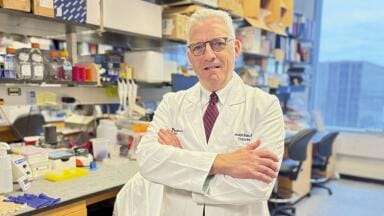
Rod is an international authority on industrial emissions measurements and is on the Management Board of the UK's Source Testing Association. He has previously been the Quality Officer and Chairman. He consults for the UK Environment Agency in this context, and has been invited to give a keynote presentation at the last four annual conferences of the US Source Evaluation Agency.
PIN 27.4 Aug/Sept 2026



 Product directory


.jpg)