Measurement and testing
Published over 9 years ago. See the latest and most current information on Measurement and testing.
Efficiency and safety at the highest levels
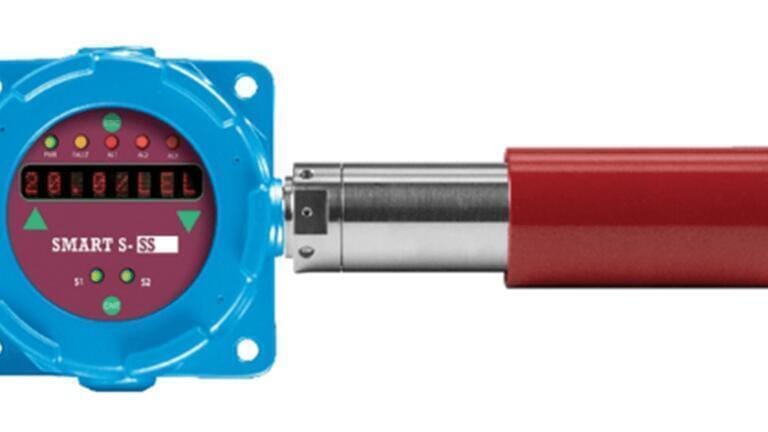
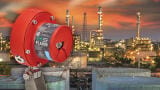
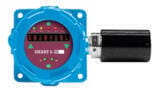
The series of Laser gas detectors use technique of TDLAS (Tunable Diode Laser Spectrometry) to monitor the presence of hydrocarbons and for ammonia. This technique is based on the fact that the gas has a unique and well defined light absorption curve in the infrared spectrum that can be used to identify the specific gas.
This LASER instrument technology has been developed in accordance with the EN50402 Standard in order to guarantee better performance and functional safety in case of failure. All LASER technology detectors have been SIL 2 HW and SIL 3SW certified according to EN50402. SENSITRON detectors can be customized to suit the end user needs.
Some features (standard or optional according to model): 4-20mA outputs, RS485 and relays, Non-intrusive one-man calibration, Hart Modem, SIL 2 HW and SIL 3 SW, Low detection level of hydrocarbons (ppm available), Very fast response time.
Please note that in order to achieve a complete SIL2 or 3 certified gas detection system, the detectors have to be combined with control panels with the same certification level such as Galileo Series control panels, capable of supervising from 8 to 256 detectors.
PIN 27.4 Aug/Sept 2026


 Product directory


.jpg)




.jpg)

.jpg)