Measurement and testing
Published over 12 years ago. See the latest and most current information on Measurement and testing.
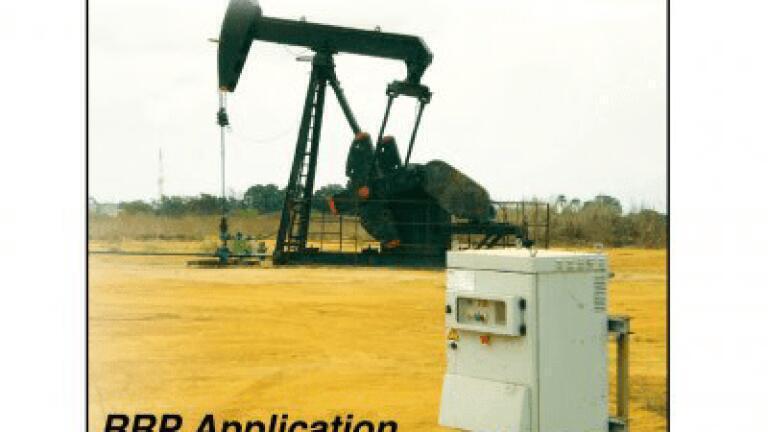
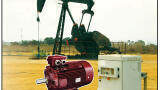
Emerson Industrial Automation’s (USA) Powerdrive regenerative Variable Speed Drive (VSD) solutions are proving an increasingly popular choice on oil pumping systems in ‘artificial lift’ applications in comparison with more traditional options such as six- or multi-pulse rectifiers, or active/passive filters.
VSDs, which are used in most oil sector pumping operations thanks largely to their established benefits of
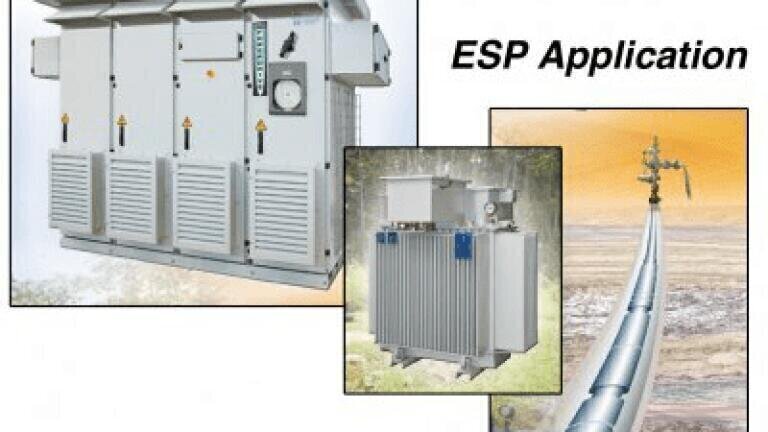
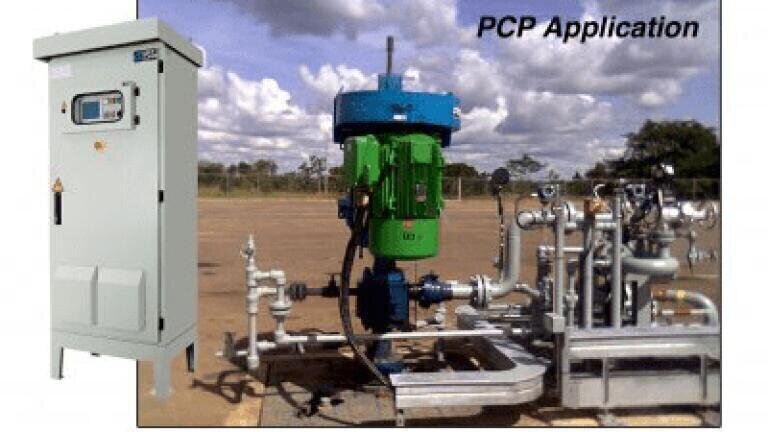
energy efficiency and flexible process control, are deployed typically on pumps that include ESP (electric
submersible pump), PCP (progressive cavity pump) and rod-based types for well activation. However, some precautions are needed when using VSDs as electronic devices encourage harmonic currents which
circulate due to network impedance. Among the unwanted effects are additional motor losses and impaired stability due to the presence of oscillating torque. Overheating of step-down transformers, increased cable losses and the production of resonant circuits in capacitors are other undesirables.
Passive and active filters are among the conventional solutions to harmonic currents. However, while these
are economic, they are not completely fail-safe with regard to harmonic current exceeding the capacity of the filter. Other established solutions, such as multi-pulse rectifiers, require an additional, special transformer with intricate sets of phase-shifted AC output windings. As a consequence, increasing numbers are turning to regenerative VSD technology, such as Powerdrive from Emerson.
The main advantages of Powerdrive for artificial lift applications include active front end technology which
imparts a low level of harmonics distortion on the main supply, typically 3.5% or less. Also, the power factor of regenerative VSDs such as Powerdrive is close to 1, while the output voltage can be higher than the input voltage. In fact, the input stage of Powerdrive is regulated at a higher voltage value than the normal voltage value of a six-pulse rectifier, ensuring this type of converter is not impacted by fluctuations in mains voltage. Of course, the VSD input consumes only active energy, which reduces the current and the losses in subsea cables and all surface equipment. The transformer also experiences reduced magnetic noise. Another major consideration for the oil industry is ATEX standards. Here, the use of Powerdrive provides a better way of assuring the security and reliability of ATEX motors than standard inverters. Firstly, from a thermal point of view, Powerdrive keeps a constant temperature rise in the motor even if the input voltage decreases. This is because Powerdrive compensates the input voltage drop by up to around 10%, and retains the flux within the motor at constant levels.
Secondly, Powerdrive keeps electrical stresses very low due to the output LC (inductor-capacitor) filter.
Additional benefits for Powerdrive users include inherent reliability, compactness and ease of
service/maintenance due to unit modularity one module can be replaced in just 20 minutes. In addition,
Powerdrive can be offered in flexible and customised solutions to match indoor-outdoor applications.
Powerdrive clearly demonstrates why it is becoming rapidly adopted for a whole host of applications in the oil and gas industry, pushing the boundaries of what can be achieved.
PIN 27.5 Oct/Nov 26


 Product directory


.jpg)














.jpg)






.jpg)