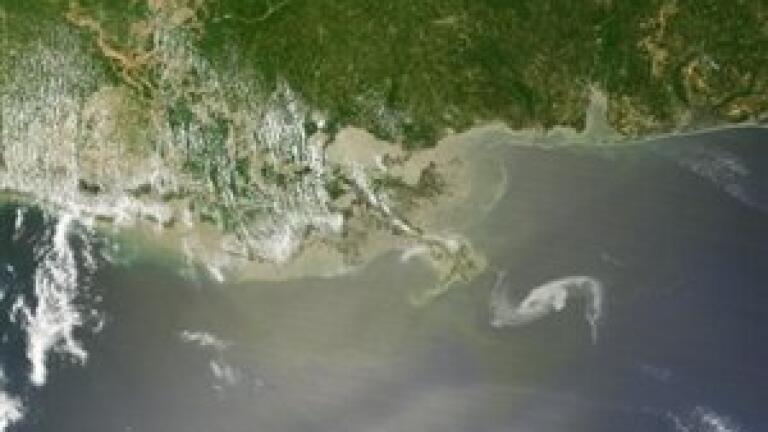
Plumes of oil released from the failed BP-operated rig Deepwater Horizon have been predicted to lead to "dead zones" being seen in
measurement and testing of Gulf of Mexico waters in the years to come.
Scientists at Princeton University and the National Oceanic and Atmospheric Administration simulated different models of oil plumage within the Gulf.
While their simulation was based on a longer-term leak than actually occurred, they also used lower estimates for the amount of oil released over time.
As a result, they argue that the two deviations from real-world conditions counteract one another and their conclusions are still supportable.
Their forecasts anticipate that "dead zones" could be seen in
measurement and testing conducted for "a couple of years" from now.
October is expected to represent a peak moment in the cycle, as oxygen levels hit their lowest points, driven downward by conditions associated with the oil leak.
Caused by microbes consuming nutrients in the water, dead zones represent oceanic regions where oxygen levels have fallen to the extent that they can no longer support life forms.


 Product directory


.jpg)









.jpg)




.jpg)