Measurement and testing
Published over 26 years ago. See the latest and most current information on Measurement and testing.
Instrumentation company Air Monitors (UK) has announced that the new TEOM 1405-F and 1405-DF ambient particulate monitors have successfully completed a series of laboratory and field trials in the UK and Germany.
The trials were part of a combined UK-Germany PM Equivalence Program to achieve both MCERTS and German UBA certification for the measurement of PM2.5 and PM10 without the need for correction factors which are required for many other techniques.
The TEOM 1405 distinguishes itself from other PM measurement methods by utilising a direct mass measurement that is not subject to the measurement uncertainties found in other surrogate technologies and provides a self-referencing, NIST traceable direct mass measurement.
For those that need to measure both fine and coarse particulates simultaneously, a dichotomous format version of the 1405 is available (1405-DF) for continuous monitoring of both PM2.5 and PM10. This provides a substantial cost reduction in comparison with two individual instruments.
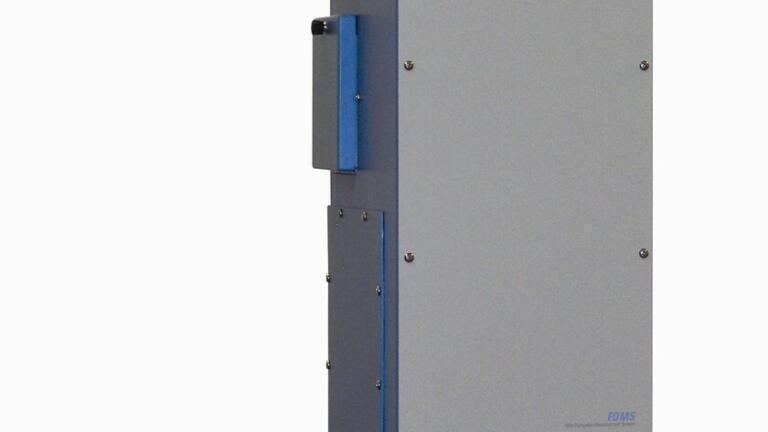
A key feature of the new design for the 1405-F is that the control unit, the sensor and the FDMS are all built into the same box, which means that the unit is smaller and more cost-effective.
PIN 27.4 Aug/Sept 2026

 Product directory


.jpg)








.jpg)

.jpg)