Flow level pressure
Published over 16 years ago. See the latest and most current information on Flow level pressure.
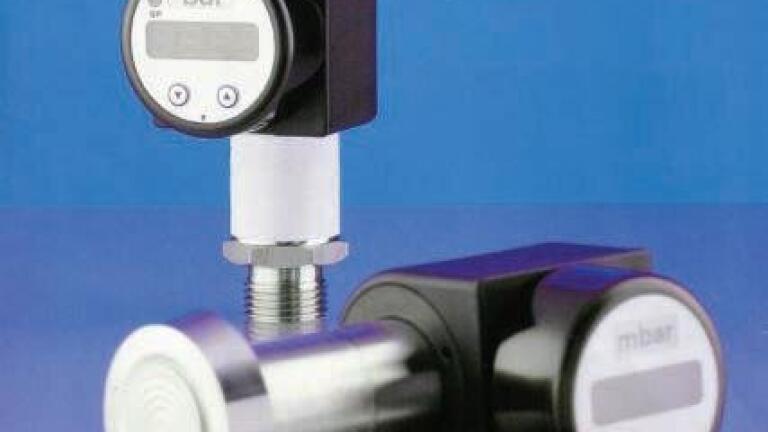
A new range of pressure transmitters is now available, which offers three-in-one functionality of a pressure sensor, switch and display, reducing installation and equipment costs for the user.
The DS range of pressure transmitters from Impress Sensors & Systems Ltd (UK) provides a combination of a pressure sensor with signal conditioning that provides a current or voltage output signal, one two or four independent PNP transistor switch outputs, as well as a freely scaleable, programmable LED rotating display.
The transmitter is ideal for a wide range of applications, including air, oil and hydraulic pressure applications. Pressure ranges start from 10mbar on the DS210 up to 600bar on the DS200. Several options are available within the DS range, including optional ATEX certification; 1,2 or 4 switch points; analogue output in either 4-20mA, voltage or none; electrical connection; and various types of process connections.
There’s also a 3-wire, 4-20mA configuration that enables the user to re-calibrate the output signal. The digital LED display is also scaleable and can be freely rotated through two axes to suit the installation. The brightness of the display can also be adjusted to suit the environment.
The DS range comprises six versions. The DS 210 is a precision electronic pressure switch with silicon sensor that is suitable for measuring gases, compressed air and thin, non-aggressive liquids, including pneumatics and vacuum technology. Pressure range is from 10mbar up to 1,000mbar.
The DS 201 is an electronic pressure switch with a chemically robust ceramic sensor, which is ideal for measurement of viscous or lightly contaminated fluids. Pressure range is from 600mbar through to 600bar. An optional PVDF pressure port is available for aggressive media, where stainless steel is not resistant. There’s also an oil and fat-free version for applications with oxygen. The DS 201 is ideally used as a gauge or absolute pressure sensor or absolute pressure switch.
The DS 200 is a piezoresistive, stainless steel sensor similar to the DS 201 ceramic version, but offers higher resolution and over-pressures. Nominal pressure range of the DS 200 is from 100mbar up to 600bar. The sensor can be used in a wide range of pneumatic and hydraulic control applications, offering long term stability and high precision. The sensor can be used with any liquids or gases that are compatible with stainless steel and the O-ring material.
The DS 230 is an OEM digital pressure switch with ceramic sensor and digital display for hydraulic applications. Suitable for a wide range of gases and liquids, the lower cost DS 230 is targeted at OEMs who require less accuracy and no transmission of output from the device, simply a pressure switch with pressure display. Preferred areas of use are machine tools, hydraulic presses and test benches, pumps and plastic processing machines.
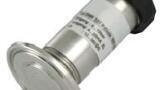
The DS 201 P and DS 200 P are ideal for machine builders that supply the process industries, including chemicals, food processing and pharmaceuticals. Stainless steel flush diaphragms are available, as well as recognised process connections, including inch fittings, Tri-clover and dairy clamp connections.
PIN 27.4 Aug/Sept 2026


 Product directory


.jpg)













.jpg)