
Analytical instrumentation
Published over 13 years ago. See the latest and most current information on Analytical instrumentation.
In the refinery process, it is important to detect unwanted chemical, pollutant, contaminant, and corrosive elements before they negatively impact your process. Two important analyses to run include:
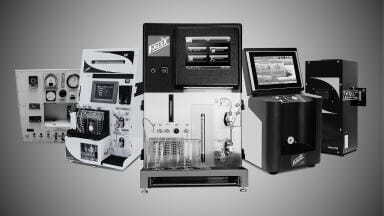
The PAC Antek MultiTek can perform both of these applications, as well as a wide variety of other applications for the refining industry in one easy to use instrument. It is the only elemental instrument on the market that combines testing for sulfur, nitrogen, and halides all in one. It features exceptional calibration linearity, low limit of detection, excellent repeatability, and an extremely stable response.
Learn more about the Antek MultiTek and its applications in the refining industry by watching an on-demand webinar. Download now. You may also read the full application notes using the links below.
Total Sulfur in Hydrocarbons
Total Sulfur content in hydrocarbons by combustion and UV fluorescence has been established as the preferred method to characterize feedstock, intermediate streams, and finished hydrocarbon products due to its sensitivity, linearity, dynamic range and ruggedness. This application note deals with the total Sulfur content determination in gasoline according to the ASTM D5453 Standard Test Method. Since sulfur is a ubiquitous element in hydrocarbon streams responsible for many undesirable effects like catalyst poisoning, detrimental product quality and ecosystem pollution, there is a need to quantify and monitor its content in every step of the industry´s technical operations. Read the application note to see how the Antek Multitek provides exceptional calibration linearity, low limit of detection, excellent repeatability, and an extremely stable response.
Chloride in Naphtha
The accurate and rapid determination of chlorine content in naphtha and related materials is important to refineries, processing plants, and storage facilities. Chlorine compounds present in the naphtha or other fractions are generally corrosive and can severely damage processing equipment. Some chlorine compounds are poisonous to catalysts and in the case of some refinery intermediates, the chlorine content may render the material unsuitable for further processing. Read the application note to see how the MultiTek, when combined with Ion Chromatography, provides a sensitive, automated and reliable analysis of chlorine in naphtha. This allows the refinery to monitor process streams, storage tanks, and other systems for unacceptable levels of chlorine to prevent corrosion and to provide catalyst protection.
PIN 27.4 Aug/Sept 2026



 Product directory


.jpg)











.jpg)


.jpg)