.jpg)
Analytical instrumentation
Published over 6 years ago. See the latest and most current information on Analytical instrumentation.
Membrane technology is the latest concept to make waves in the oil refining sector, with research from the Georgia Institute of Technology suggesting it could be used to slash energy use and emissions. Developed by a team of Georgia Tech researchers, the innovative polymer membrane technology has the potential to replace widely used heat-based distillation processes and help the energy industry transition towards cleaner, more eco-friendly practices. The research was supported by scientists at Imperial College London and ExxonMobil, with early laboratory testing delivering promising results.
Currently, the heat-based and hugely energy-intensive distillation techniques used to fractionate crude oil account for around 1% of total global energy use. This equates to a huge 1100 terawatt-hours per year. By incorporating low-energy membranes into the process, the technology could drastically reduce energy consumption and emissions. Simultaneously, it would support the development of new, more energy-efficient hybrid refining systems.
“Much in our modern lives comes from oil, so the separation of these molecules makes our modern civilisation possible,” says M.G. Finn, a professor at the Georgia Tech School of Chemistry and Biochemistry. “The scale of the separation required to provide the products we use is incredibly large. This membrane technology could make a significant impact on global energy consumption and the resulting emissions of petroleum processing.”
Already utilised in applications such as wastewater treatment and seawater desalination, membrane technology is an efficient way to filter, extract and distil. While in the past petroleum refining has been too complex a process for membrane technology, the new technique pushes boundaries with a sophisticated spirocyclic polymer. When applied to a durable substrate, the spirocyclic polymer formed a low-energy membrane capable of fractionating complex hydrocarbon mixtures when exposed to pressure.
The findings were reported in the journal Science, with the team saying the low-energy membrane technology could revolutionise the way crude oil and crude-oil fractions are separated. While more research and development is required to industrialise the new process, the team is confident it has big potential.
“We worked extensively with ExxonMobil and Georgia Tech to demonstrate the scalability potential of this technology to the levels required by the petroleum industry,” says Andrew Livingston, a professor of chemical engineering at Imperial College London.
Methane is one of the most concerning chemical compounds emitted by the oil and gas industry. To find out more about how the sector is working to minimise its environmental footprint and enhance onsite safety, don’t miss ‘Methane monitoring is a ’must’
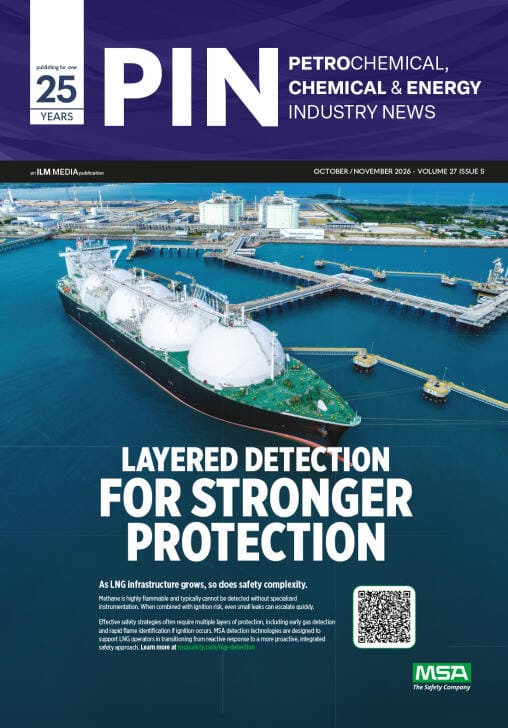
PIN 27.5 Oct/Nov 26

 Product directory


.jpg)


.jpg)

.jpg)




.jpg)