Mass spectrometry & spectroscopy
Published over 5 years ago. See the latest and most current information on Mass spectrometry & spectroscopy.
Polybrominated biphenyls (PBBs) and Polybrominated diphenyl ethers (PBDEs) are routinely used as flame retardants in electronic equipment, textiles and plastics. These flame retardants are deemed a hazardous substance due to the health implications which they cause; they are carcinogenic compounds. PBBs and PBDEs are regularly released into the environment during production and disposal of products which contain these flame retardants. As carcinogenic chemicals, the release of PBBs and PBDEs must be controlled and monitored to minimise the amount released into the environment and limit human exposure. The Restriction of Hazardous Substances Directive (RoHS) regulates the levels permitted for use in electronic equipment, typically 0.1% for both PBBs and PBDEs. SCION Instruments developed a method for the analysis of PBBs and PBDEs by gas chromatography with mass spectrometry.
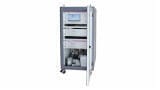
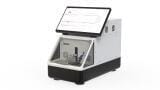
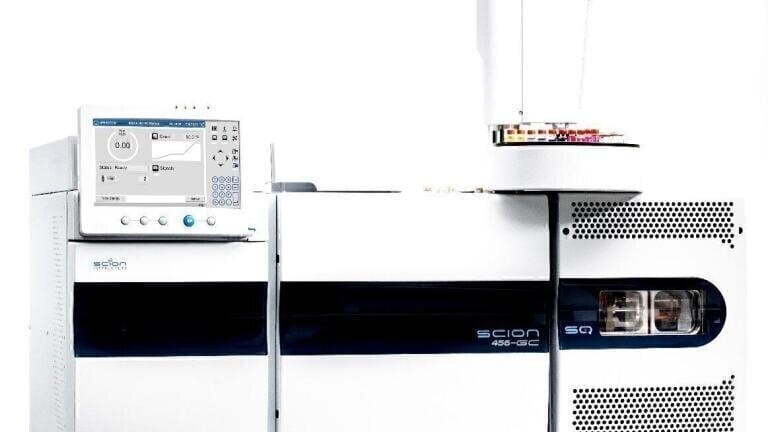
A SCION 456 GC was coupled to the SCION Single Quad Mass Spectrometer. The analytical conditions for this analysis can be found in Table 1 with the instrumentation used being found in Figure 1.
Table 1. Analytical conditions of the GC-MS.
Conditions
S/SL: 280°C
Column: Scion-5HT 15m x 0.25mm x 0.10μm
Oven: 110°C (2 mins), 40°C/min to 200°C, 10°C/min to 260°C, 20°C/min to 340°C (2 min)
Carrier Gas: Helium 1mL/min constant
Transfer Line: 300°C
Source: 230°C
MS: Full Scan, 100-1000Da
1mL of each PPB and PBDE standard mixtures were prepared in a 5mL volumetric flasks. Toluene was used to adjust the standard stock solutions to 20µg/mL. Working standards were prepared in concentrations of 0.05, 0.15, 0.25, 0.35 and 0.45µg/mL for each of the target compounds. Preparation of samples varies depending on the sample type but can include pyrolysis and solvent extraction.
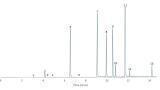
The five working standards were analysed in both full scan and SIM mode, with quantification using SIM mode. The total ion chromatogram (TIC) for a 20µg/mL stock standard was used for peak identification with peak retention times being compared with the certificate of analysis to confirm identification. Figure 2 shows the two total ion chromatograms (TIC) from the 20µg/mL stock standards whilst Table 2 details peak identification, linear coefficient values of all calibration curves and repeatability values, in full scan mode. Repeatability of the system was determined through ten replicates of each component at 0.05µg/mL.
Table 2. Peak identifiers, retention time, RSD% and linear coefficient values.
Peak Peak ID RT (min) RSD % (RT) RSD% (Area) Linear Coefficient(R2)
- PBBs - - - -
1 2-bromobiphenyl 3.36 0.02 2.4 0.99992
2 2,5-dobromobiphenyl 4.23 0.01 2.9 0.99992
3 2,4,6-tribromobiphenyl 4.84 0.01 2.3 0.99963
4 2,2’,5,5’-tetrabromobiphenyl 6.01 0.01 2.6 0.99943
5 2,2’,4,5’,6-pentabromobiphenyl 7.01 0.006 1.9 0.99823
6 2,2’,4,4’,6,6’-hexabromobiphenyl 8.10 0.01 2.4 0.99782
7 2,2’,3,4,4’,5,5’-heptabromobiphenyl 11.42 0.007 2.7 0.99714
8 Octabromobiphenyl 12.80 0.006 3.9 0.99525
9 2,2’,3,3’,4,4’,5,5’,6-nonabiphenyl 13.49 0.005 2.1 0.99829
10 Decabromobiphenyl 14.06 0.005 2.1 0.99510
- PBDE - -
11 4-monobromobiphenyl ether 3.77 0.006 2.5 0.99958
12 4,4’-dibromodiphenyl ether 4.71 0.03 2.7 0.99930
13 3,3’,4-tribromodiphenyl ether 5.79 0.007 1.4 0.99855
14 3,3’,4,4’-tetrabromodiphenyl ether 7.54 0.02 4.0 0.99724
15 2,2’,4,4’,6-pentabromodiphenyl ether 8.16 0.01 1.4 0.99588
16 2,2’,4,4’,5,6’-hexabromodiphenyl ether 9.53 0.07 1.7 0.99619
17 2,2’,3,4,4’,5,6;-heptaBDE 11.91 0.01 2.9 0.99957
18 2,2’,3,4,4’,5,5’,6’-octaBDE 12.67 0.07 4.0 0.99889
19 2,2’,3,3’,4,4’,5,5’,6-nonbrominated diphenyl ether 13.84 0.009 2.9 0.99963
20 Decabromodiphenyl ether 14.73 0.0082 3.4 0.99903
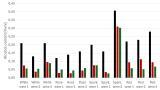
It is critical that the instrumentation used can detect both low levels and higher concentrations to determine how much of a risk the flame retardant items are to the environment and human health. Excellent linearity was observed for all target compounds, with a calibration range from 0.05µg/mL to 0.45µg/mL. All coefficients were equal to or greater than 0.995. Figure 3 shows the calibration curve of Decabromobiphenyl, which is representative of all target compounds analysed. Linearity was calculated using SIM data.
In addition, excellent repeatability was also observed for all compounds for both retention time and peak area. These low RSD% values are important when monitoring low-level contaminants, such as PPB and PBDE, as there must be confidence in the levels reported especially when there are health implications associated with the target compounds. As the RoHS limits the exposure of PPBs and PBDEs to no more than 0.1% (by mass), the repeatability of the 0.05µg/mL calibration standard was key to this analysis.
Optimisation of the SCION GC-MS allowed excellent separation and quantification of polybrominated biphenyls and polybrominated diphenyl ethers, common flame retardants. Using a quantitative SIM method it was possible to identify and quantify twenty components in fifteen minutes, over a concentration range of 0.05µg/mL to 0.45µg/mL.
Monitoring these carcinogenic compounds is vital for industries which manufacture electrical and plastic products, in order to reduce the amount released into the environmental during disposal.
PIN 27.2 Apr/May 2026




 Product directory